

How to Store Cast Iron Skillet (So It Lasts a Lifetime)

If you own a cast iron skillet, congratulations—you’re officially in possession of one of the most hardworking tools in the kitchen.
These pans can sear, bake, fry, and roast like absolute champs. But here’s the catch: cast iron is loyal only if you treat it right.
And that includes knowing how to store cast iron skillet properly when you’re not using it.
Store it the wrong way, and you might open your cabinet to rust, weird smells, or a pan that suddenly lost its nonstick magic.
Store it the right way, and that skillet can outlive trends, appliances, and possibly even you. Dramatic? Maybe. True? Absolutely.
Let’s break it down step by step, no stress, no myths, just practical advice you can actually use.
Why Proper Cast Iron Storage Matters More Than You Think
Cast iron isn’t fragile, but it is particular. It hates moisture, doesn’t love air exposure, and will absolutely hold a grudge if you put it away dirty.
Unlike modern nonstick pans, cast iron relies on seasoning—a thin layer of oil baked into the surface—to protect it.
Bad storage can lead to:
- Rust spots
- Sticky or gummy surfaces
- Strange odors
- Seasoning breakdown
Good storage, on the other hand, keeps your pan:
- Smooth and slick
- Ready to cook anytime
- Free from rust or damage
So yes, learning how to store cast iron skillet properly is just as important as learning how to cook with it.
Step One: Clean It the Right Way Before Storing
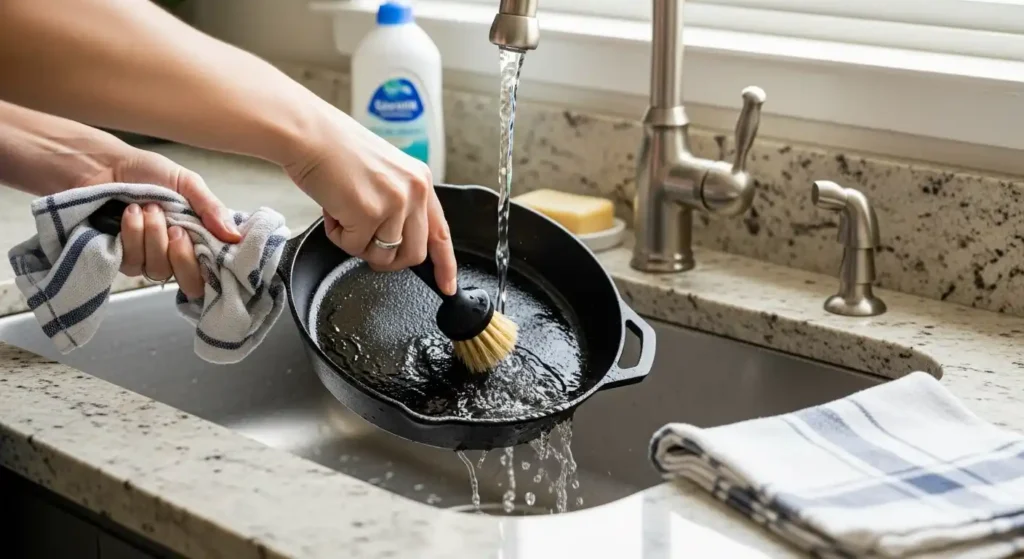
Before storage even enters the conversation, your skillet needs to be clean. Not “looks fine” clean—actually clean and dry.
What to Do
- Wash the skillet with warm water
- Use a soft brush or sponge
- Skip soaking it for long periods
- Dry immediately with a towel
If food bits are stubborn, use coarse salt and a little water to scrub. It works like magic and won’t hurt the seasoning.
Why This Matters
Any leftover moisture or food residue can cause rust or odor during storage. Even a slightly damp pan is a risk.
Cast iron remembers everything.
Always Dry Your Cast Iron Completely (No Shortcuts)
This step is non-negotiable. Air-drying is not enough.
Best Method
- Wipe the pan dry with a towel
- Place it on the stove over low heat for 2–3 minutes
- Let remaining moisture evaporate
This quick heat-dry step is a game changer. It removes hidden moisture that towels miss.
Skipping this step is the fastest way to ruin a perfectly good pan.
Apply a Light Oil Layer Before Storage
Once your skillet is clean and fully dry, add a thin layer of oil.
How to Do It
- Add a few drops of cooking oil
- Rub it all over the surface (inside, outside, handle)
- Buff off excess with a clean cloth
The pan should look shiny but not greasy.
Why It Works
This oil layer protects the iron from moisture and keeps the seasoning healthy. Think of it as skincare for cookware.
How to Store Cast Iron Skillet in Cabinets
Cabinets are the most common storage spot—and they work great if done correctly.
Best Practices
- Store the skillet in a dry cabinet
- Avoid areas near sinks or dishwashers
- Place a paper towel inside the pan
That paper towel absorbs moisture and protects the cooking surface if pans are stacked.
Stacking Cast Iron
If you stack pans:
- Place a paper towel or cloth between them
- Never stack bare iron on bare iron
This prevents scratches and preserves seasoning.
Storing Cast Iron in the Oven (Yes, Really)
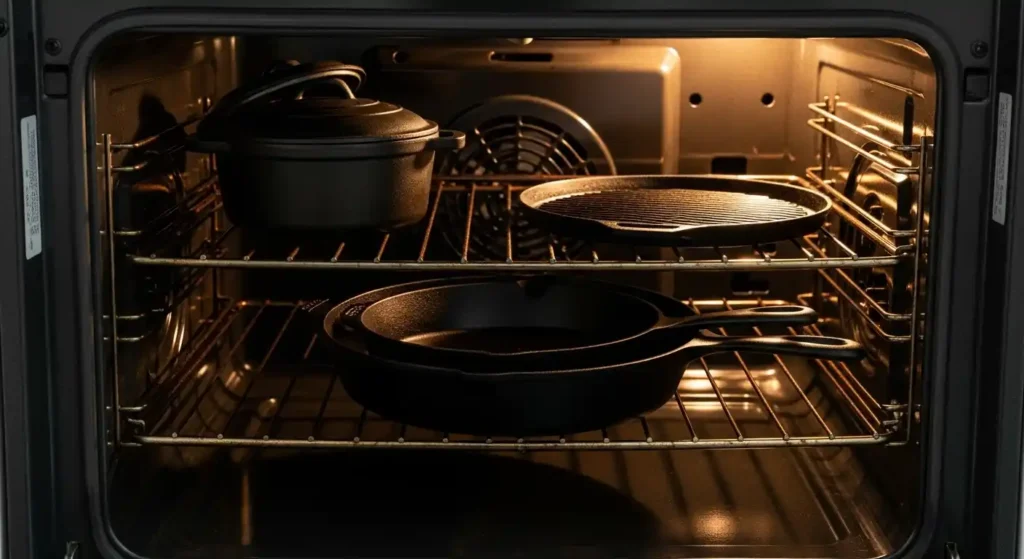
Many people store their cast iron skillet in the oven, and that’s totally fine—as long as you remember it’s there.
Pros
- Dry environment
- Easy access
- Saves cabinet space
Cons
- Easy to forget and preheat the oven with it inside
- Can get dusty if unused for long periods
If you store it in the oven, make it a habit to check before turning the oven on. A simple reminder note helps.
Hanging Cast Iron Skillets: Smart or Risky?
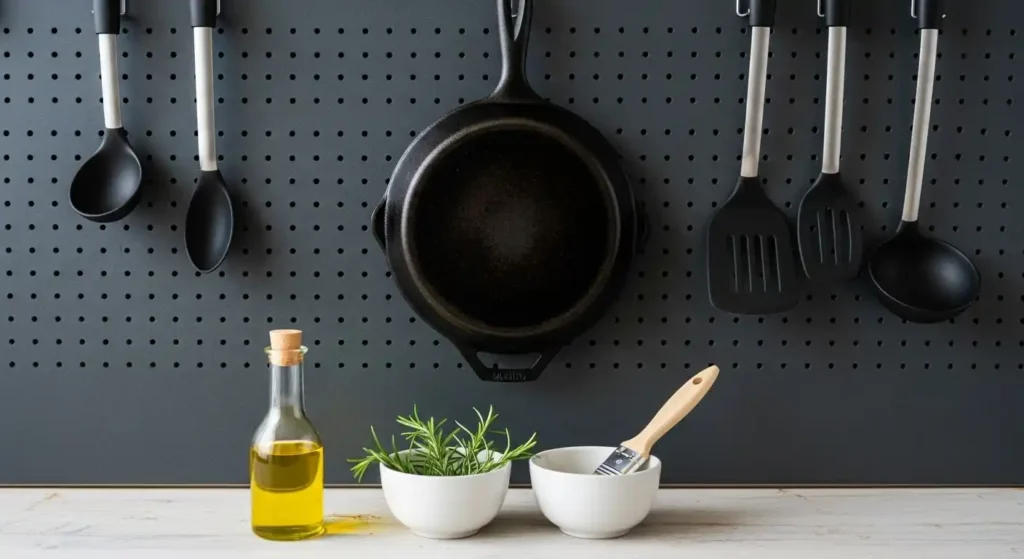
Hanging your cast iron can look stylish and practical.
When Hanging Works
- Strong hooks or racks
- Wall studs or solid supports
- Dry kitchen environment
Things to Watch Out For
- Moisture from nearby sinks
- Handles scratching walls
- Heavy pans pulling on weak hooks
Hanging is great for frequently used pans. Just make sure they’re clean, oiled, and secure.
What NOT to Do When Storing Cast Iron
Let’s talk mistakes—because most cast iron damage happens during storage.
Avoid These at All Costs
- Storing while damp
- Sealing in airtight containers
- Leaving food residue inside
- Wrapping in plastic
- Storing in humid areas
Cast iron needs airflow, dryness, and light oil. Treat it like a living thing with boundaries.
Long-Term Storage Tips (For Seasonal Use)
If you won’t use your skillet for weeks or months, take extra care.
Best Long-Term Storage Method
- Clean and dry thoroughly
- Apply a slightly thicker oil layer
- Wrap loosely in paper or cloth
- Store in a dry, temperature-stable place
Avoid basements or garages unless they’re climate-controlled. Humidity is the enemy here.
How to Tell If Your Cast Iron Was Stored Incorrectly
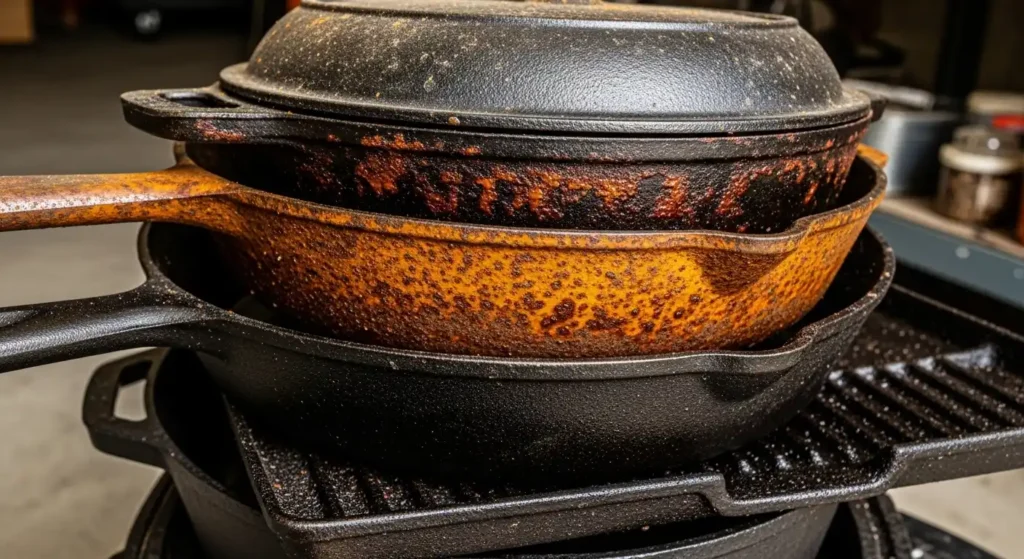
Opened the cabinet and something looks off? Here are signs your skillet didn’t love its storage conditions.
Warning Signs
- Orange or brown rust spots
- Sticky or tacky surface
- Metallic or musty smell
- Dull gray appearance
The good news? Most issues are fixable with a little scrubbing and re-seasoning. Cast iron is forgiving—just not infinitely patient.
Quick Recovery If Rust Appears
If rust shows up, don’t panic.
Fix It Fast
- Scrub rust with steel wool or a stiff brush
- Wash and dry thoroughly
- Re-oil and heat the pan
- Re-season if needed
A little rust doesn’t mean the pan is ruined. It just means it needs attention.
Final Thoughts: Store It Right, Use It Forever
Knowing how to store cast iron skillet properly isn’t about being fussy—it’s about protecting something built to last generations.
With a few simple habits—cleaning, drying, oiling, and smart storage—you can keep your skillet smooth, rust-free, and always ready to cook.
Cast iron rewards consistency.
Treat it well, and it will show up for every meal, every time.
Now go check your cabinet.
If your skillet is dry, lightly oiled, and smiling back at you—you’re doing it right.


