

How to Make a Ceramic Pan Non Stick Again

So you’ve got a ceramic pan that used to glide like a dream—eggs slid off effortlessly, pancakes turned golden without sticking—but now it’s more “stuck-on catastrophe” than non-stick wonder.
Don’t stress. Ceramic pans are great, but over time, they can lose their slick surface.
The good news? With a little care and the right tricks, you can make a ceramic pan non stick again and get it performing like new.
I’ve been there: scrubbing at stuck-on scrambled eggs, wondering if I should just toss the pan.
But before you say goodbye to your favorite cookware, let’s talk about why ceramic pans lose their non-stick magic and what you can do to restore it.
Why Ceramic Pans Lose Their Non-Stick Power
Ceramic pans are popular because they are generally free from harmful chemicals like PFOA and PTFE, but the non-stick coating is not invincible. A few things can rob your pan of its glide:
- High heat: Ceramic coatings can degrade at very high temperatures.
- Cooking sprays: Over time, these can leave a residue that actually makes sticking worse.
- Metal utensils: Scraping or stirring with metal tools can scratch the surface.
- Dishwasher cleaning: Harsh detergents and high temperatures can erode the coating.
Knowing the cause is half the battle. Now, let’s fix it.
Step 1: Clean the Pan Thoroughly
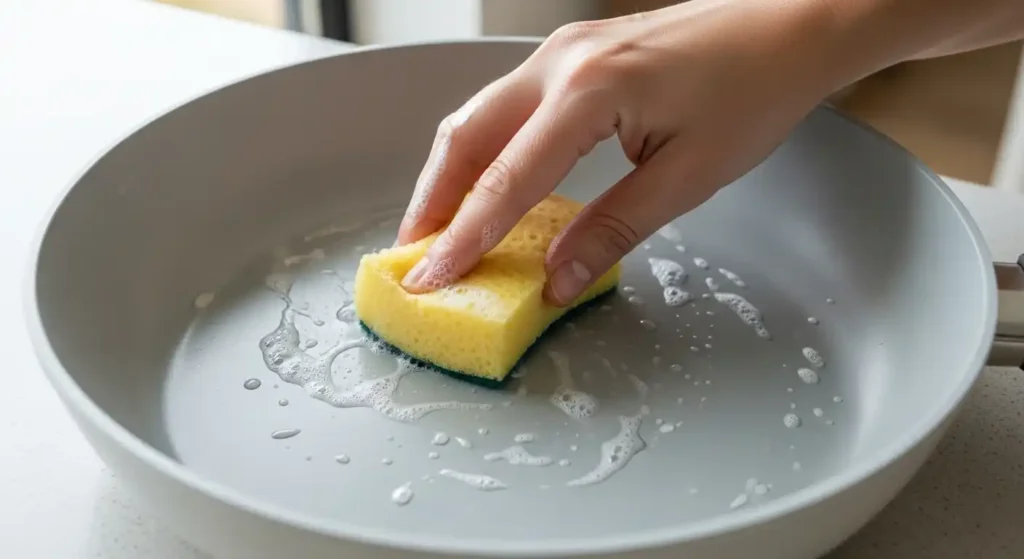
Before doing anything fancy, start with a deep clean. Even minor residue buildup can make sticking worse.
You’ll need:
- Hot water
- Mild dish soap
- Non-abrasive sponge
Instructions:
- Fill your pan with hot water and a drop of dish soap.
- Let it soak for 10–15 minutes to loosen stuck-on food.
- Gently scrub with a soft sponge—no steel wool or harsh scrubbers!
- Rinse and dry thoroughly.
Why this works:
Removing leftover food and oils allows your pan to absorb new oil or seasoning properly, which is key to restoring non-stick properties.
Step 2: Re-Season the Pan (Yes, Even Ceramic!)
You might think seasoning is only for cast iron. Wrong. Ceramic pans benefit from a light layer of oil to restore their non-stick performance.
You’ll need:
- 1–2 teaspoons of neutral oil (grapeseed, canola, or vegetable)
- Paper towel
Instructions:
- Pour a small amount of oil into the pan.
- Use a paper towel to spread it evenly across the surface.
- Heat the pan on low for 2–3 minutes.
- Let it cool, then wipe away any excess oil.
Why this works:
The oil fills microscopic pores in the ceramic surface, reducing friction and letting your food glide.
Think of it like giving your pan a tiny spa treatment.
Step 3: Use Gentle Heat
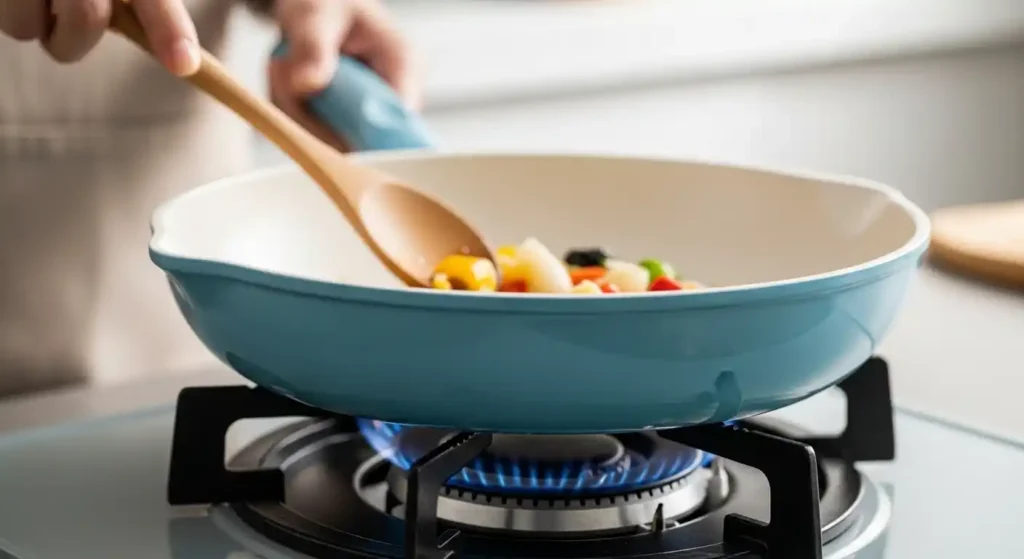
One reason ceramic pans start sticking is that they’re abused with high heat. From now on:
- Preheat on low to medium heat only.
- Add oil after the pan is warm—not before.
- Avoid overheating empty pans, which can degrade the ceramic surface.
Tip: Test the pan’s heat by sprinkling a few drops of water—if they dance, it’s ready.
Step 4: Avoid Cooking Sprays and Harsh Chemicals
Non-stick sprays might seem like a shortcut, but over time, they leave a sticky residue that attracts more sticking.
Stick to liquid oils or a small dab of butter instead.
Also, skip harsh detergents, bleach, or abrasive scrubbers.
Stick with gentle dish soap and a soft sponge—your pan will thank you.
Step 5: Baking Soda Magic for Tough Stains
If your ceramic pan still sticks after cleaning and seasoning, try baking soda, your new best friend.
You’ll need:
- Baking soda
- Water
Instructions:
- Make a paste with baking soda and a little water.
- Spread the paste over the sticky or discolored areas.
- Let sit for 10–15 minutes.
- Gently scrub with a soft sponge, rinse, and dry.
Why this works:
Baking soda is mildly abrasive without damaging ceramic. It lifts stubborn residue and can brighten up a dull surface.
Step 6: Regular Maintenance
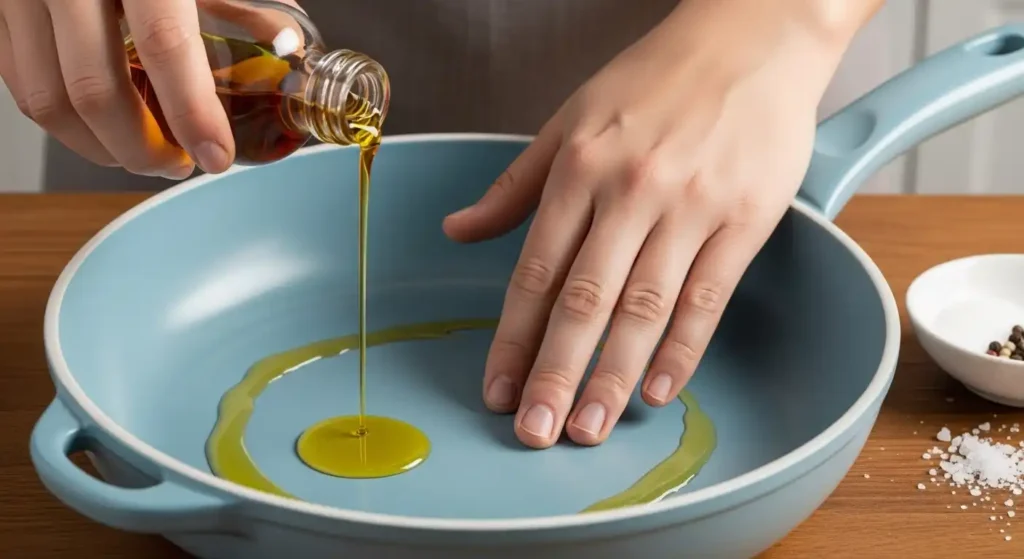
Now that your ceramic pan is back in action, keep it non-stick longer with these habits:
- Hand wash only: Skip the dishwasher to protect the coating.
- Avoid metal utensils: Opt for silicone, wood, or plastic tools.
- Re-season lightly after 5–6 uses: A tiny dab of oil keeps the surface slick.
- Store carefully: Avoid stacking heavy pans on top of it to prevent scratches.
Bonus Tip: Natural Non-Stick Boosters
Some extra tricks to keep food sliding off your pan:
- A tiny splash of water when cooking eggs: Creates steam and prevents sticking.
- Cook oily foods in small batches: Overcrowding the pan makes sticking inevitable.
- Temperature check: Avoid sudden temperature changes (like running hot water over a just-used pan).
Common Mistakes to Avoid
- Overheating: This is a top culprit. No searing at max heat unless your pan is rated for it.
- Sprays and aerosols: They accumulate and defeat your efforts.
- Scrubbing with metal: You’ll scratch your ceramic surface, undoing all your hard work.
- Neglecting oil layers: Even light seasoning goes a long way.
Final Thoughts
Restoring a ceramic pan to non-stick glory is easier than you think.
A gentle cleaning, a touch of oil, and mindful cooking habits go a long way.
With a little TLC, your favorite pan can be back to sliding eggs, pancakes, and stir-fries like it used to.
Remember, how to make a ceramic pan non stick again isn’t about magic—it’s about understanding the surface, protecting it, and giving it a small boost when it starts to lose its sheen.
With these hacks, you’ll save money, reduce kitchen frustration, and enjoy hassle-free cooking.
Your ceramic pan deserves a second chance—and so do your scrambled eggs.


