

How Many Pots and Pans Do I Need? The Ultimate Guide for Every Kitchen

So you’re standing in the kitchen aisle, staring at an endless wall of shiny pots and pans, and thinking, “Do I really need all of these?” If that’s you, welcome to the club.
But fear not!
By the time you finish reading this guide, you’ll know exactly how many pots and pans do I need for a functional, stress-free kitchen—without overbuying or cluttering your cabinets.
There’s a lot of marketing hype, and suddenly a 12-piece set seems “essential” just because it’s shiny and comes with a bonus lid.
Kitchen shopping can be overwhelming, especially when you’re trying to figure out how many pots and pans are actually necessary.
Why Knowing How Many Pots and Pans You Need Matters
It might sound trivial, but having the right number of pots and pans can change your life—or at least your cooking game.
Here’s why:
- Efficiency: Cooking multiple dishes at once is easier when you have the right tools.
- Space management: Too many pans can crowd your kitchen and make it hard to find what you need.
- Cost savings: Avoid spending hundreds on items you rarely use.
- Better results: Using the right pan size improves cooking, prevents sticking, and reduces burned food.
Basically, it’s not just about having a lot—it’s about having the right ones.
The Essential Pots and Pans
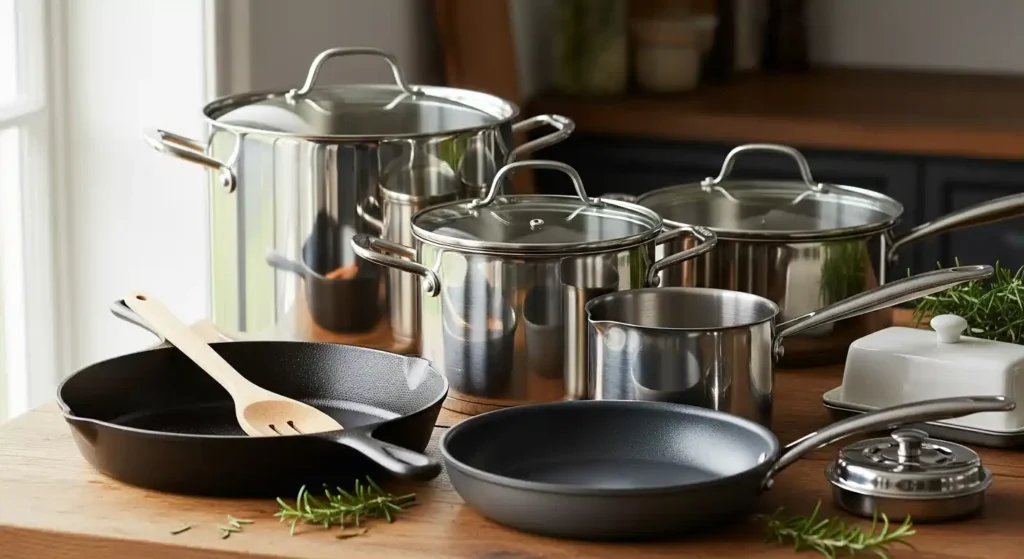
When figuring out how many pots and pans do I need, start with the essentials. These are the items that will cover 90% of everyday cooking.
1. Skillets/Frying Pans
A good nonstick or stainless steel skillet is a must-have. Most kitchens benefit from two sizes:
- Small (8-inch): Perfect for eggs, small omelets, or single servings.
- Medium/Large (10–12 inch): Ideal for stir-fries, pancakes, and sautéing vegetables.
Skillets are versatile and can even double as shallow roasting pans in a pinch.
2. Saucepan
A medium-sized saucepan (2–3 quarts) is perfect for:
- Boiling pasta or rice
- Making sauces or gravies
- Heating soups
Optional: A smaller 1-quart saucepan can be handy for melting butter or heating small portions.
3. Stockpot
A stockpot (6–8 quarts) is your heavy-duty workhorse. Use it for:
- Making soups and stews
- Cooking large batches of pasta
- Boiling potatoes or corn
Stockpots aren’t used every day, but when you need one, nothing else substitutes.
4. Dutch Oven
A Dutch oven is basically the multitool of the pot world. It’s great for:
- Slow-cooking braises
- Baking bread
- Stews, soups, and even roasting
A 5–7 quart size is perfect for most families. Cast iron is preferred for heat retention, but enamel-coated varieties are easier to clean.
5. Baking Sheet or Roasting Pan
While technically not a “pan” for stovetop cooking, baking sheets are indispensable. Use them for:
- Roasting vegetables
- Baking cookies
- Sheet pan dinners
A sturdy roasting pan also doubles as a lasagna dish or a makeshift tray for casseroles.
Optional but Nice-to-Have Pans
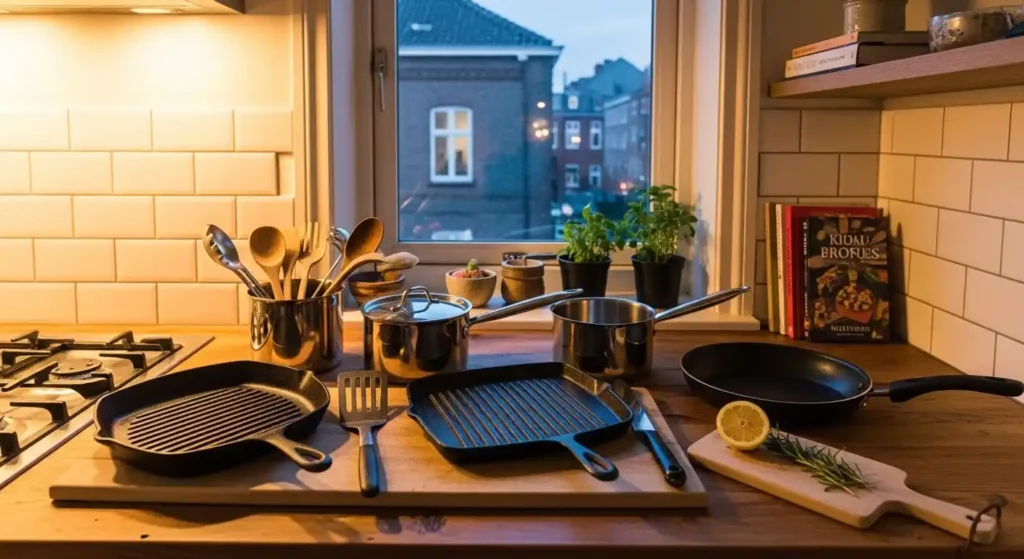
Once you have your essentials, you can think about specialty pans. These aren’t required but make life a little easier:
- Grill pan: Brings that outdoor grilling flavor inside.
- Wok: Great for stir-frying, especially if you cook Asian dishes often.
- Sauté pan with lid: Deeper than a skillet, perfect for pan sauces and braises.
- Griddle: Fantastic for pancakes, quesadillas, or grilled sandwiches.
Remember, these optional pans are nice, but not mandatory. You can often substitute with your skillet or Dutch oven if you’re trying to minimize clutter.
Consider Your Cooking Style
How many pots and pans you need also depends on your cooking habits:
- Solo or couple: You can get away with just one skillet, one saucepan, and one stockpot.
- Family of 4: Two skillets, one medium saucepan, and a 6–8 quart stockpot will usually cover it.
- Entertainers: You’ll want multiples of essential pans, maybe a griddle or large roasting pan, to handle multiple dishes at once.
Think of your kitchen like a toolbox. You don’t need every hammer and wrench ever made—you just need the ones that suit your projects.
Material Matters
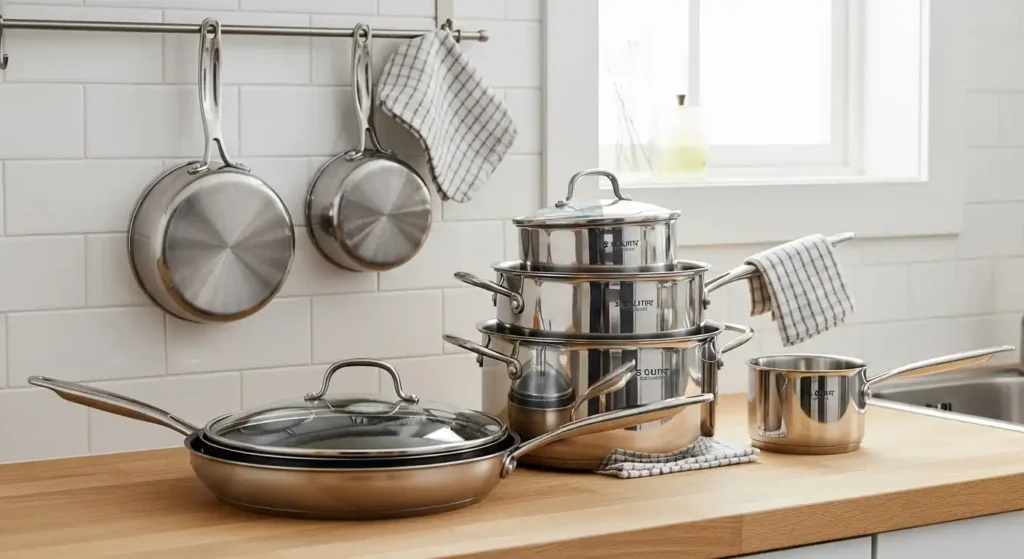
The number of pans isn’t the only factor—material plays a huge role in performance and maintenance:
- Nonstick: Great for eggs, pancakes, and delicate fish. But avoid overheating to extend life.
- Stainless steel: Durable, perfect for browning, searing, and deglazing. Requires a bit more oil or attention to prevent sticking.
- Cast iron: Long-lasting, excellent heat retention, ideal for everything from frying to oven-baking. Needs seasoning.
- Copper or anodized aluminum: Excellent heat conduction but more expensive. Usually reserved for serious home cooks.
Investing in quality materials means fewer pans overall—you won’t need multiples if your main skillet or saucepan performs well.
Storage and Space Considerations
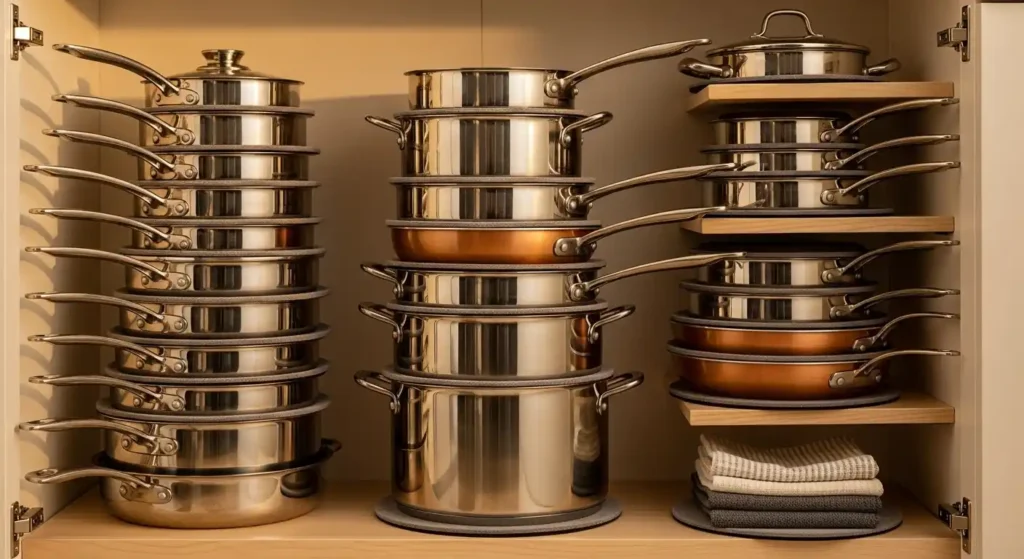
You might think, “If I get all the pans, I’ll just find space somewhere.” But kitchen storage is a real concern. A few tips:
- Stack smart: Use pan protectors or cloth between pans to prevent scratching.
- Use vertical space: Install a pot rack or hooks to hang skillets.
- Drawer organizers: Perfect for lids and smaller pans.
- Limit duplicates: You don’t need three frying pans of the same size.
Having too many pans is not just wasteful—it makes cooking frustrating when you can’t find the right one.
Cleaning and Maintenance
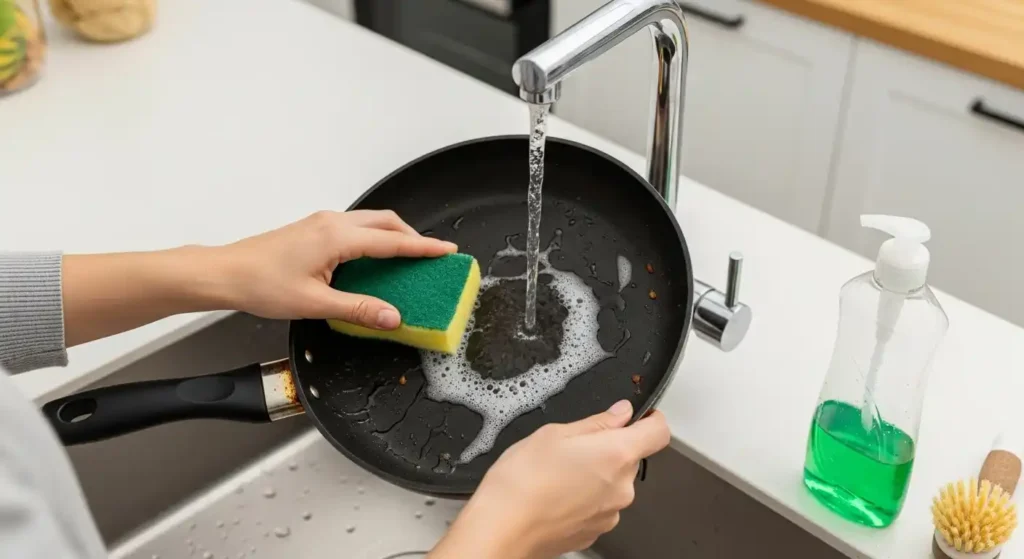
One consideration for how many pots and pans do I need is how much cleaning you’re willing to do. Every pan adds to your washing pile. A few tips:
- Wash nonstick gently with mild soap and soft sponges.
- For stainless steel, use a little baking soda for stubborn stains.
- Cast iron needs seasoning after every few uses to maintain its nonstick surface.
Keeping up with maintenance ensures your pans last longer, reducing the need to constantly replace them.
Signs You Have Too Many Pans
Even the most organized kitchen can fall into the trap of “more is better.” Here are signs you might have too many:
- You can’t reach your favorite skillet without moving three others.
- You have multiple stockpots but rarely use them.
- Cleaning is a hassle because you have too many different materials requiring different care.
- Pans sit unused for months.
Remember, quality over quantity wins every time.
Final Thoughts
So, how many pots and pans do I need? The answer is: it depends. But a well-rounded kitchen usually includes:
- 1–2 skillets (8–12 inch)
- 1 medium saucepan (2–3 quart)
- 1 large stockpot (6–8 quart)
- 1 Dutch oven (5–7 quart)
- 1 baking sheet or roasting pan
Optional additions like a grill pan, wok, or sauté pan are nice but not mandatory.
The goal is to cover your cooking needs without overcrowding your kitchen or spending money on items you won’t use.
Focus on versatile, high-quality pieces, and your cooking experience will improve significantly.
Remember, cooking should be fun, not stressful.
With the right number of pots and pans, you’ll save time, avoid frustration, and create delicious meals more efficiently.
So next time you find yourself staring at a 20-piece cookware set, ask yourself: “Do I really need all of this?” Chances are, you don’t—and that’s perfectly okay.


