

The Ultimate Almond Butter Recipe Hack You Need

I’m gifting you a jar of homemade almond butter that actually tastes like it costs twice as much.
It’s simple, forgiving, and surprisingly indulgent. You’ll wonder why you ever bought the store stuff in the first place.
The Ultimate Almond Butter Recipe
Ingredients
- 2 cups raw almonds roasted at home for deeper flavor if you like
- 1/2 teaspoon salt adjust to taste
- 1 –2 tablespoons neutral oil like light olive oil or avocado oil, optional
- 1 –2 teaspoons honey or maple syrup optional for a touch of sweetness
Instructions
- Toast the almonds (if they aren’t already roasted). Spread on a baking sheet and bake at 350°F (175°C) for 8–10 minutes, stirring once. Let them cool slightly. This step boosts flavor and makes blending easier.
- Pulse to break down. Add cooled almonds to your blender or food processor. Pulse in short bursts until you hear a gritty meal forming, then a crumbly butter crumb starts to appear.
- Go smooth. Keep blending, scraping down the sides as needed. It may take 5–10 minutes total. Be patient—the oils will release, and the texture will turn velvety.
- Season and adjust. Add salt, and if you like, honey or maple syrup. Blend another minute to combine. If it looks dry, drizzle in oil a teaspoon at a time until you reach your preferred consistency.
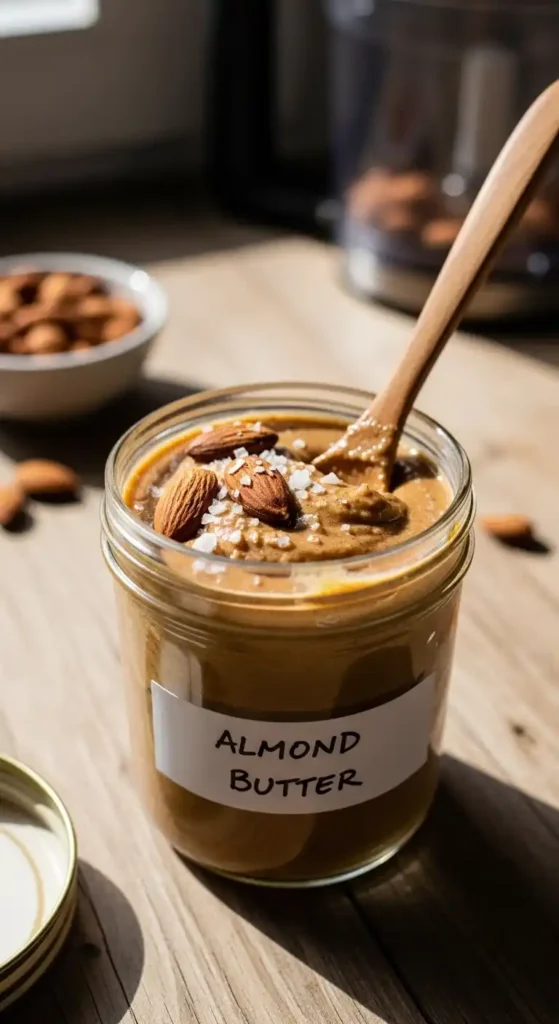
- Store smartly. Transfer to a jar with a tight lid. It keeps for 2–3 weeks in the fridge or longer in the freezer. Stir before using if separation happens.
Why This Recipe is Awesome
This almond butter is smooth, slightly roasted, and ridiculously easy. It’s idiot-proof, even I didn’t mess it up.
No fancy equipment required—just a blender or food processor and a dash of patience.
Bonus: you control the sweetness and salt, so it tastes like your kitchen decided to treat you right.
Ingredients You’ll Need
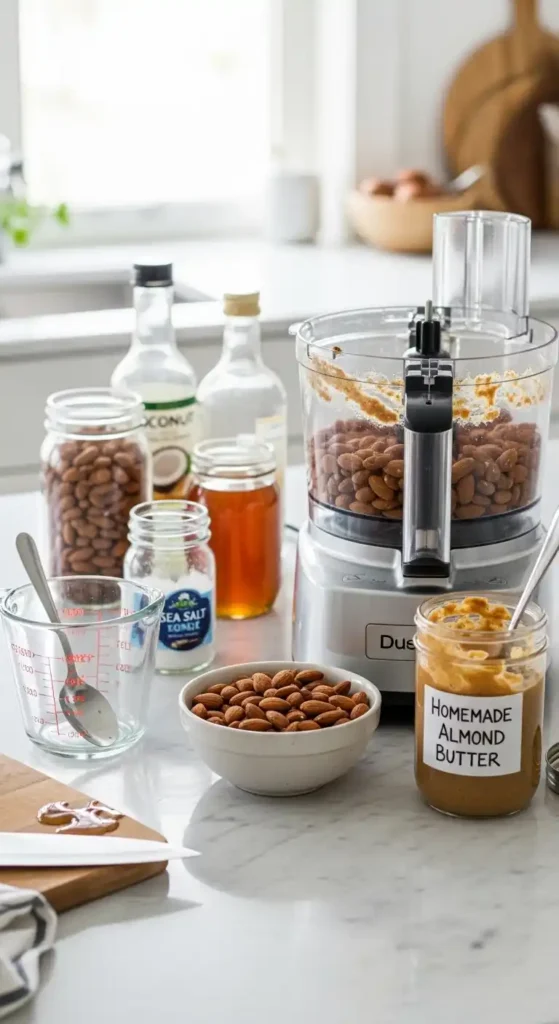
- 2 cups raw almonds (roasted at home for deeper flavor if you like)
- 1/2 teaspoon salt (adjust to taste)
- 1–2 tablespoons neutral oil (like light olive oil or avocado oil), optional
- 1–2 teaspoons honey or maple syrup (optional for a touch of sweetness)
Step-by-Step Instructions
- Toast the almonds (if they aren’t already roasted). Spread on a baking sheet and bake at 350°F (175°C) for 8–10 minutes, stirring once. Let them cool slightly. This step boosts flavor and makes blending easier.
- Pulse to break down. Add cooled almonds to your blender or food processor. Pulse in short bursts until you hear a gritty meal forming, then a crumbly butter crumb starts to appear.
- Go smooth. Keep blending, scraping down the sides as needed. It may take 5–10 minutes total. Be patient—the oils will release, and the texture will turn velvety.
- Season and adjust. Add salt, and if you like, honey or maple syrup. Blend another minute to combine. If it looks dry, drizzle in oil a teaspoon at a time until you reach your preferred consistency.
- Store smartly. Transfer to a jar with a tight lid. It keeps for 2–3 weeks in the fridge or longer in the freezer. Stir before using if separation happens.
How to Serve
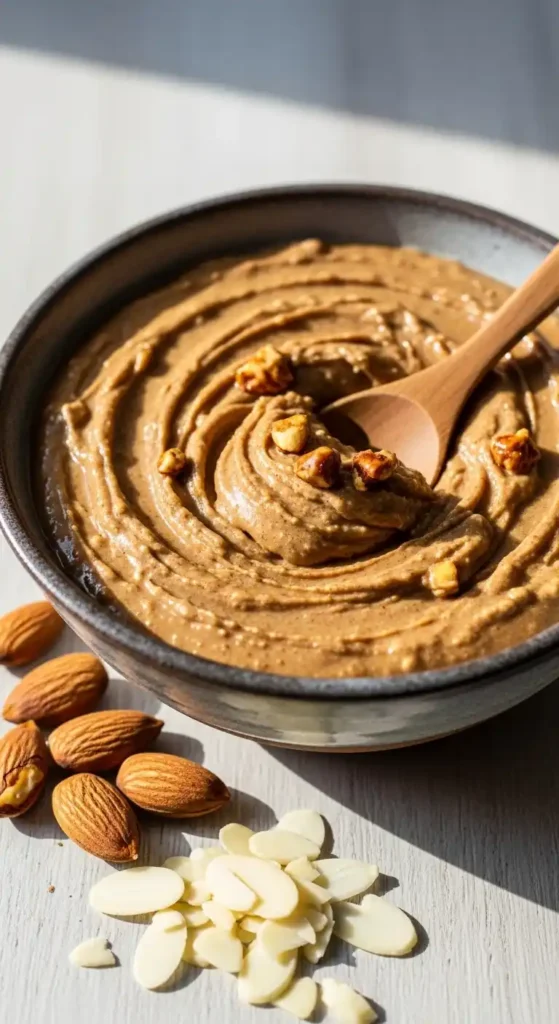
– Spread on toast, a rice cake, or a cinnamon swirl bagel for a quick breakfast clutch.
– Dollop into smoothies for extra creaminess or swirl into oats for a cozy bowl.
– Use as a dip for apple slices, celery sticks, or pretzels when you’re feeling snacky.
– Add a pinch of cocoa powder for a chocolatey twist, or sprinkle with sesame seeds for texture.
– Pair with coffee for a bold, slightly nutty latte vibe (yes, it’s a thing).
– Creative serving idea: set up a mini “almond butter bar” with toppings like sliced bananas, chia seeds, dark chocolate shavings, and a drizzle of honey. Instant fancy snack station.
Approximate Nutrition Facts per Serving
Per serving (approximate, because we live in reality):
– Calories: about 180–210
– Carbohydrates: 6–8 g
– Protein: 5–6 g
– Fat: 15–18 g
– Fiber: 3–4 g
– Sugar: 1–3 g (depending on whether you added sweetener)
Note: values vary with exact ingredients and serving size. This is a friendly ballpark, not a lab report.
Common Mistakes
– Skipping the toasting step. You’ll miss that nutty depth and end up with a flatter flavor.
– Adding too much oil at once. You’ll get a greasy, not-nice texture. Add a little oil as needed.
– Blending too short. Your butter will be gritty and sad. Let it run— patience pays.
– Refrigerating right away after blending. It’s not a solid, hard butter yet; give it a minute to settle at room temp, or you’ll miss the creaminess.
– Overloading the blender with too many nuts. Small batches blend more evenly and faster.
Simple Substitutions
– Use roasted almonds instead of raw for a richer flavor without extra steps.
– Swap half the almonds for cashews if you want an extra creamy texture.
– If you’re sugar-averse, omit the sweetener entirely; the natural nuttiness shines through.
– For a savory twist, add a tiny pinch of garlic powder and a splash of soy sauce—great for making a savory dip or spread.
– Olive oil works, but if you have neutral oil like avocado oil, it keeps the flavor clean. You’ll barely taste it—promise.
– For a lower-fat version, blend until just silky and skip the extra oil entirely, but expect a crisper bite rather than a melt-in-your-mouth smoothness.
Conclusion
Homemade almond butter is a tiny project with a big payoff. It tastes cleaner, fresher, and more personal than the store-bought stuff, and you can tailor it to your exact mood—saltier, sweeter, or purely nutty.
This jar is your new pantry MVP, ready to spread, dip, and swirl into your daily routine.
FAQ
Can I use a blender instead of a food processor?
Blenders work, but a food processor is ideal because it handles nuts more evenly and stops you from overheating the appliance. If you’re using a blender, you may need to stop and scrape more often and add a little oil to help it along.
How long will it last in the fridge?
About 2–3 weeks in the fridge. For longer storage, freeze in small portions and thaw as needed. If you notice a sour smell or mold, toss it—don’t risk a disappointing spoonful.
Is it okay to add flavors?
Absolutely. Cinnamon, vanilla, cocoa powder, or a touch of honey can change the vibe. Start with tiny amounts and taste as you go so you don’t overdo it.
My blender isn’t blending smoothly. What now?
Scrape the sides, give it a few more pulses, and consider adding a teaspoon of oil or a splash of water to loosen. If your blender is struggling, switch to a processor or blend in smaller batches.
Can I make it without roasting the almonds?
Yes, you can use raw almonds, but roasting deepens flavor and improves texture. If you skip roasting, just blend longer and keep an eye on the texture—it will still be tasty.
What if I want a chunky texture?
Pulse in short bursts with a handful of almonds left chunky at the end. Or mix in chopped roasted almonds after the smooth stage for a rustic feel.


