

What Is the Difference Between a Pot and a Pan? A Complete Kitchen Guide
If you’re new to cooking or even just upgrading your kitchen tools, you’ve probably asked yourself: what is the difference between a pot and a pan? While both are essential cookware items, they serve different purposes and are designed for specific cooking tasks.
Understanding the difference can help you cook more efficiently, choose the right tool for each recipe, and even improve your overall results.
In this guide, we’ll break it all down in a simple, practical way so you can feel confident in your kitchen.
What Is a Pot?
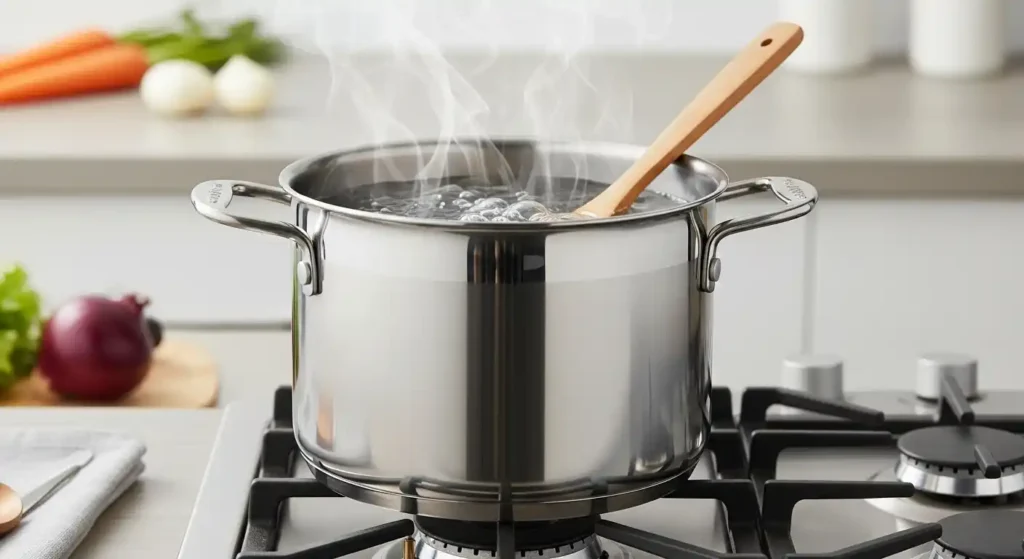
A pot is a deep cooking vessel with high, straight sides and usually two small handles on either side. Pots are designed to hold larger quantities of liquid and are typically used for boiling, simmering, or slow cooking.
Key Features of a Pot
- Deep structure for holding liquids
- Straight sides to prevent splashing
- Larger capacity compared to pans
- Two handles for easy lifting
- Often comes with a lid
Pots come in various sizes, from small saucepots to large stockpots used for cooking big batches of food.
What Is a Pan?
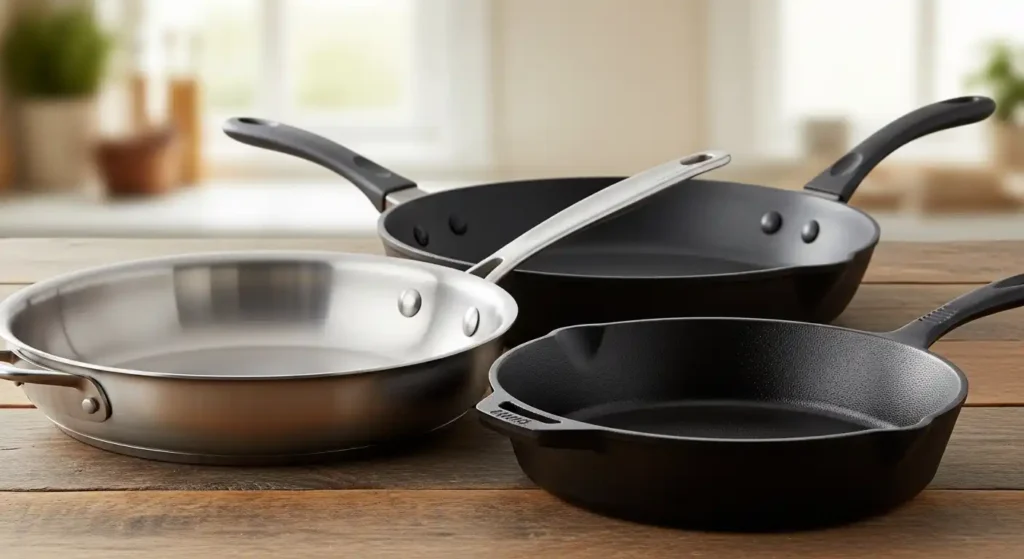
A pan is a broader, shallower piece of cookware with low or sloped sides and usually one long handle. Pans are designed for cooking methods that require more surface area and quicker heat exposure.
Key Features of a Pan
- Wide, flat base
- Low or sloped sides
- Single long handle
- Quick heat response
- Ideal for stirring, flipping, or sautéing
Common types of pans include frying pans, skillets, and sauté pans.
What Is the Difference Between a Pot and a Pan?
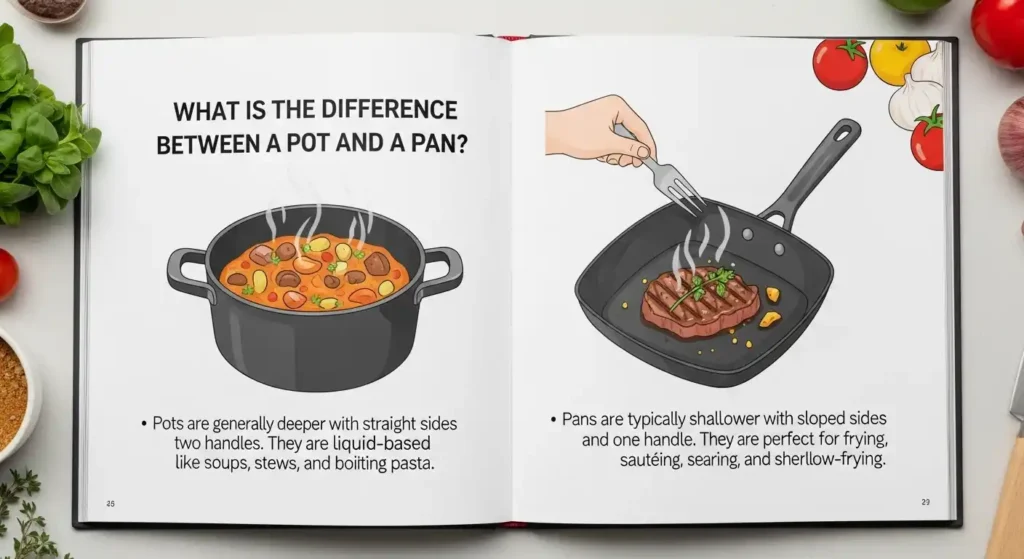
The main differences between pots and pans come down to shape, depth, function, and cooking style. Let’s explore these in detail.
1. Depth and Shape
- Pot: Deep with high sides
- Pan: Shallow with low or sloped sides
This is the most noticeable difference. Pots are designed to contain liquids, while pans allow for easy access to food.
2. Cooking Purpose
- Pot: Best for boiling, simmering, and slow cooking
- Pan: Best for frying, sautéing, and searing
Pots are ideal for dishes that require liquid, while pans are better for dry or quick cooking methods.
3. Surface Area
- Pot: Smaller surface area, larger volume
- Pan: Larger surface area, less depth
Pans provide more space for food to spread out, which helps with browning and even cooking.
4. Heat Distribution
Pans heat up quickly due to their wide surface, making them perfect for fast cooking.
Pots heat more slowly but retain heat well, which is ideal for long cooking processes like simmering soups or stews.
5. Handling and Design
- Pot: Usually has two side handles for lifting
- Pan: Typically has one long handle for easy movement
This design difference reflects how each is used during cooking.
When Should You Use a Pot?
A pot is your go-to cookware for recipes that involve liquids or require longer cooking times.
Best Uses for a Pot
- Boiling pasta or noodles
- Cooking rice or grains
- Making soups and stews
- Simmering sauces
- Preparing large batches of food
If your recipe includes a lot of liquid or needs slow cooking, a pot is usually the best choice.
When Should You Use a Pan?
A pan is perfect for recipes that require quick cooking and direct heat.
Best Uses for a Pan
- Frying eggs or vegetables
- Sautéing ingredients
- Browning or searing food
- Making pancakes or flatbreads
- Cooking quick meals
If you need to stir, flip, or cook something quickly, a pan is the right tool.
Types of Pots
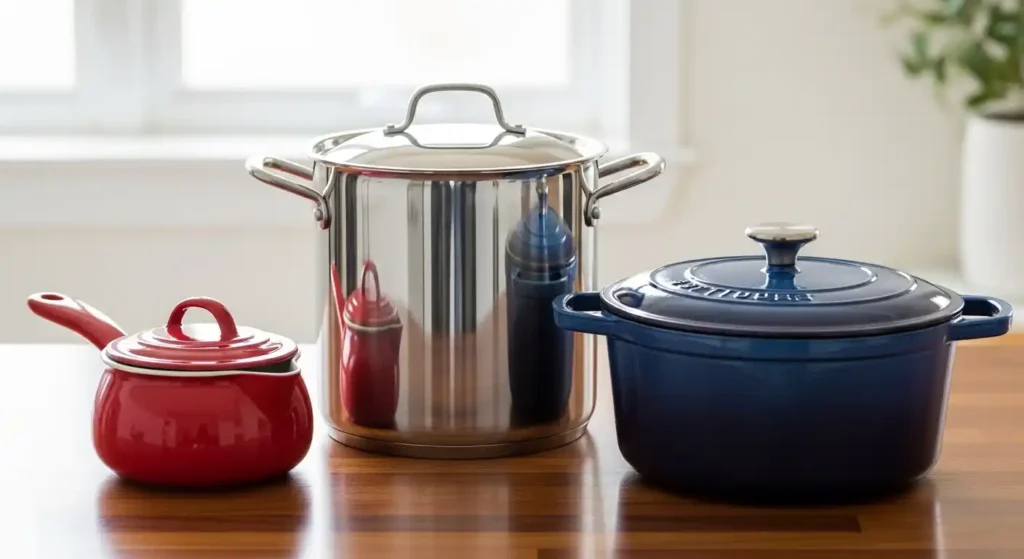
There are several types of pots, each designed for specific cooking tasks.
Stockpot
Large and deep, perfect for soups, stews, and boiling large amounts of water.
Saucepot
Slightly smaller, ideal for cooking grains, sauces, or smaller meals.
Dutch Oven
Heavy pot with a lid, great for slow cooking and braising.
Types of Pans
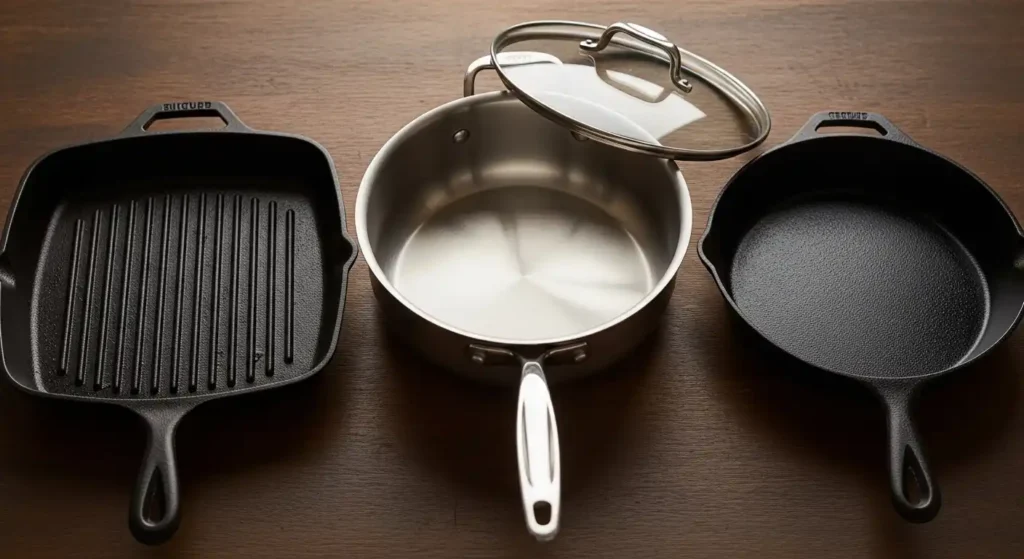
Pans also come in different varieties, each suited to specific cooking styles.
Frying Pan (Skillet)
Flat and wide, perfect for frying and sautéing.
Sauté Pan
Has slightly higher sides than a frying pan, ideal for cooking with a bit more liquid.
Grill Pan
Features ridges for grilling food indoors.
Can You Substitute a Pot for a Pan?
In some cases, you can substitute one for the other, but it depends on the recipe.
Using a Pot Instead of a Pan
You can use a pot for frying or sautéing, but:
- The high sides may trap steam
- Food may not brown as well
- Stirring can be less convenient
Using a Pan Instead of a Pot
You can use a pan for boiling or simmering small quantities, but:
- It may not hold enough liquid
- There’s a higher risk of spilling
For best results, it’s always ideal to use the cookware designed for the specific task.
Materials Used in Pots and Pans
Both pots and pans are made from similar materials, which affect their performance.
Stainless Steel
- Durable and long-lasting
- Non-reactive with foods
- Great for everyday cooking
Nonstick
- Easy to clean
- Requires less oil
- Best for delicate foods
Hard-Anodized Aluminum
- Excellent heat distribution
- Lightweight and durable
- Often includes a nonstick coating
Choosing the right material depends on your cooking style and preferences.
Do You Need Both in Your Kitchen?
The short answer is yes. Pots and pans serve different purposes, and having both allows you to cook a wide variety of dishes efficiently.
Why You Need a Pot
- Essential for boiling and simmering
- Great for large meals
- Necessary for soups and grains
Why You Need a Pan
- Ideal for quick cooking
- Perfect for frying and sautéing
- Useful for everyday meals
Most kitchens benefit from having at least one pot and one pan in different sizes.
Tips for Choosing the Right Cookware
When selecting pots and pans, keep these tips in mind:
- Choose the right size based on your cooking needs
- Look for sturdy, well-balanced handles
- Consider materials that suit your cooking style
- Invest in quality for long-term use
Good cookware can make cooking easier and more enjoyable.
Care and Maintenance Tips
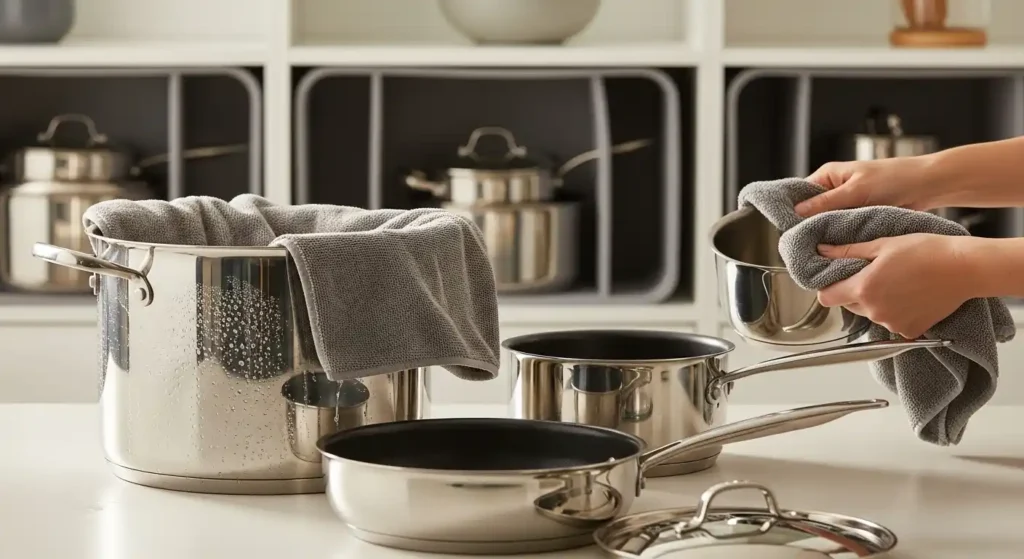
To keep your pots and pans in good condition:
- Clean them with mild soap and a soft sponge
- Avoid using metal utensils on nonstick surfaces
- Dry thoroughly after washing
- Store carefully to prevent scratches
Proper care ensures your cookware lasts for years.
Final Thoughts
So, what is the difference between a pot and a pan? It all comes down to their design and purpose.
- A pot is deep, designed for liquids, and perfect for boiling and simmering.
- A pan is shallow, designed for quick cooking, and ideal for frying and sautéing.
Both are essential tools in the kitchen, and understanding how to use them properly can improve your cooking results and make your time in the kitchen more efficient.
Whether you’re preparing a simple meal or experimenting with new recipes, having the right cookware—and knowing how to use it—makes all the difference.


