

Foolproof Garlic Herb Focaccia Bread Recipe for Beginners
This foolproof garlic herb focaccia bread recipe for beginners is here to save the day—and your confidence.
It’s soft, fluffy, golden on top, and smells so good your neighbors might “accidentally” stop by.
Best part? You don’t need fancy skills or bakery-level patience.
If you can stir, poke dough with your fingers, and turn on an oven, you’re already overqualified.
Why This Recipe Is Awesome
First of all, this focaccia is ridiculously forgiving. Forgot about the dough for an extra 20 minutes? It won’t hold a grudge.
Used slightly warm water instead of perfectly measured lukewarm? Still works. Honestly, this bread wants you to succeed.
Second, the garlic + herb combo does all the heavy lifting. Even if your shaping skills are questionable, the flavor screams “I know what I’m doing.”
IMO, focaccia is the confidence-boosting best friend of beginner bakers everywhere.
And let’s not ignore the texture. This bread comes out pillowy inside, crisp on the edges, and drenched in olive oil goodness.
Store-bought bread could never.
Ingredients You’ll Need
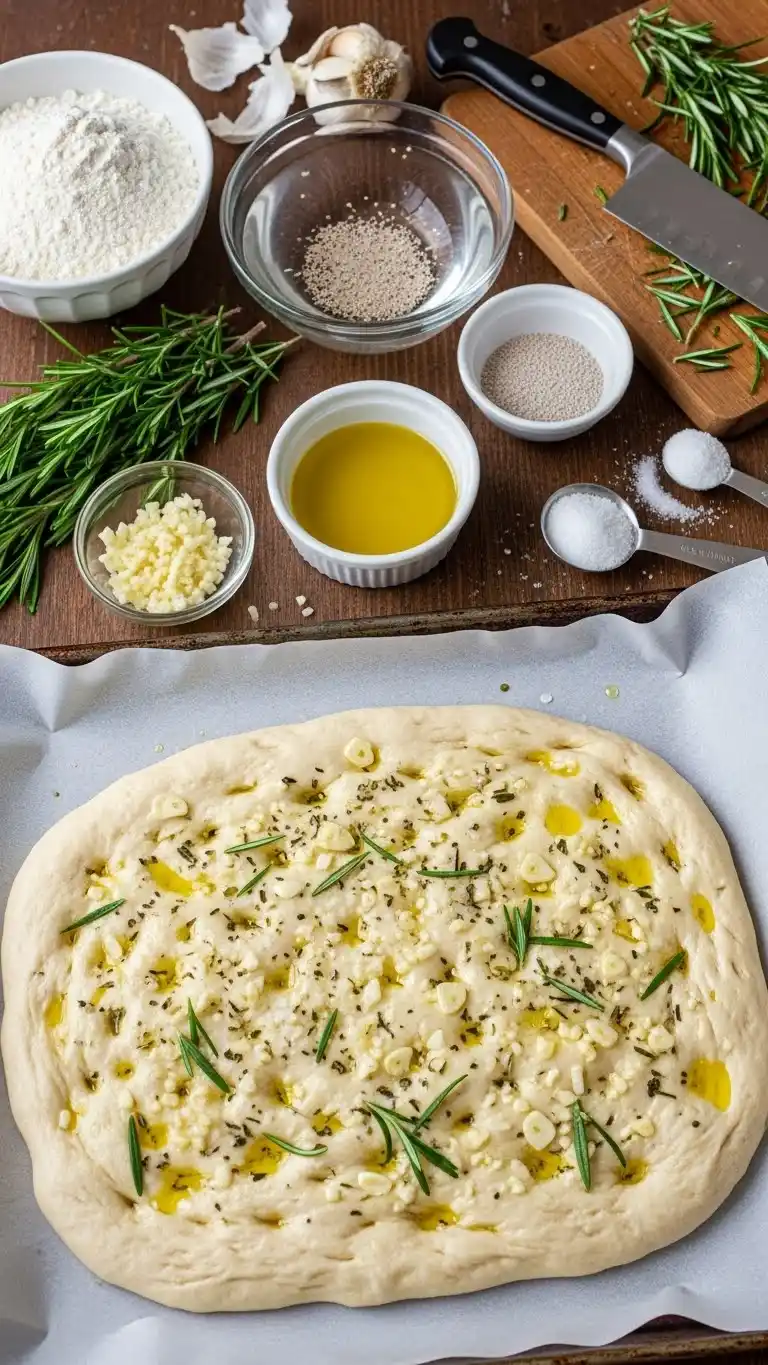
Nothing fancy. No mystery ingredients. Just solid pantry staples doing their thing.
- Warm water – Not hot. Think “comfortable bath,” not “lava.”
- Active dry yeast – The magic that makes bread fluffy.
- Sugar – Just a pinch to wake up the yeast, not to sweeten the bread.
- All-purpose flour – Simple, reliable, no drama.
- Olive oil – Be generous. Focaccia thrives on it.
- Salt – Because bland bread is a crime.
- Fresh garlic – The more, the merrier. Measure with your heart.
- Dried or fresh herbs – Rosemary, thyme, oregano, or whatever you love.
- Flaky sea salt – Optional, but highly encouraged for that bakery vibe.
Bold tip: Use good olive oil. You’ll taste it.
Step-by-Step Instructions
1. Wake Up the Yeast
Mix warm water, sugar, and yeast in a bowl. Stir once and let it sit for 5–10 minutes. If it gets foamy and smells like bread dreams, you’re golden. If not… your yeast might be expired (rude).
2. Make the Dough
Add flour, salt, and olive oil to the yeast mixture. Stir until a sticky, shaggy dough forms. It will look messy. That’s normal. This dough prefers rustic charm over perfection.
3. First Rise (a.k.a. Do Nothing Time)
Cover the bowl and let the dough rise until doubled, about 1–1½ hours. Put it somewhere warm and forget about it. This is your break—use it wisely.
4. Prep the Pan
Drizzle olive oil generously into a baking pan. Transfer the dough in, then flip it once so it’s fully coated. Oil = flavor + no sticking. Win-win.
5. The Famous Focaccia Dimple
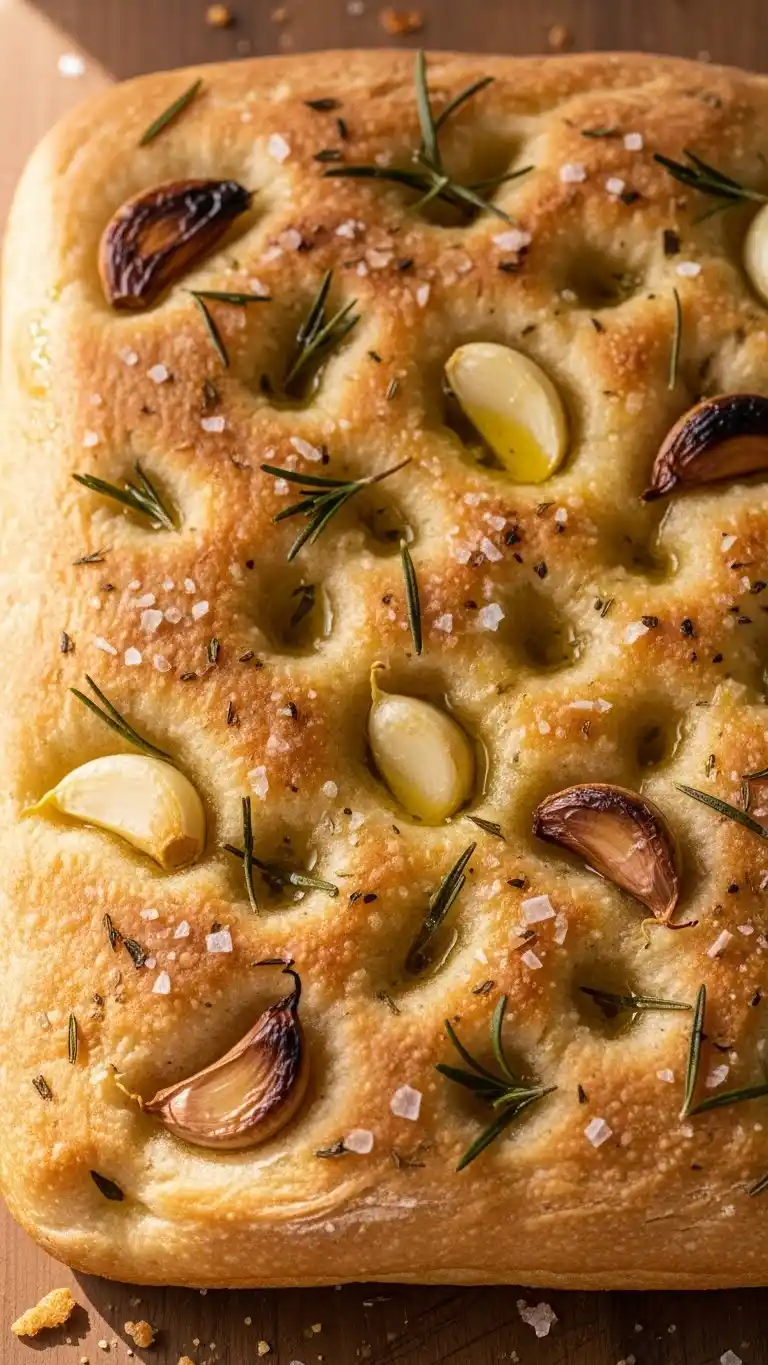
Using oiled fingers, gently press dents all over the dough. Don’t be shy—this is the fun part. Those dimples hold olive oil and flavor like tiny bread pockets.
6. Second Rise
Cover and let it rise again for 20–30 minutes. Yes, again. Bread likes attention.
7. Add the Toppings
Drizzle more olive oil (because obviously), sprinkle garlic, herbs, and flaky salt. This is where it starts smelling unfairly good.
8. Bake
Bake at 400°F (200°C) for 20–25 minutes until golden and irresistible. Cool slightly, then try not to eat half the pan immediately.
Common Mistakes to Avoid
- Skipping the olive oil – This isn’t diet bread. Embrace the oil.
- Killing the yeast with hot water – Warm, not hot. Yeast has feelings.
- Overthinking the dough texture – Sticky is good. Dry is not.
- Under-seasoning – Focaccia loves salt and herbs. Be generous.
- Not letting it rise enough – Patience = fluffier bread.
Rookie mistakes happen. This recipe forgives most of them.
Alternatives & Substitutions
- No fresh garlic? Garlic powder works in a pinch, but fresh is king.
- Gluten-free flour? Use a 1:1 gluten-free blend, but expect a slightly different texture.
- Want cheese? Sprinkle shredded mozzarella or parmesan before baking. Highly recommended.
- Herb swap? Basil, sage, or even za’atar work beautifully.
- Whole wheat flour? Replace up to half the flour for a heartier loaf.
FYI, focaccia is basically a blank canvas. Play with it.
FAQ (Frequently Asked Questions)
Do I really not need to knead this dough?
Yep. Minimal mixing does the job. Lazy bakers, rejoice.
Can I make the dough ahead of time?
Absolutely. Let it rise in the fridge overnight for extra flavor.
Why is my dough so sticky?
Because focaccia dough is supposed to be sticky. Trust the process.
Can I freeze focaccia?
Yes! Slice it, wrap it well, and freeze for up to 2 months.
Can I use instant yeast instead?
Sure. Skip the blooming step and mix it straight into the flour.
Why didn’t mine get fluffy?
Usually under-proofing or old yeast. Bread is picky like that.
Final Thoughts
If you’ve ever been intimidated by bread baking, this foolproof garlic herb focaccia bread recipe for beginners is your redemption arc.
It’s cozy, flavorful, and wildly impressive for how little effort it actually takes.
Serve it with soup, salad, or just rip pieces off and dunk them in olive oil like a happy carb-loving human.
Go bake it. Impress someone. Or don’t—eat it all yourself. You’ve earned it.
Garlic Herb Focaccia Bread Recipe
Ingredients
- Warm water – Not hot. Think “comfortable bath ” not “lava.”
- Active dry yeast – The magic that makes bread fluffy.
- Sugar – Just a pinch to wake up the yeast not to sweeten the bread.
- All-purpose flour – Simple reliable, no drama.
- Olive oil – Be generous. Focaccia thrives on it.
- Salt – Because bland bread is a crime.
- Fresh garlic – The more the merrier. Measure with your heart.
- Dried or fresh herbs – Rosemary thyme, oregano, or whatever you love.
- Flaky sea salt – Optional but highly encouraged for that bakery vibe.
- Bold tip: Use good olive oil. You’ll taste it.
Instructions
- Wake Up the Yeast
- Mix warm water, sugar, and yeast in a bowl. Stir once and let it sit for 5–10 minutes. If it gets foamy and smells like bread dreams, you’re golden. If not… your yeast might be expired (rude).
- Make the Dough
- Add flour, salt, and olive oil to the yeast mixture. Stir until a sticky, shaggy dough forms. It will look messy. That’s normal. This dough prefers rustic charm over perfection.
- First Rise (a.k.a. Do Nothing Time)
- Cover the bowl and let the dough rise until doubled, about 1–1½ hours. Put it somewhere warm and forget about it. This is your break—use it wisely.
- Prep the Pan
- Drizzle olive oil generously into a baking pan. Transfer the dough in, then flip it once so it’s fully coated. Oil = flavor + no sticking. Win-win.
- The Famous Focaccia Dimple
- Using oiled fingers, gently press dents all over the dough. Don’t be shy—this is the fun part. Those dimples hold olive oil and flavor like tiny bread pockets.
- Second Rise
- Cover and let it rise again for 20–30 minutes. Yes, again. Bread likes attention.
- Add the Toppings
- Drizzle more olive oil (because obviously), sprinkle garlic, herbs, and flaky salt. This is where it starts smelling unfairly good.
- Bake
- Bake at 400°F (200°C) for 20–25 minutes until golden and irresistible. Cool slightly, then try not to eat half the pan immediately.
Nutritional Value (per slice, approx.)
- Calories: 210–230 kcal
- Carbohydrates: 34g
- Protein: 6g
- Fat: 7g
- Fiber: 2g
- Sugar: 1–2g
Values vary based on olive oil amount and toppings used.


