

How to Clean Calphalon Pans: The Ultimate Guide for a Spotless Kitchen
If you’re a home chef—or just someone who likes your cookware to last a lifetime—you’ve probably invested in a set of Calphalon pans.
These beauties are known for their durability, nonstick surfaces, and sleek design.
But let’s be real: even the fanciest pan can look like it’s been through a battlefield after a few weeks of serious cooking.
Grease, baked-on food, and those mysterious brown spots that appear out of nowhere can make any pan feel like a nightmare to clean.
The good news? Learning how to clean Calphalon pans properly can save your cookware, keep your food tasting amazing, and prevent those frustrating scratches that ruin your nonstick surface.
In this guide, we’ll go over everything from everyday maintenance to deep cleaning, so your pans stay gleaming and ready for action.
Why Proper Care Matters
You might think, “It’s just a pan, why bother?”
But the truth is, nonstick cookware like Calphalon is an investment.
Using the wrong cleaning methods can warp the pan, peel the nonstick coating, or leave behind stubborn stains that no sponge can handle.
By taking a few extra minutes to clean your pans the right way, you’ll:
- Extend the lifespan of your cookware
- Keep your nonstick surface smooth and scratch-free
- Avoid unpleasant smells from leftover grease
- Keep your kitchen looking polished and organized
Plus, let’s face it—there’s nothing more satisfying than a pan that looks brand new, even after months of heavy use.
Everyday Cleaning: How to Keep Your Calphalon Pans Spotless
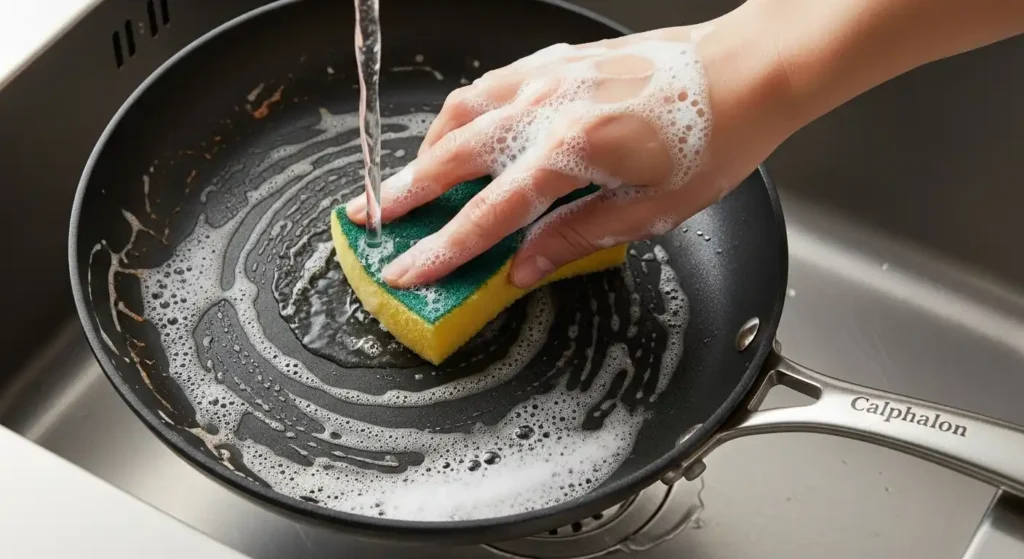
For routine cleaning after cooking, the process is pretty simple. Here’s a step-by-step guide:
- Cool Your Pan: Always let your Calphalon pan cool before washing. Sudden temperature changes can warp the metal and damage the nonstick coating.
- Warm, Soapy Water: Use warm water and a gentle dish soap. Avoid harsh detergents—they can strip the nonstick coating over time.
- Soft Sponge or Cloth: Never use steel wool or abrasive pads. A soft sponge or dishcloth will remove most food residue without scratching the surface.
- Rinse and Dry: Rinse thoroughly to remove soap, then dry with a soft towel. Avoid air-drying, which can leave water spots.
Pro tip: If food is stuck, soak the pan in warm soapy water for 10–15 minutes before scrubbing gently. This avoids harsh scrubbing and keeps your nonstick coating intact.
Removing Stubborn Stains
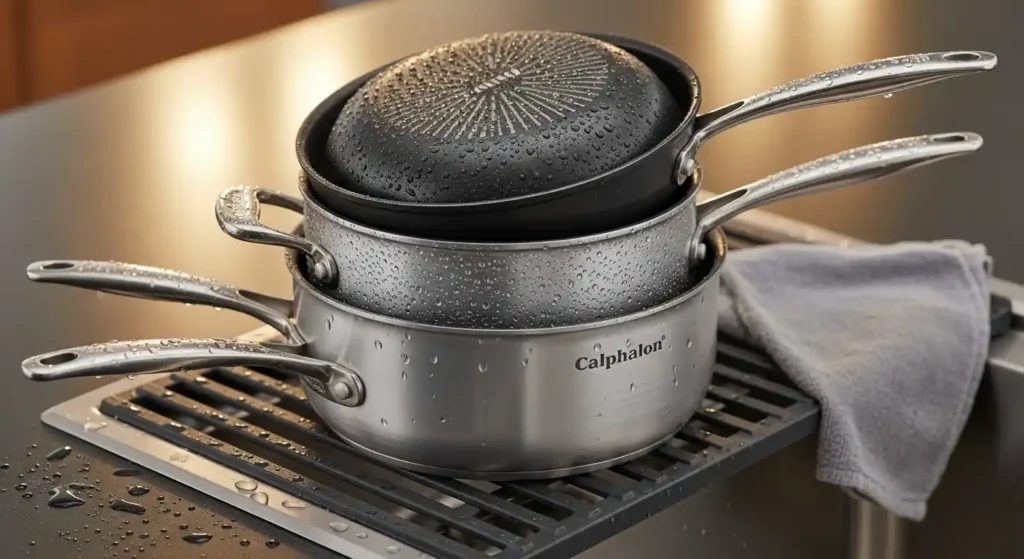
Sometimes a simple wash isn’t enough. Grease, burnt cheese, or sauces can leave marks that won’t budge.
Don’t panic—there’s a way to tackle even the toughest stains on your Calphalon pans:
- Baking Soda Paste: Mix baking soda with a little water to form a thick paste. Apply it to the stains and let it sit for 15–20 minutes.
- Gentle Scrub: Use a soft sponge to scrub the paste in circular motions. The baking soda acts as a mild abrasive, lifting stains without harming the nonstick surface.
- Rinse Thoroughly: Make sure all paste residue is removed, then dry the pan completely.
Baking soda is a lifesaver for stubborn spots—it’s safe, natural, and effective.
Plus, it’s much gentler than chemical cleaners, which can damage your pan over time.
Deep Cleaning: When Your Pans Need Extra TLC
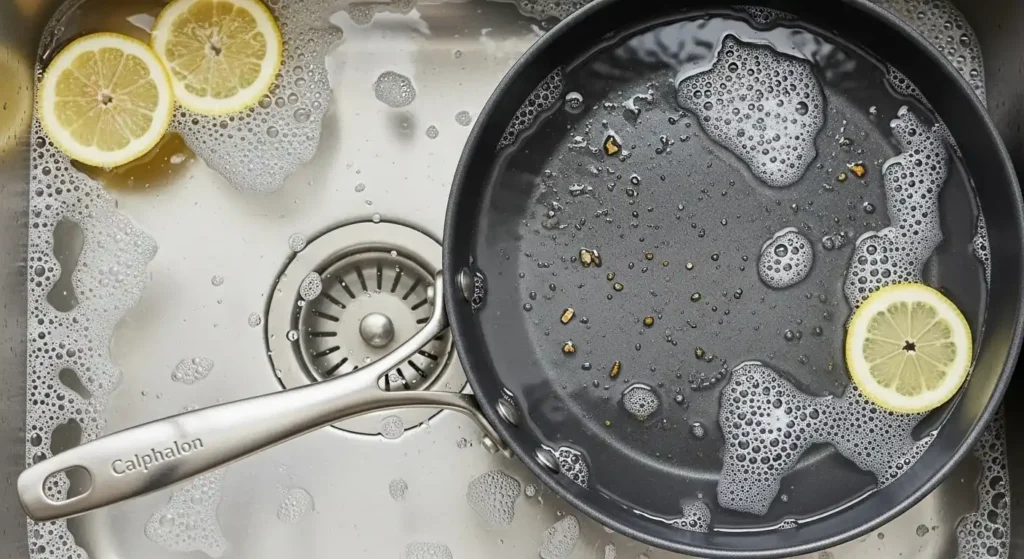
If your Calphalon pan has started looking dull or has built-up grease that regular washing won’t remove, it’s time for a deep clean.
Here’s how:
- Create a Soak Solution: Fill your sink with hot water and add a few drops of dish soap. For extra power, add a couple of tablespoons of white vinegar.
- Soak the Pan: Let your pan soak for 30–60 minutes. This loosens baked-on food and grease.
- Use a Non-Scratch Scrubber: After soaking, gently scrub with a soft sponge or nylon scrubber. Focus on areas with stubborn buildup.
- Rinse and Dry: Thoroughly rinse off all soap and vinegar. Dry with a soft cloth to prevent water spots.
Deep cleaning isn’t something you need to do every day—once a month or so is usually enough, depending on how often you cook.
Common Mistakes to Avoid
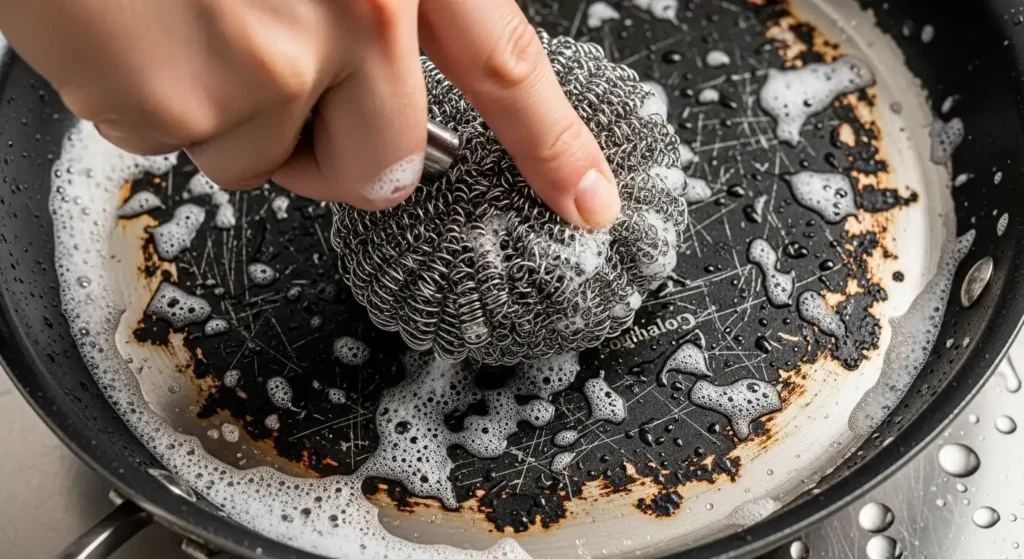
Even experienced cooks make mistakes when cleaning Calphalon pans.
Here’s what NOT to do:
- Don’t use metal utensils or scrubbers: These scratch the nonstick surface.
- Don’t put your pan in the dishwasher: Dishwashing detergents and high heat can dull and damage the coating.
- Avoid cooking sprays: They can leave a residue that is tough to clean.
- Never boil your pan dry: This can warp the metal and ruin the surface.
Avoiding these pitfalls will keep your pans looking and performing like new for years.
Tips for Maintaining Your Pans
Proper cleaning is important, but maintenance goes hand-in-hand.
Here’s how to keep your Calphalon pans in top condition:
- Use low to medium heat: High heat can warp pans and degrade nonstick surfaces.
- Use wooden, silicone, or plastic utensils: Metal knives or spoons scratch the surface.
- Store carefully: Stack pans with a soft cloth or paper towel between them to avoid scratches.
- Season your pan occasionally: Lightly rub a little cooking oil on the surface to maintain the nonstick coating.
Eco-Friendly Cleaning Options

If you’re into natural cleaning solutions, there are plenty of eco-friendly ways to keep your Calphalon pans spotless:
- Baking soda + vinegar: Great for stubborn stains and safe for nonstick surfaces.
- Lemon juice: Acts as a natural degreaser and leaves a fresh scent.
- Salt scrubs: Coarse salt with a little oil can remove stuck-on food without chemicals.
These methods are not only effective but also chemical-free, keeping your kitchen healthier.
When to Replace Your Pan
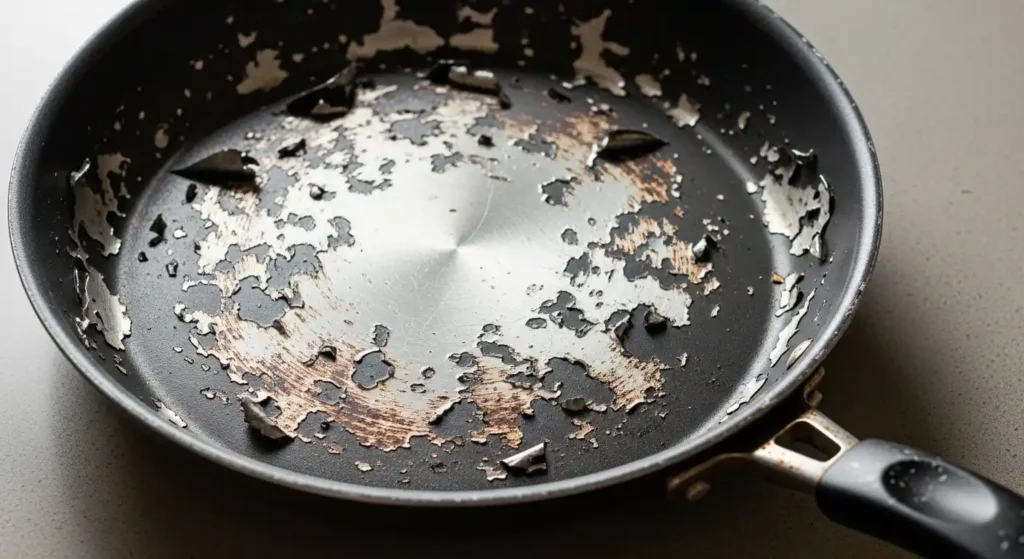
Even with the best care, nonstick pans don’t last forever. Signs that your Calphalon pan may need replacing:
- Peeling or flaking coating: If the nonstick surface is peeling, it’s time to retire the pan.
- Warping: If the pan no longer sits flat, it won’t cook evenly.
- Persistent stains or odor: Sometimes buildup is too stubborn and affects taste.
Replacing a pan is normal—nonstick cookware has a lifespan of several years if cared for properly.
Final Thoughts
Learning how to clean Calphalon pans properly is more than just keeping your kitchen neat.
It’s about protecting your investment, making cooking easier, and ensuring your meals taste their best.
By sticking to gentle cleaning methods, avoiding harsh chemicals, and maintaining your pans carefully, you’ll enjoy years of nonstick bliss.
Remember: cool, soapy water, soft sponges, occasional deep cleaning with baking soda or vinegar, and avoiding metal utensils—these are your keys to pan perfection.
Treat your cookware well, and it will return the favor every time you cook.
With a little patience and care, your Calphalon pans will continue to shine, making meal prep a joy rather than a chore.
So go ahead, wash that pan, admire the gleam, and get cooking.
You’ve earned it!


