

How to Clean Stove Drip Pans: A Simple Guide to a Spotless Stove
Let’s be honest: stove drip pans are the unsung heroes of your kitchen.
They catch spills, grease, and the occasional overenthusiastic pot of sauce.
And yes, they get gross—fast.
Burnt-on food, stubborn stains, and greasy residue can make them look like a science experiment gone wrong.
But before you toss them in despair, breathe. Cleaning these little discs of doom isn’t as scary as it seems.
With a few simple tricks, you can restore them to shiny, grease-free glory.
If you’ve ever wondered how to clean stove drip pans efficiently without spending hours scrubbing, you’re in the right place.
In this guide, we’ll walk through everything from everyday maintenance to deep cleaning, plus tips to keep your stove looking brand-new.
Why Clean Stove Drip Pans Matter
You might be thinking, “It’s just a pan under my burners, why bother?” Here’s the deal: keeping drip pans clean isn’t just about looks.
Dirty drip pans can:
- Affect how evenly your burners heat
- Cause smoke and lingering odors when cooking
- Make your kitchen look messy even if everything else is sparkling
- Attract pests if grease is left unchecked
So cleaning your drip pans isn’t just a chore—it’s part of keeping your kitchen hygienic, functional, and safe. Plus, a sparkling stove just makes cooking more satisfying.
Everyday Cleaning: Quick and Easy
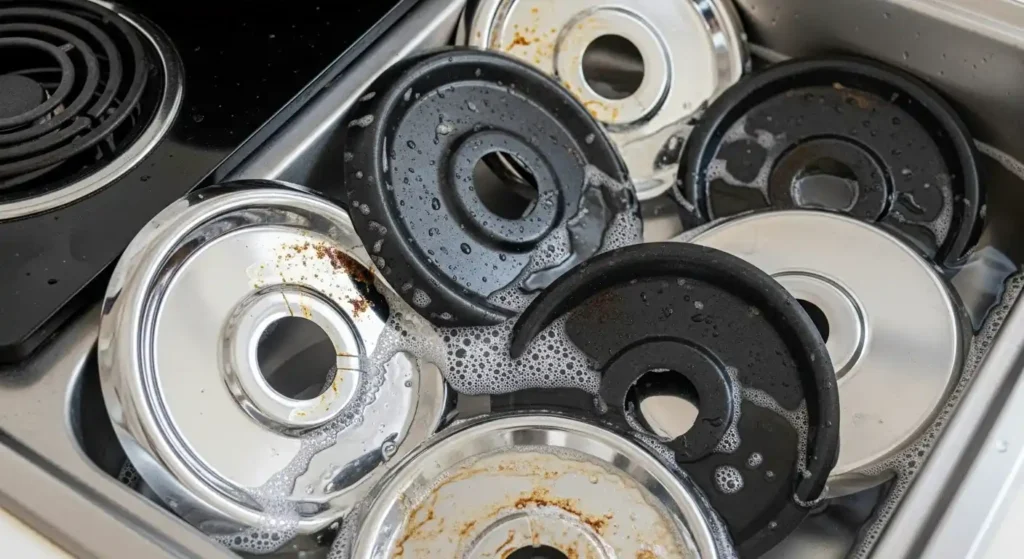
For minor spills and everyday grease, you don’t need a full-scale scrubbing operation. Here’s the simple method:
- Remove the Drip Pans: Make sure your stove is off and cool before removing them. Most drip pans lift right out, but check your model’s manual if you’re unsure.
- Wipe with Warm, Soapy Water: Use a soft cloth or sponge with warm water and mild dish soap. Avoid harsh chemicals—they can damage the finish.
- Rinse and Dry: Thoroughly rinse with clean water and dry with a towel. Leaving water on the surface can cause rust or discoloration over time.
Pro tip: Keep a soft sponge near the stove for quick wipe-downs after cooking. Preventing buildup is much easier than removing it later.
Tackling Stubborn Stains
Sometimes everyday cleaning isn’t enough.
Burnt-on food, stubborn grease, or sugary spills can leave marks that won’t budge with just soap and water.
Don’t worry—you don’t need to buy harsh chemicals.
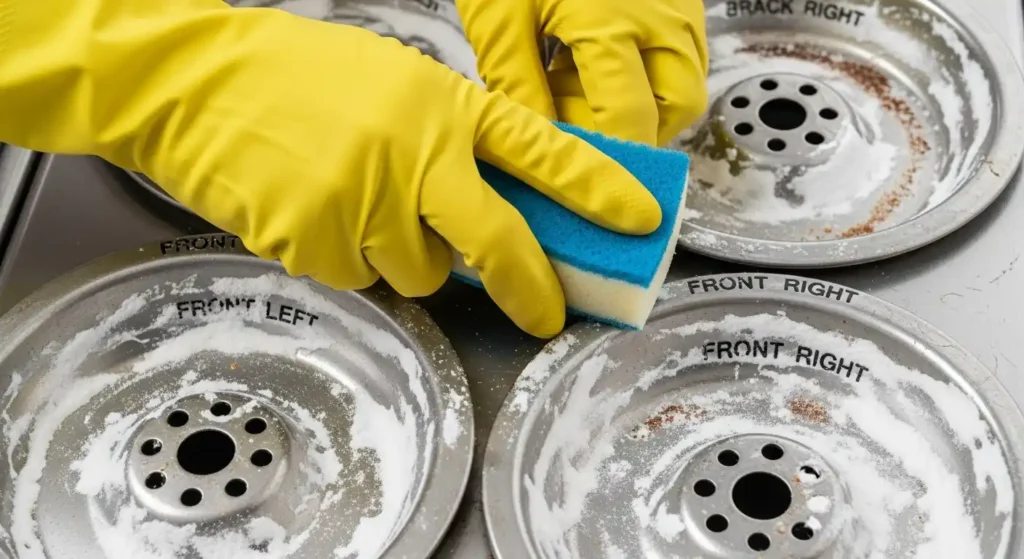
- Baking Soda Paste: Mix baking soda with a little water until it forms a thick paste. Spread this over the stained areas of the drip pans.
- Let It Sit: Allow the paste to sit for 15–30 minutes. Baking soda is mildly abrasive, so it works wonders on tough spots without scratching metal.
- Gentle Scrub: Use a soft sponge to scrub in circular motions. Most stains will lift with minimal effort.
- Rinse and Dry: Make sure all residue is gone, then dry thoroughly.
This method is especially helpful for stainless steel or aluminum drip pans, and it’s safe for non-toxic, eco-friendly cleaning.
Deep Cleaning: When Drip Pans Are Really Nasty
For drip pans that have seen better days—think months of burnt cheese, sugar spills, and hardened grease—you’ll need a more thorough approach. Here’s a tried-and-true method:
Soaking Method
- Remove the Pans: Always ensure they’re cool before handling.
- Create a Soak Solution: Fill a sink or large bowl with hot water and a few drops of dish soap. Add about 1–2 tablespoons of white vinegar for extra cleaning power.
- Soak: Submerge the drip pans for 1–2 hours. If they’re really bad, let them soak overnight.
- Scrub Gently: Use a non-abrasive scrubber to remove softened grime. Most burnt-on spots will lift easily after soaking.
- Rinse and Dry: Make sure to rinse thoroughly—any leftover soap can cause a film or residue. Dry completely before placing them back on the stove.
This method works on all types of stove drip pans, including metal, coated, or enamel varieties.
Common Mistakes to Avoid
Even seasoned cooks can make mistakes when cleaning drip pans. Avoid these errors to protect your pans and make cleaning easier:
- Don’t use steel wool or metal scrubbers: They scratch the surface and can make drip pans look worse.
- Avoid harsh chemical cleaners: They may damage enamel or nonstick coatings.
- Never wash hot drip pans with cold water: Sudden temperature changes can warp the metal.
- Don’t skip drying: Moisture left on the pan can cause rust, stains, or discoloration.
Following these rules will make your cleaning efforts last longer and keep your stove looking great.
Everyday Maintenance Tips
A little prevention goes a long way. By taking a few simple steps, you can reduce the time spent scrubbing:
- Wipe spills immediately: Don’t let sauce or oil sit. It’s easier to clean when fresh.
- Use burner liners: Aluminum or silicone liners catch spills and can be removed for easy cleaning.
- Rotate your pans: If you use multiple burners frequently, rotating drip pans can prevent uneven wear or discoloration.
- Light coat of oil: For stainless steel pans, a thin layer of oil can prevent rust.
Eco-Friendly Cleaning Alternatives
If you prefer chemical-free cleaning, you’ll love these natural solutions:
- Baking soda: Works on grease and stains. Safe and non-toxic.
- White vinegar: Great for breaking down tough grime and deodorizing.
- Lemon juice: Acts as a natural degreaser with a fresh scent.
- Salt scrubs: Coarse salt and a little water make a gentle abrasive paste for stubborn marks.
These methods are safe, effective, and keep your kitchen free from harsh chemicals.
When It’s Time to Replace Drip Pans
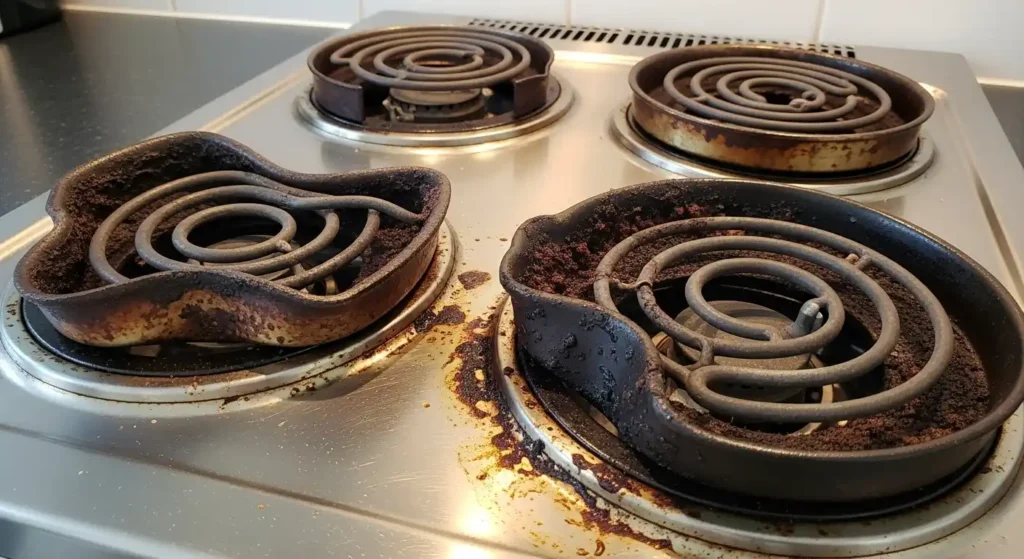
Even with the best care, drip pans don’t last forever. Here are signs it might be time to get new ones:
- Warped or bent pans: This can affect how your burners heat.
- Peeling or chipped coating: Damaged surfaces can stick to food and are hard to clean.
- Persistent stains or discoloration: Sometimes no amount of scrubbing will restore them.
Replacing your drip pans regularly ensures even cooking and keeps your stove looking pristine.
Final Thoughts
Learning how to clean stove drip pans properly isn’t just about appearance—it’s about functionality, hygiene, and overall cooking enjoyment.
With a combination of gentle everyday cleaning, deep soaking for stubborn stains, and regular maintenance, you can keep your drip pans in tip-top shape.
The key takeaways: cool pans before cleaning, use soft sponges, soak for tough spots, avoid harsh chemicals, and dry thoroughly.
Simple habits like wiping spills immediately and using burner liners can save you hours of scrubbing in the long run.
A clean stove isn’t just visually satisfying—it helps you cook more efficiently, reduces unwanted odors, and prevents the growth of bacteria or rust.
So next time your drip pans look like they’ve seen a food apocalypse, remember: a little baking soda, vinegar, or soaking is all it takes to bring them back to life.
Keep these tips handy, and your stove will not only shine but also make every cooking session a little more enjoyable.
Now, grab that sponge, put on some music, and restore your drip pans to their former glory—you’ve got this!


