

How to Keep Eggs From Sticking to Pan (So Breakfast Stops Winning the Fight)
Few kitchen moments feel more personal than flipping an egg and watching half of it stay glued to the pan like it has unresolved issues.
You wanted a perfect sunny-side-up or fluffy scramble. Instead, you’re scraping, sighing, and questioning your cookware choices.
If this sounds familiar, you’re not alone—and the good news is, it’s fixable.
Learning how to keep eggs from sticking to pan isn’t about luck or magic pans.
It’s about understanding heat, fat, timing, and a few small habits that make a huge difference.
Once you nail these, eggs become one of the easiest, most forgiving breakfasts instead of the most annoying.
Let’s break it all down so your eggs finally cooperate.
Why Eggs Stick in the First Place
Eggs are delicate and high in protein, and proteins love to bond with hot surfaces.
When an egg hits a pan that’s too hot, too cold, or improperly greased, those proteins latch on fast.
Add in the wrong pan material or rushed timing, and sticking becomes almost guaranteed.
It’s not that you’re bad at cooking eggs.
It’s that eggs are picky—and once you know what they want, they behave.
Choose the Right Pan (Yes, It Matters)
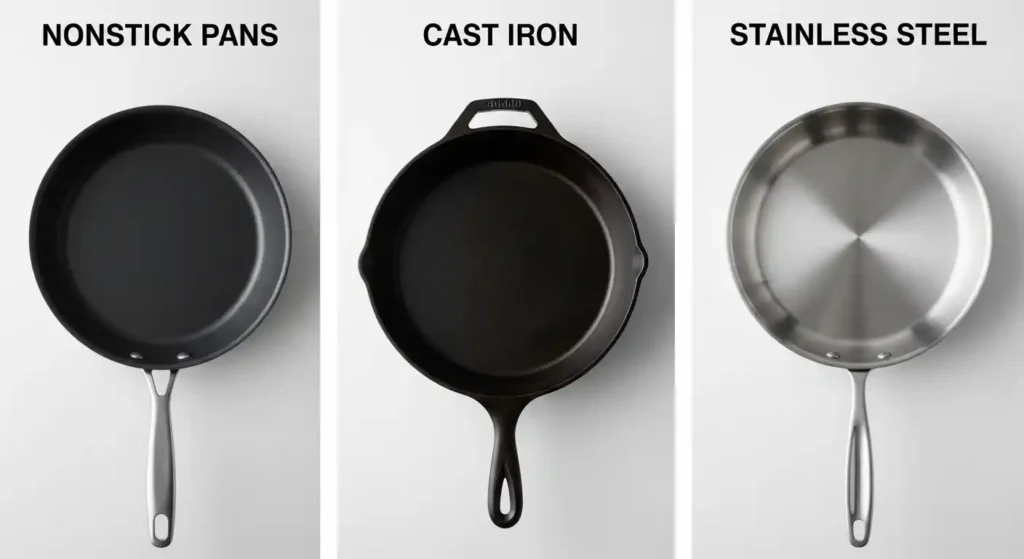
Not all pans are egg-friendly. Some are great for searing or sauces but absolutely terrible for eggs.
Nonstick Pans
This is the easiest option, especially for beginners.
A well-maintained nonstick pan practically begs eggs not to stick.
The key is keeping it in good shape—no metal utensils and no high heat abuse.
Cast Iron
Cast iron can work beautifully for eggs if it’s properly seasoned.
A well-seasoned cast iron pan creates a natural nonstick surface.
A poorly seasoned one creates egg chaos.
Stainless Steel
Stainless steel is the most challenging for eggs, but not impossible.
It requires correct preheating and enough fat.
If you rush this pan, eggs will stick. Every time.
If eggs are a regular part of your meals, having at least one dedicated egg pan is a smart move.
Preheat the Pan the Right Way
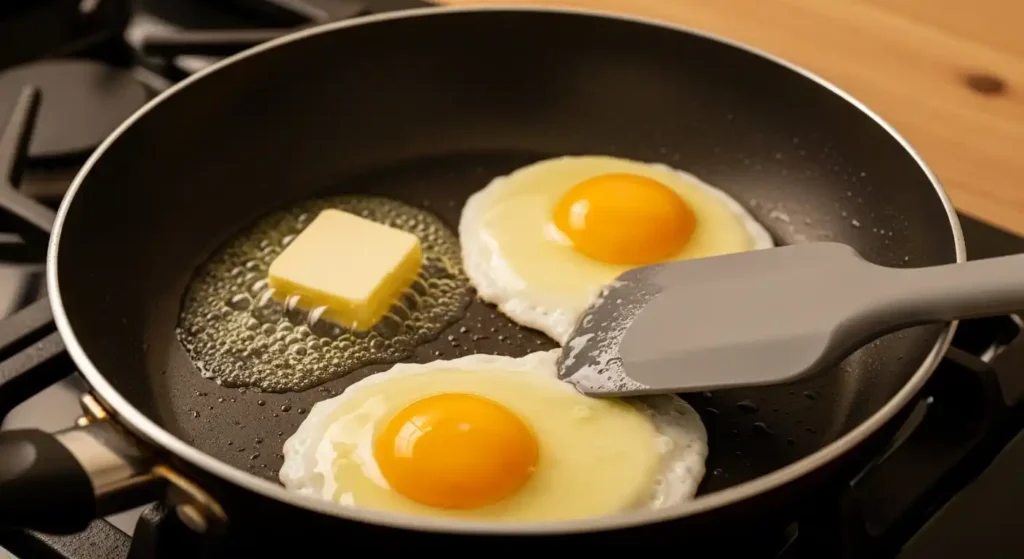
This step gets skipped constantly, and it’s one of the biggest mistakes.
Place your pan on the stove over medium or medium-low heat and let it warm up gradually.
You want the surface evenly heated—not blazing hot, not barely warm.
A simple test: sprinkle a few drops of water into the pan.
If they gently sizzle and evaporate, you’re ready. If they dance aggressively, it’s too hot. If they just sit there, the pan isn’t ready yet.
Proper preheating helps the egg cook evenly and reduces sticking before it even starts.
Fat Is Non-Negotiable
No matter how “nonstick” your pan claims to be, eggs still need fat.
Butter, oil, or a combination creates a barrier between the egg and the pan.
Add your fat after the pan is heated but before the eggs go in. Let it melt or warm fully and coat the surface evenly.
Pay attention to the edges and corners—eggs love sticking there.
If the fat starts smoking, your heat is too high. Wipe it out, lower the heat, and try again.
Burnt fat leads to sticking and off flavors.
Use Medium-Low Heat (Eggs Hate Rushing)
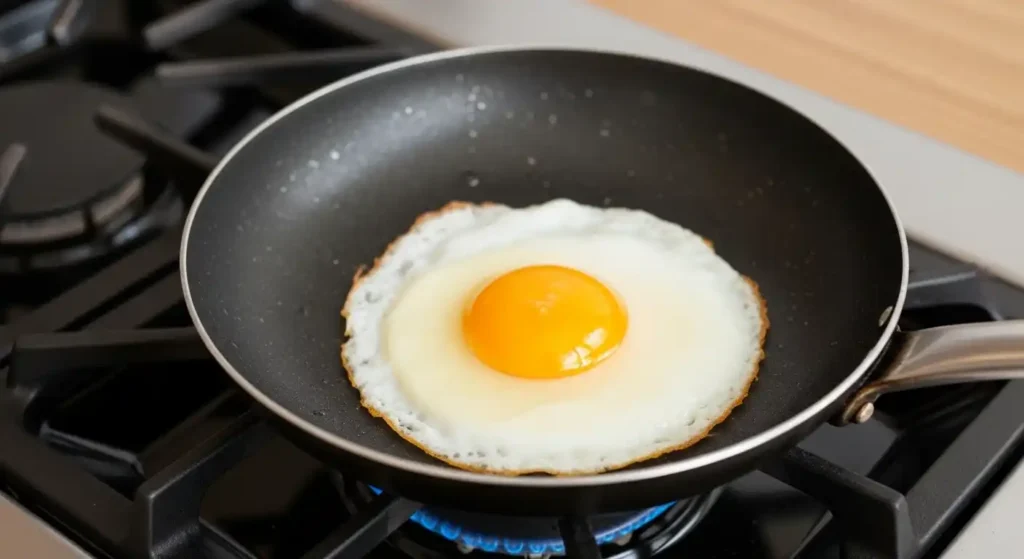
High heat is the enemy of good eggs.
It causes proteins to bond too quickly to the pan, which leads to tearing and sticking.
Medium-low heat gives eggs time to set gently.
The whites firm up without welding themselves to the surface, and the yolks stay tender.
Scrambled eggs become creamy instead of rubbery.
Patience here saves a lot of scraping later.
Add Eggs at the Right Time
Timing matters more than people realize.
Don’t add eggs before the pan is ready and don’t wait so long that the fat breaks down.
Once the pan is preheated and the fat is evenly melted and shimmering (not smoking), add the eggs immediately.
This creates an instant protective layer that helps prevent sticking.
Hesitation is how eggs win.
Let the Eggs Set Before Moving Them
This one is tough, especially if you’re nervous about sticking—but moving eggs too soon actually causes sticking.
For fried eggs, let the whites set before attempting to slide or flip.
For scrambled eggs, wait a few seconds before stirring so they form soft curds.
If the egg resists when you try to move it, give it another moment.
Eggs naturally release from the pan when they’re ready.
Use the Right Utensils
Thin, flexible spatulas work best for eggs. They slide cleanly under delicate whites and help lift eggs without tearing them.
Avoid stiff or overly thick spatulas, especially in nonstick pans. You want something that can get under the egg gently, not forcefully.
And yes—metal utensils can damage nonstick surfaces, which leads to more sticking later. Use silicone or wood instead.
Keep Your Pan Clean and Maintained
Old residue is a silent egg saboteur. Even a thin layer of burnt-on oil can cause eggs to cling to the surface.
After cooking eggs, clean your pan thoroughly.
For nonstick pans, avoid abrasive scrubbers.
For cast iron, wipe it clean, dry it fully, and lightly oil it before storing.
A well-cared-for pan is half the battle.
Common Egg-Sticking Mistakes to Avoid
Let’s call out the usual suspects:
- Cooking eggs on high heat because you’re in a hurry
- Skipping fat because the pan “looks” nonstick
- Adding eggs to a cold pan
- Moving eggs too early
- Using damaged or worn-out cookware
Fix just one of these, and you’ll notice improvement.
Fix all of them, and sticking becomes rare.
Does Egg Temperature Matter?
Yes, but not as much as heat and fat.
Eggs straight from the fridge can cool the pan slightly, which may increase sticking if your heat is already low.
If you want extra insurance, let eggs sit at room temperature for a few minutes before cooking.
It’s not mandatory, but it helps with even cooking.
Scrambled vs. Fried Eggs: Different Rules, Same Principles
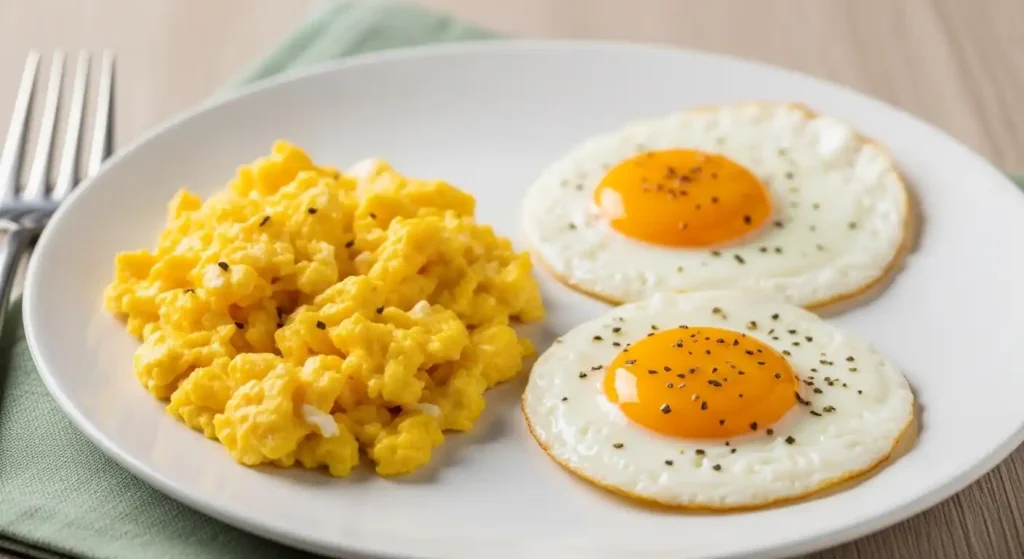
Scrambled eggs need a gentler touch and slightly more fat. Stir slowly and don’t rush the process.
Fried eggs need patience. Let the bottom set fully before trying to move or flip.
The principles stay the same: proper heat, enough fat, and timing.
When to Replace a Pan
If your nonstick pan sticks no matter what you do, it might be done.
Nonstick coatings wear out over time, especially if exposed to high heat or metal utensils.
If eggs stick even with proper technique, replacing the pan might be the smartest move.
Fighting a worn pan every morning isn’t worth it.
Final Thoughts
Eggs shouldn’t feel like a kitchen obstacle course.
Once you understand heat control, fat usage, and timing, the mystery disappears.
Mastering how to keep eggs from sticking to pan turns breakfast into a calm, predictable win instead of a daily struggle.
The next time you cook eggs, slow down just a bit, trust the process, and let the pan do its job.
Your eggs will release cleanly, your spatula will glide under them, and breakfast will finally go your way.


