

How to Pack Pots and Pans (Without Losing Your Mind or Your Lids)
If you’re wondering how to pack pots and pans without scratching them, denting them, or losing pieces along the way, you’re in the right place.
So, you’re staring at your kitchen thinking… how on earth did I collect this many pots and pans? We’ve all been there.
Moving day sneaks up, and suddenly you’re knee-deep in cookware, mismatched lids, and that one skillet you swear you’ll season “properly” one day.
I’m going to walk you through this step-by-step so your cookware survives the move—and you stay sane.
Let’s get into it.
Why Learning How to Pack Pots and Pans Properly Matters
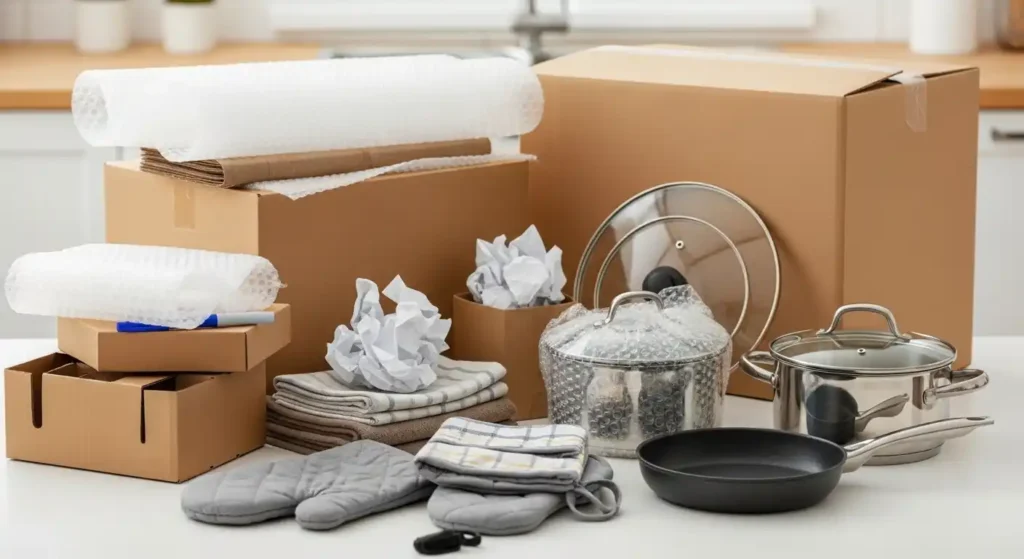
You might think, “They’re metal. They’ll survive.” Not exactly.
Cookware can scratch, chip, warp, or lose nonstick coating if you just toss it into a box.
And lids? They love to disappear at the worst possible time. Ever tried cooking rice without the right lid? Chaos.
Here’s why doing it right matters:
- Protects nonstick and stainless steel surfaces
- Prevents dents and broken glass lids
- Keeps sets organized
- Makes unpacking way easier
Trust me, future-you will be grateful when you unpack your kitchen and everything is intact.
Supplies You’ll Need
Before you start, gather these:
- Medium and large sturdy moving boxes
- Packing paper or plain newspaper
- Bubble wrap (especially for glass lids)
- Dish towels or kitchen cloths (bonus padding!)
- Packing tape
- Permanent marker
- Cardboard dividers (optional but helpful)
If you don’t have fancy packing supplies, don’t panic. Towels, old t-shirts, and even oven mitts work beautifully.
Step-by-Step: How to Pack Pots and Pans the Right Way
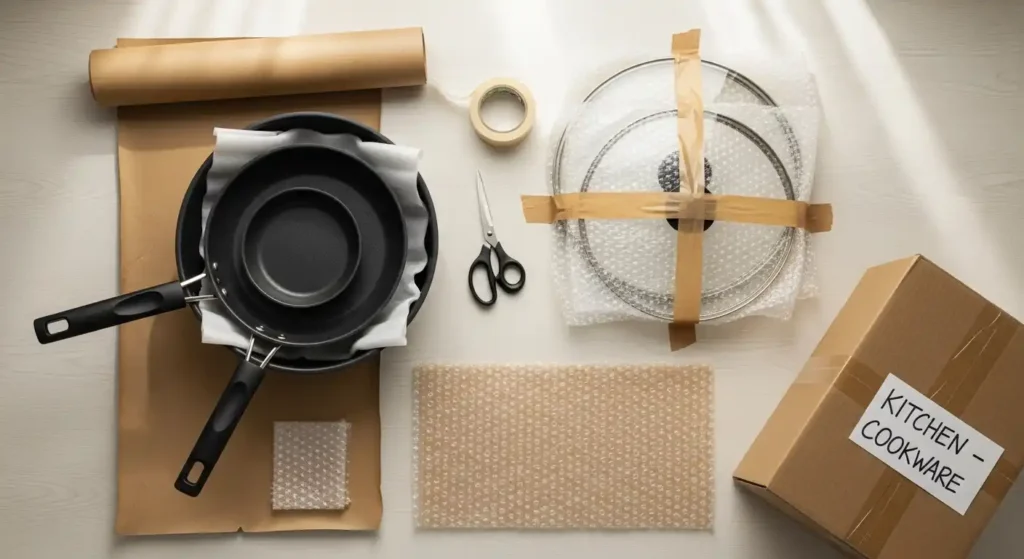
Let’s break it down so nothing gets damaged.
1. Clean Everything First
I know. You’re busy. But pack dirty cookware and you’ll open a box later that smells… questionable.
Wash and dry everything completely. Moisture can lead to rust or weird odors during storage.
2. Separate Lids from Pots
Don’t pack lids attached to pots. That’s how glass shatters.
Stack pots together by size, and keep lids separate. We’ll pack them safely in a minute.
3. Nest Pots Together (Smartly)
This is where space-saving magic happens.
- Place a sheet of packing paper inside the largest pot.
- Insert the next smaller pot inside it.
- Add another layer of paper.
- Repeat until stacked.
Think of it like Russian nesting dolls—but cookware edition.
Important: Always place padding between each piece to avoid scratches.
4. Protect Nonstick Surfaces
Nonstick pans need extra love.
Place cardboard circles, paper, or even thin dish towels between each pan. If stacked directly, they can scratch during transport.
If you’ve invested in good nonstick cookware, this step is non-negotiable.
5. Wrap Glass Lids Individually
Glass lids are fragile divas.
- Wrap each lid in packing paper.
- Add a layer of bubble wrap.
- Tape gently to secure.
- Pack them vertically (like plates) in a box with padding around them.
Never lay them flat at the bottom of a heavy box. That’s asking for heartbreak.
6. Line the Bottom of the Box
Before placing anything inside:
- Add crumpled paper or towels to cushion the bottom.
- This absorbs shock if the box gets bumped.
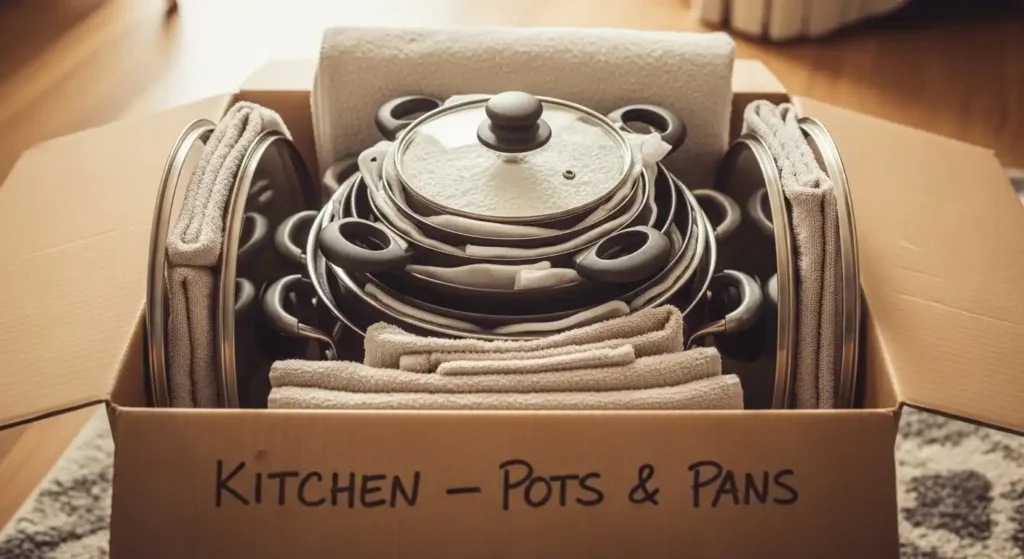
7. Place Nested Pots in the Box
Put the heaviest items at the bottom.
Fill gaps with paper, towels, or cloth so nothing shifts when you shake the box lightly.
If things move, add more padding.
8. Label Clearly
Write:
- “Kitchen – Pots & Pans”
- “Fragile” (if lids included)
- “This Side Up” if necessary
Clear labeling saves time and prevents rough handling.
Special Situations: How to Pack Pots and Pans for Storage
If you’re storing them long-term (not just moving):
- Add moisture absorbers to prevent rust.
- Avoid sealing in damp conditions.
- Keep boxes off the floor in humid spaces.
Cast iron especially needs care. Lightly oil it before wrapping to prevent rust.
What NOT to Do When Packing Cookware
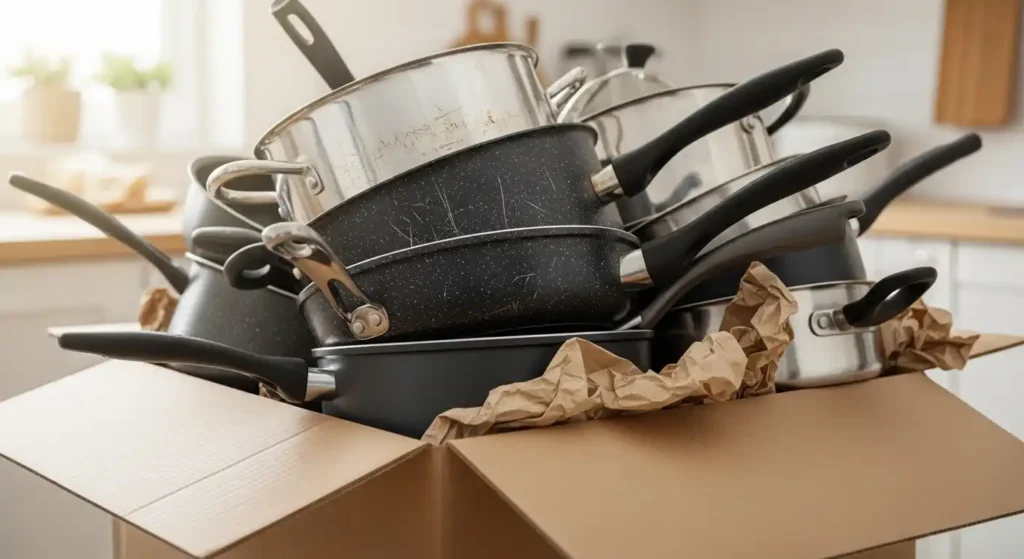
Let’s avoid common mistakes.
❌ Don’t Overfill Boxes
Pots are heavy. Overpacking can cause the bottom to burst open. Keep boxes under 50 lbs if possible.
❌ Don’t Skip Padding
Metal against metal equals scratches. Always separate pieces.
❌ Don’t Pack with Random Heavy Items
Keep cookware in its own box. Mixing with tools or appliances can cause damage.
❌ Don’t Forget to Secure Handles
Some detachable handles should be removed and wrapped separately.
Pro Tips to Make Packing Easier
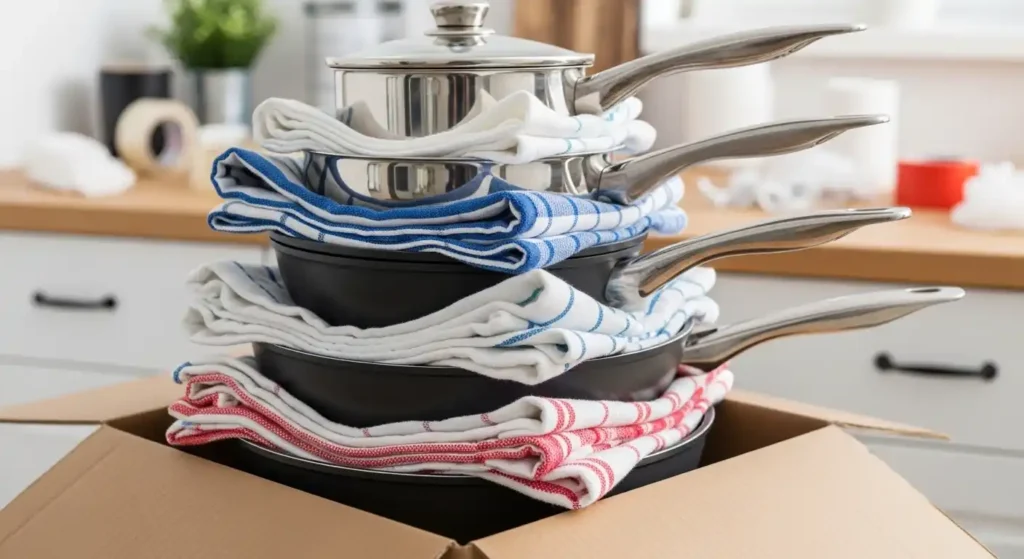
Here are a few tricks that make life smoother:
Use Your Kitchen Towels as Padding
You’re packing them anyway. Let them do double duty.
Tape Lids Together (Safely)
If you have matching sets, lightly tape wrapped lids together and label them.
Keep One Pan Out
You’ll probably want to cook before the move or right after arrival. Leave one essential pan unpacked until the last minute.
Photograph Complex Sets
If you have stacked sets that fit a certain way, snap a photo before packing. It makes reassembly easier later.
How to Pack Pots and Pans for Short Moves vs Long-Distance Moves
Local Move (Same City)
- Standard padding works.
- Sturdy boxes are enough.
- Less risk of extended vibration.
Long-Distance Move
- Double-wrap fragile pieces.
- Reinforce box bottoms with extra tape.
- Fill every empty space tightly.
Long hauls mean more shifting inside trucks, so pack snugly.
Quick Checklist: How to Pack Pots and Pans
Before sealing the box, check:
✔ Pots are clean and dry
✔ Nonstick surfaces padded
✔ Glass lids wrapped separately
✔ Empty spaces filled
✔ Box weight manageable
✔ Box clearly labeled
If you can gently shake the box and nothing rattles, you did it right.
Frequently Asked Questions
Should I wrap stainless steel pans?
Yes. Even though stainless steel is durable, scratches can still happen during transport.
Can I use newspaper?
Yes, but avoid direct contact with light-colored or porous surfaces if you’re worried about ink transfer. Packing paper is safer.
How many pots should go in one box?
It depends on size and weight. Usually 4–6 nested pieces per medium box works well.
What about cast iron?
Wrap tightly, cushion heavily, and keep it dry. Cast iron is tough but can rust if stored improperly.
Final Thoughts
Learning how to pack pots and pans isn’t complicated—but doing it carelessly can cost you.
A few extra minutes of wrapping and padding protects your cookware and saves you from replacing scratched or broken pieces later.
Take your time. Use what you already have for padding. Keep boxes manageable.
And label everything clearly.
When you unpack in your new kitchen and everything looks just as good as before, you’ll know it was worth the effort.
Now go conquer those cabinets. You’ve got this.


