

Is Tiramisu Actually Italian? History & Origins Explained
Creamy mascarpone. Espresso-soaked ladyfingers. Is Tiramisu Actually Italian? History & Origins Explained—we’re diving into the facts, the legends, and the delicious truth behind one of the world’s favorite desserts.
A generous dusting of cocoa on top. Tiramisu feels undeniably Italian—but is it really? Or is this beloved dessert another “Italian classic” with a slightly complicated backstory?
Let’s settle it once and for all.
What Does “Tiramisu” Even Mean?
Before we talk history, let’s start with the name.
“Tiramisu” comes from the Italian phrase tirami su, which translates to “pick me up” or “cheer me up.” That makes perfect sense when you think about it.
The dessert traditionally includes espresso and sugar—two ingredients known for giving you a little energy boost.
But here’s the interesting part: the name itself gives us a clue that the dessert is deeply rooted in Italian language and culture.
It’s not a borrowed word. It’s authentically Italian in sound, structure, and meaning.
That’s our first big hint.
Is Tiramisu Actually Italian? History & Origins Explained
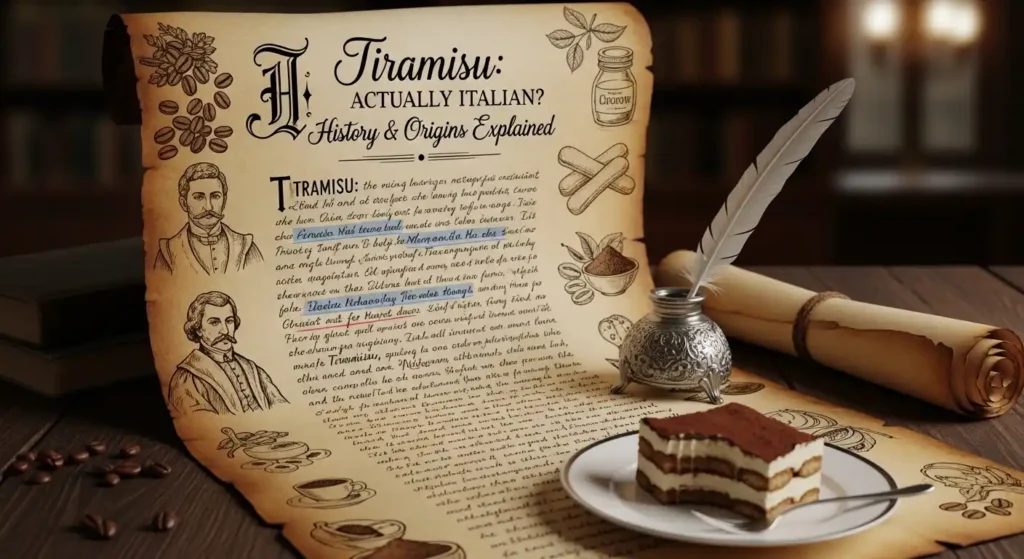
Short answer: Yes, tiramisu is Italian.
Long answer: It’s Italian—but not as ancient as many people assume.
Unlike pasta, pizza, or gelato, tiramisu isn’t a centuries-old recipe passed down from medieval kitchens.
In fact, it’s surprisingly modern. Most food historians trace the official birth of tiramisu to the 1960s in northern Italy.
Specifically, the region of Veneto gets most of the credit.
The Veneto Region and the Birth of Tiramisu
Many culinary experts believe tiramisu was first created in the town of Treviso, located in Italy’s Veneto region.
One popular account credits a restaurant called Le Beccherie in the late 1960s.
The story goes that a pastry chef combined simple, local ingredients—mascarpone cheese, eggs, sugar, espresso, cocoa, and ladyfingers—to create a dessert that felt luxurious yet comforting.
What makes this origin story believable?
- The ingredients were widely available in northern Italy.
- Mascarpone is traditionally produced in Lombardy, not far from Veneto.
- The recipe began appearing in Italian cookbooks shortly after this period.
That timeline matters. We don’t see written records of tiramisu in Italian cookbooks before the mid-20th century.
That strongly suggests it wasn’t around in the Renaissance or ancient Roman times, despite some romantic myths.
The Legends (Because Every Good Dessert Has One)
Of course, no famous dish survives without a few dramatic backstories.
One legend claims tiramisu was created as an energizing treat for newlyweds.
Another suggests it was served in certain establishments as a “revitalizing” dessert thanks to its rich ingredients and espresso.
Are these stories charming? Absolutely.
Are they well-documented? Not exactly.
Food historians generally agree that these tales are more folklore than fact.
The most reliable evidence still points to northern Italy in the 1960s.
Still, you have to admit—“cheer me up” is a pretty poetic name for a dessert.
Why People Think It Might Not Be Italian

If tiramisu is Italian, why does the question keep popping up?
There are a few reasons.
1. It Feels Too Modern
When people think of Italian cuisine, they imagine centuries-old traditions.
Tiramisu doesn’t have that ancient pedigree. Its relatively recent invention surprises many food lovers.
But modern doesn’t mean inauthentic. Italy’s culinary scene continues to evolve, just like any other country’s.
2. It Spread Internationally Very Fast
Tiramisu exploded in popularity during the 1980s and 1990s. Restaurants across Europe and North America quickly adopted it.
Soon, it became a standard dessert on Italian restaurant menus worldwide.
When a dish spreads that quickly, people sometimes assume it’s a fusion or international invention.
In this case, it simply means the dessert was incredibly successful.
3. Variations Changed the Original
Over time, creative cooks introduced countless twists:
- Chocolate tiramisu
- Fruit-flavored tiramisu
- Lemon tiramisu
- Coffee-free versions
- Vegan adaptations
While these versions are delicious, they sometimes blur the lines of authenticity.
When you see dozens of variations, it’s easy to question where the original truly came from.
But experimentation doesn’t erase origins.
The Core Ingredients Tell the Story
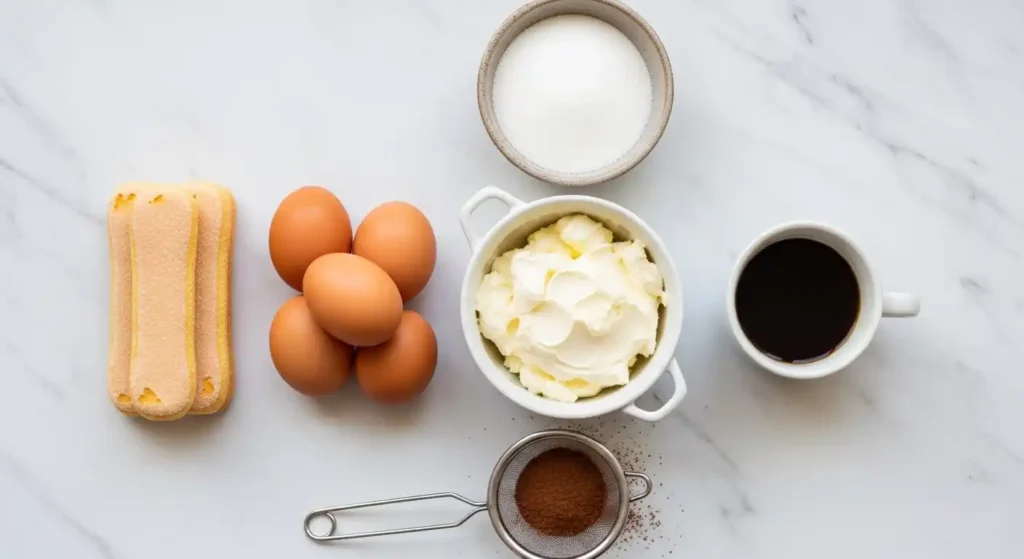
One of the strongest arguments for tiramisu’s Italian identity lies in its ingredients.
Traditional tiramisu includes:
- Mascarpone cheese
- Espresso
- Ladyfingers (savoiardi)
- Eggs
- Sugar
- Cocoa powder
Each component reflects Italian culinary traditions.
Mascarpone has deep roots in northern Italy. Espresso culture is central to Italian daily life.
Even the texture—soft layers soaked just enough—aligns with classic Italian dessert craftsmanship.
It’s not a random combination. It’s culturally coherent.
When Did Tiramisu Become Officially Recognized?
By the 1980s, tiramisu started appearing in Italian dictionaries and cookbooks.
That formal documentation helped solidify its place in Italy’s culinary landscape.
As chefs outside Italy embraced it, the dessert became globally iconic.
But its earliest confirmed written recipes still trace back to Italy.
In other words, the paperwork checks out.
A Modern Italian Classic
Here’s the fun twist: tiramisu proves that tradition doesn’t have to be ancient.
Italian cuisine often celebrates regional identity and seasonal ingredients. Tiramisu fits that philosophy perfectly. It uses simple, high-quality components and relies on technique rather than complexity.
Its relatively recent creation actually makes it a fascinating example of how food traditions evolve.
Think about it: many dishes we now consider “classic” were once new inventions. Tiramisu just happened to achieve global fame very quickly.
How Authentic Tiramisu Is Traditionally Made
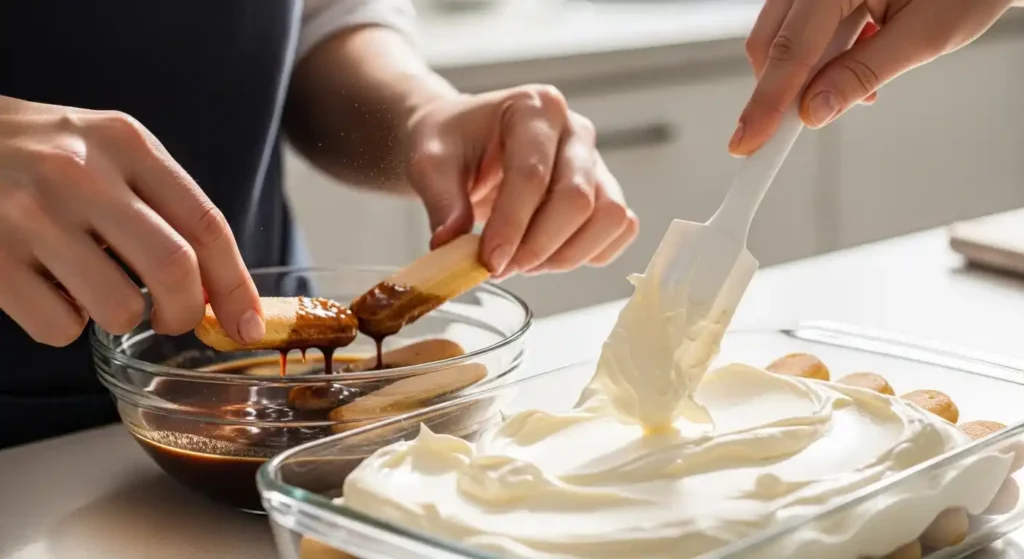
If you want to stick to the original spirit of tiramisu, keep it simple.
Traditional preparation involves:
- Lightly dipping ladyfingers in espresso.
- Whipping egg yolks with sugar until creamy.
- Folding in mascarpone cheese.
- Gently layering the soaked biscuits and cream.
- Dusting the top generously with cocoa powder.
- Chilling the dessert to let flavors develop.
No elaborate decorations. No excessive toppings. Just balanced layers and silky texture.
That restraint is very Italian.
Regional Pride and Friendly Debates
Interestingly, even within Italy, regions sometimes debate credit for certain dishes. Veneto proudly claims tiramisu, but nearby areas occasionally present their own variations of the origin story.
These friendly rivalries are part of Italy’s rich food culture. Each region fiercely protects its culinary heritage.
And that pride reinforces one thing: Italians consider tiramisu theirs.
So, Is Tiramisu Actually Italian?
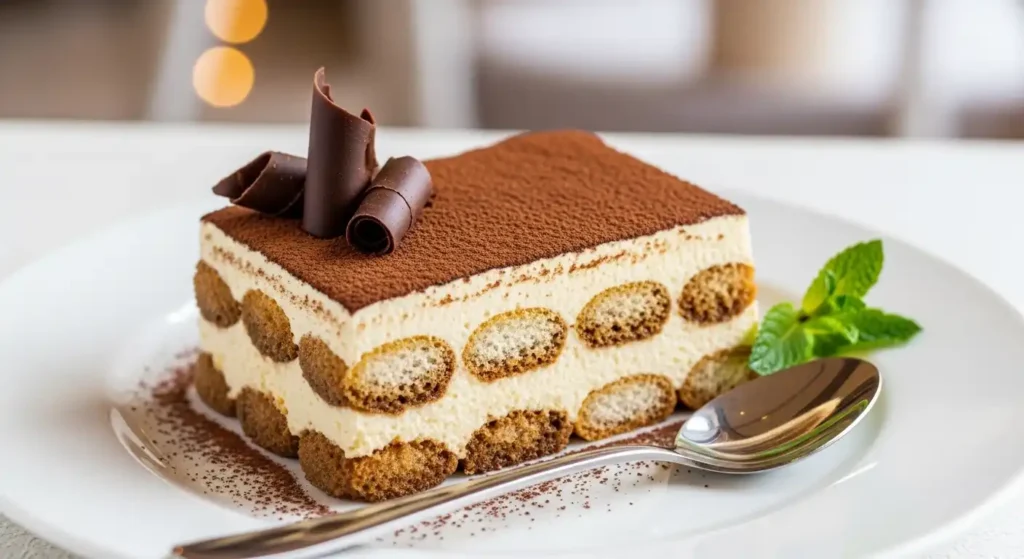
Yes.
The historical evidence, ingredient origins, language, and documented recipes all point to Italy—specifically northern Italy in the mid-20th century.
It may not date back to ancient Rome. It may not have medieval manuscripts backing it up. But it was created in Italy, by Italians, using Italian ingredients and culinary techniques.
That makes it authentically Italian.
Why the Question Still Matters
Food tells stories about identity, culture, and migration. Asking “Is Tiramisu Actually Italian?” isn’t just about trivia.
It’s about understanding how culinary traditions form and spread.
Tiramisu’s journey—from a regional specialty in Veneto to a global dessert icon—shows how quickly a great recipe can travel.
It also reminds us that authenticity doesn’t always mean ancient. Sometimes, it simply means true to its roots.
Final Thoughts
So next time someone questions tiramisu’s heritage, you’ll know the answer.
It’s Italian. Not centuries-old, not medieval—but proudly and undeniably Italian.
Its name, ingredients, and documented history all trace back to northern Italy in the 1960s. From there, it charmed the world with its creamy layers and espresso kick.
And honestly? Whether you’re enjoying a traditional version or a creative twist, one thing remains clear: tiramisu definitely lives up to its name.
It really does “pick you up.”


