

Made In vs All Clad: Which Cookware Brand Is Better?
When shopping for premium cookware, two names often come up again and again: Made In vs All-Clad.
Both brands are known for high-quality stainless steel cookware, professional performance, and durable construction.
However, many home cooks and professional chefs still ask the same question: which one is better?
In this detailed guide on made in vs all clad, we’ll compare the two brands in terms of materials, performance, price, durability, and overall value.
By the end, you’ll have a clear understanding of which cookware brand fits your kitchen and cooking style best.
Made In vs All Clad: A Quick Overview

Before diving into the details, it helps to understand the basic philosophy behind both brands.
Made In is a relatively newer cookware brand that focuses on direct-to-consumer sales.
By selling directly online, the company avoids retail markups and offers professional-quality cookware at a slightly lower price.
All-Clad, on the other hand, has been a trusted name in premium cookware for decades.
Many professional kitchens rely on its cookware because of its reputation for durability and consistent heat performance.
When comparing made in vs all clad, both brands aim to deliver professional results—but they approach the market a little differently.
Brand Background
Made In
Made In was founded in 2016 and quickly gained popularity among chefs and home cooks.
The company partners with established manufacturers in Europe and the United States to produce cookware designed for serious cooking.
One reason for its rapid growth is its focus on high-quality materials combined with competitive pricing.
Popular products include:
- Stainless steel frying pans
- Saucepans
- Stock pots
- Carbon steel pans
Made In cookware is often praised for its modern design and restaurant-style performance.
All-Clad
All-Clad has been a major name in cookware since the 1970s.
The brand pioneered bonded stainless steel cookware in the United States and is widely considered one of the leaders in premium kitchen equipment.
All-Clad cookware is manufactured primarily in the United States and is commonly used in professional kitchens.
Popular collections include:
- D3 Stainless
- D5 Stainless
- Copper Core
Because of its long history and reputation, All-Clad is often seen as the benchmark when discussing made in vs all clad comparisons.
Materials and Construction
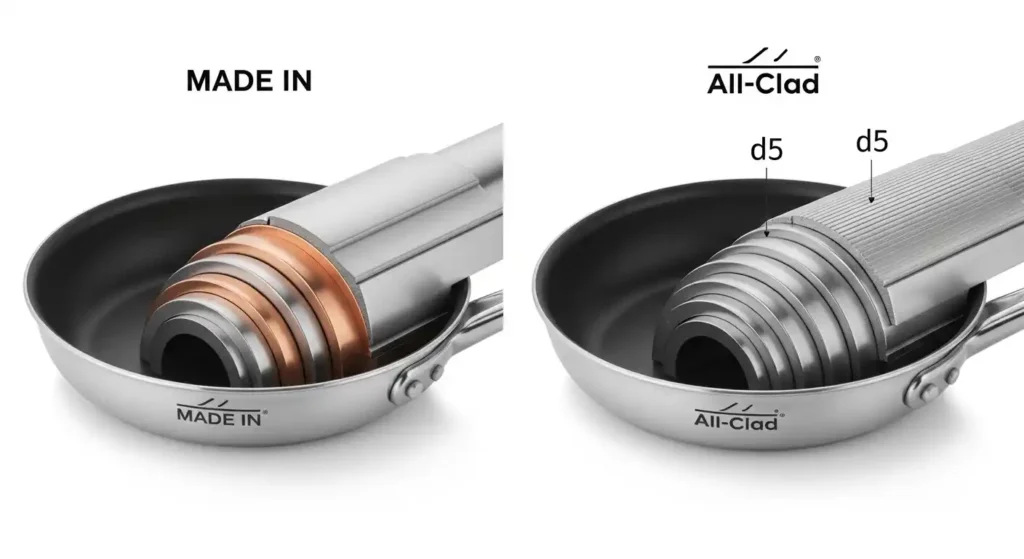
The construction of cookware determines how evenly it heats and how durable it is over time.
Made In Construction
Made In stainless steel cookware typically features 5-ply construction, meaning it has five bonded layers of metal.
These layers usually include:
- Stainless steel exterior
- Aluminum core layers
- Stainless steel interior cooking surface
This design helps distribute heat evenly and prevent hot spots.
Many chefs appreciate Made In pans because they heat quickly and maintain stable cooking temperatures.
All-Clad Construction
All-Clad cookware is famous for its bonded metal technology.
The most common collections include:
D3 Stainless
- Three bonded layers
- Stainless steel exterior and interior
- Aluminum core
D5 Stainless
- Five bonded layers for improved heat distribution
Both designs are extremely durable and provide reliable cooking performance.
When comparing made in vs all clad, the construction quality of both brands is excellent, though All-Clad has decades of proven durability.
Cooking Performance

Cooking performance is one of the biggest factors people consider when choosing cookware.
Heat Distribution
Both brands provide excellent heat distribution thanks to their layered metal construction.
However:
- Made In pans tend to heat slightly faster due to their aluminum core.
- All-Clad pans are known for extremely even heating across the entire cooking surface.
For most home cooks, the difference is minimal.
Heat Retention
All-Clad cookware often retains heat slightly better, which is helpful for tasks like:
- Searing vegetables
- Browning proteins
- Simmering sauces
Made In cookware still performs very well, but All-Clad sometimes has a small advantage in this area.
Cooking Control
Both brands offer excellent temperature control.
This makes them great for:
- sautéing
- simmering
- frying
- preparing sauces
In a made in vs all clad comparison, the performance difference is usually subtle and often comes down to personal preference.
Design and Comfort
Cookware design affects how comfortable a pan feels during cooking.
Made In Design
Made In cookware features:
- Modern minimalist design
- Stay-cool handles
- Lightweight feel compared to some competitors
Many home cooks like the balance and comfortable grip of Made In pans.
All-Clad Design
All-Clad pans are known for their classic professional look.
However, some people find the handles slightly less comfortable during long cooking sessions.
That said, the design is extremely durable and stable.
When evaluating made in vs all clad, comfort may depend on your personal grip preference.
Price Comparison
Price is often one of the biggest deciding factors when choosing cookware.
Made In Pricing
Made In cookware is generally less expensive because the brand sells directly to consumers.
For example:
- Stainless steel skillet: mid-range price
- Saucepan: slightly lower than comparable premium brands
This pricing strategy makes Made In appealing to home cooks who want professional cookware without paying luxury prices.
All-Clad Pricing
All-Clad cookware is typically more expensive due to:
- Brand reputation
- Retail distribution
- Long manufacturing history
While the price is higher, many cooks view it as a long-term investment because the pans can last for decades.
Durability and Longevity
Both brands produce cookware designed to last many years.
Made In Durability
Made In cookware is durable and resistant to warping.
With proper care, these pans can last a very long time.
However, since the brand is relatively new, there are fewer long-term reports compared with older brands.
All-Clad Durability
All-Clad cookware is famous for lasting decades.
Many professional kitchens still use All-Clad pans that are more than 20 years old.
In the made in vs all clad debate, All-Clad clearly has the longer proven track record.
Cleaning and Maintenance
Both brands are easy to maintain.
Most stainless steel cookware from Made In and All-Clad is:
- Dishwasher safe
- Oven safe
- Compatible with induction cooktops
For best results, hand washing is usually recommended to preserve the finish.
Which Brand Should You Choose?
Choosing between made in vs all clad ultimately depends on your priorities.
Choose Made In if:
- You want professional cookware at a lower price
- You prefer modern design
- You like lighter pans with fast heating
Choose All-Clad if:
- You want a brand with a long proven reputation
- You value durability above all else
- You prefer cookware used widely in professional kitchens
Both options are excellent and capable of producing great cooking results.
Final Verdict: Made In vs All Clad
The comparison between made in vs all clad doesn’t have a single universal winner.
Both brands produce high-quality cookware that performs exceptionally well in the kitchen.
Made In stands out for its modern approach, competitive pricing, and impressive performance.
All-Clad remains a legendary cookware brand known for durability, reliability, and decades of professional use.
If you want premium cookware at a slightly lower cost, Made In may be the better choice.
If you prefer a long-established brand with a proven track record, All-Clad is hard to beat.
Either way, investing in quality cookware can make cooking easier, more enjoyable, and more consistent—something every home cook can appreciate.


