
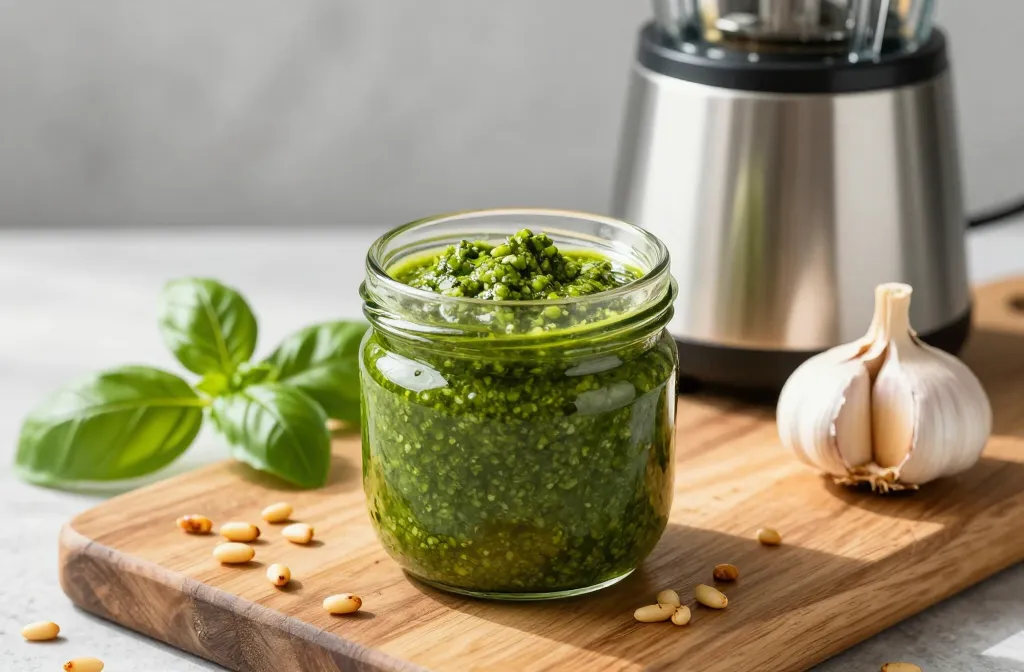
Pesto Sauce Recipe: Summer in a Jar in 5 Minutes
Pesto that actually tastes like summer in a jar? Yes, please. This pesto sauce recipe is fast, fresh, and fearless, like a good playlist on a car ride.
Five minutes in the blender, and suddenly you’re the hero who rescued dinner
Pesto Sauce Recipe
Ingredients
- 2 cups fresh basil leaves packed, not shy
- 1/2 cup grated Parmesan cheese
- 1/3 cup pine nuts or walnuts if you’re feeling frugal
- 2 garlic cloves more if you love a punch
- 1/2 cup extra-virgin olive oil
- Salt and pepper to taste
- Optional: squeeze of lemon for brightness
Instructions
- Toast the pine nuts in a dry skillet for 2–3 minutes until golden and fragrant. Cool slightly. This step adds depth—trust the toasty magic.
- In a blender or food processor, add basil, Parmesan, garlic, and cooled pine nuts. Pulse a few times to break things up.
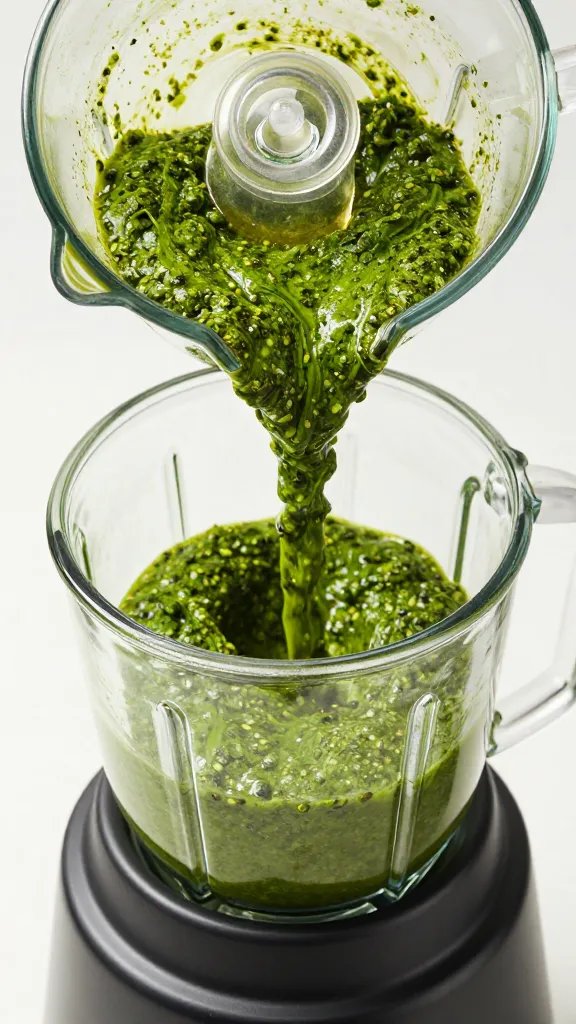
- With the machine running, slowly stream in the olive oil until the mixture is smooth and spreadable. If it’s too thick, add a splash more oil; if too thin, add a little more cheese.
- Season with salt and pepper. Add a squeeze of lemon if you want the bright lift. Pulse once more to combine.
- Scrape into a jar or bowl. Use immediately or store in the fridge with a thin layer of oil on top to keep it bold.
Why This Recipe is Awesome
Pesto is basically garden magic in a jar. It bursts with bright basil, nutty pine vibe, and garlic zing. It’s idiot-proof, even I didn’t mess it up.
The best part? It goes from fridge to feast in under 10 minutes.
No boiling drama, no hidden steps, just pure green glory.
Ingredients You’ll Need
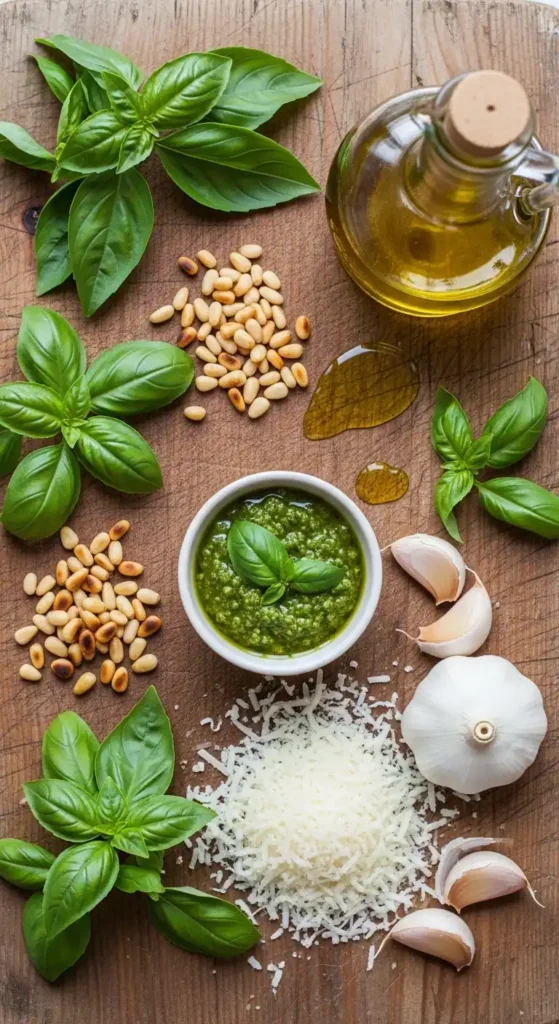
- 2 cups fresh basil leaves (packed, not shy)
- 1/2 cup grated Parmesan cheese
- 1/3 cup pine nuts (or walnuts if you’re feeling frugal)
- 2 garlic cloves (more if you love a punch)
- 1/2 cup extra-virgin olive oil
- Salt and pepper to taste
- Optional: squeeze of lemon for brightness
Step-by-Step Instructions
- Toast the pine nuts in a dry skillet for 2–3 minutes until golden and fragrant. Cool slightly. This step adds depth—trust the toasty magic.
- In a blender or food processor, add basil, Parmesan, garlic, and cooled pine nuts. Pulse a few times to break things up.
- With the machine running, slowly stream in the olive oil until the mixture is smooth and spreadable. If it’s too thick, add a splash more oil; if too thin, add a little more cheese.
- Season with salt and pepper. Add a squeeze of lemon if you want the bright lift. Pulse once more to combine.
- Scrape into a jar or bowl. Use immediately or store in the fridge with a thin layer of oil on top to keep it bold.
How to Serve
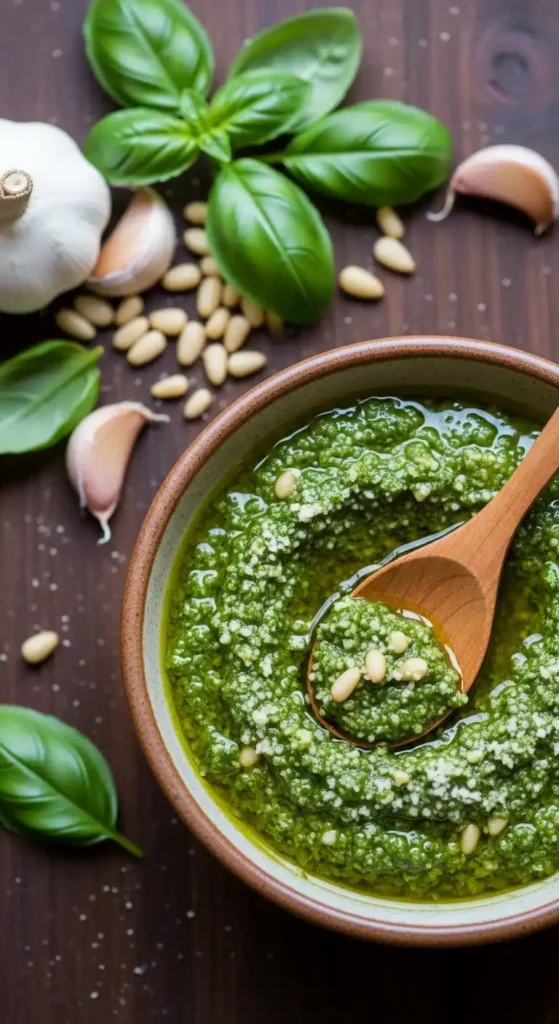
Pesto doesn’t need a complicated stage setup to shine. Toss it with hot pasta for a quick weeknight miracle, or dollop on grilled veggies for a color pop. Here are a few ideas:
- Pasta night: Mix with al dente spaghetti and a little pasta water to loosen.
- Pizza topping: Swirl over crust before baking for an herby twist.
- Grilled chicken or fish: Spoon on right after heat for a glossy finish.
- Toast upgrade: Spread on crusty bread, top with cherry tomatoes.
- Salad booster: White bean or potato salads get a pesto makeover.
Approximate Nutrition Facts per Serving
Per serving (approximate, because we live in reality):
- Calories: 180–210
- Carbohydrates: 3–6 g
- Protein: 5–7 g
- Fat: 16–20 g
- Fiber: 1–2 g
- Sugar: 0–1 g
Note: exact numbers depend on cheese and oil brands, which is basically the point of life—variety keeps it spicy.
Common Mistakes
- Overcooking the garlic in the processor. Raw garlic = bold flavor; burnt garlic = bitter regret.
- Using low-quality basil. Fresh matters. The garden is cheering for you when you pick sunlit leaves.
- Skipping the lemon or salt. It might taste flat at first, but you’ll regret it later when there’s no zing.
- Too much oil. Then you’ve got pesto soup. We’re aiming for spreadable, not soupable.
Simple Alternatives or Ingredient Substitutions
- Nut swap: Use almonds or walnuts if pine nuts aren’t available. Still delicious, just different vibes.
- Cheese twist: If you don’t have Parmesan, try Pecorino or a sharp Asiago.
- Herb swap: Swap in a handful of fresh parsley or arugula for a different color and bite.
- Vegan version: Use nutritional yeast instead of cheese for a dairy-free vibe, plus a little extra lemon zest.
Conclusion
Pesto is your weeknight superhero, ready in minutes and endlessly versatile.
It tastes like a clean plate, a little bit of sunshine, and a dash of “I totally planned this.” Keep a stash in the fridge, and dinner will never feel routine again.
Frequently Asked Questions
Can I freeze pesto?
Yes. Freeze in ice cube trays for quick portions, then transfer to a bag. Thaw and use as needed. Flavor holds up surprisingly well after freezing.
How long does pesto stay fresh?
In the fridge, about 4–7 days if you keep a thin oil layer on top (helps prevent browning). For longer storage, freeze as mentioned above.
Can I make pesto without cheese?
Sure. It will be a tad less rich, but you can use nutritional yeast or a splash of miso for savory depth. It still tastes amazing with the basil and garlic shining through.
What’s the best way to store pesto?
Transfer to a clean jar, add a thin layer of olive oil on top, seal, and refrigerate. The oil layer helps keep air away and flavors bright.
Is pesto good on sandwiches?
Absolutely. A smear on toasted bread with sliced tomatoes or roasted vegetables is a game changer. It’s essentially edible sunshine on bread.


