
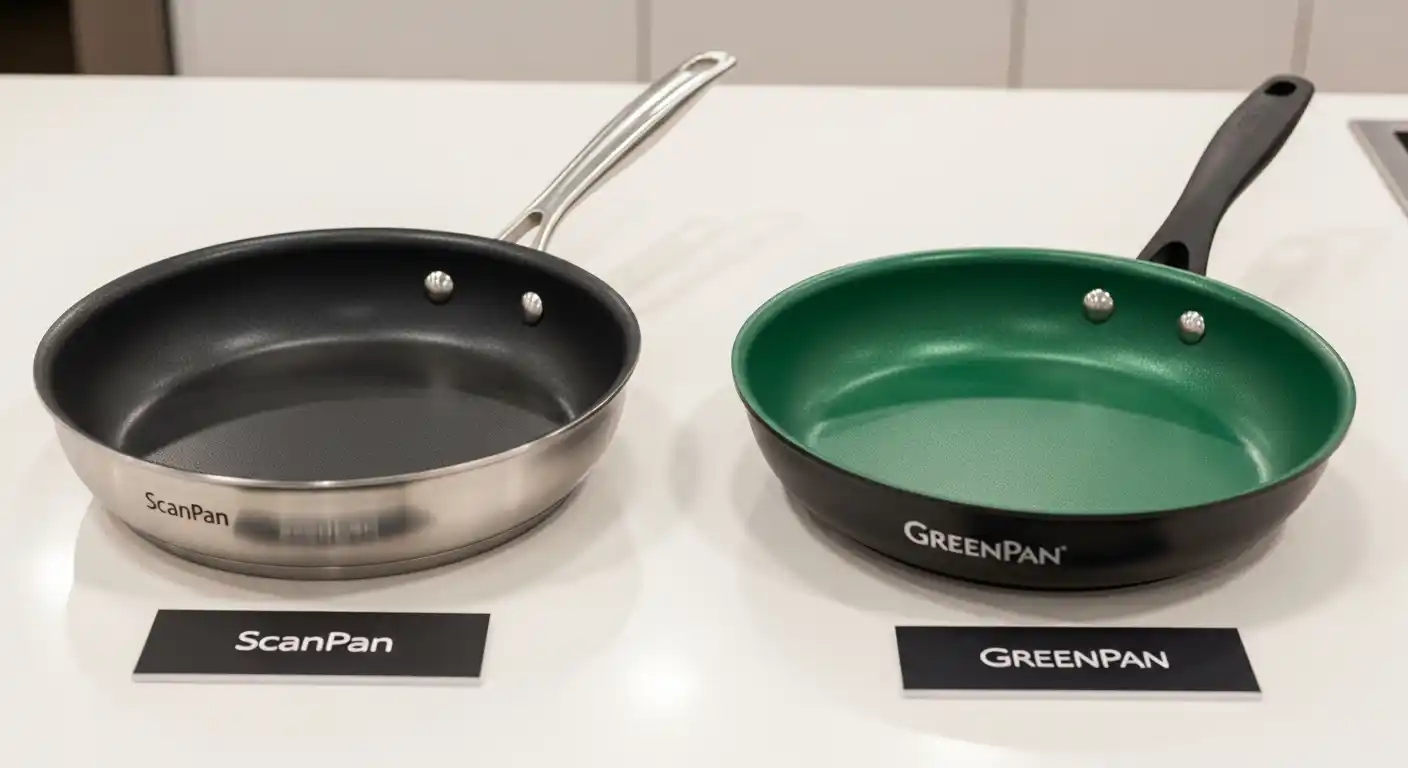
ScanPan vs GreenPan: Which Nonstick Cookware Is Right for You?
Choosing the right nonstick cookware can be overwhelming, especially with so many options on the market. Two of the most popular brands are ScanPan vs GreenPan.
Both promise excellent nonstick performance, durability, and safe cooking surfaces, but they are designed with slightly different philosophies and technologies.
Understanding the differences between these two brands can help you make the best choice for your kitchen.
In this guide, we’ll explore the key features, pros and cons, and ideal uses for each, so you can decide which one fits your cooking style best.
What Is ScanPan?
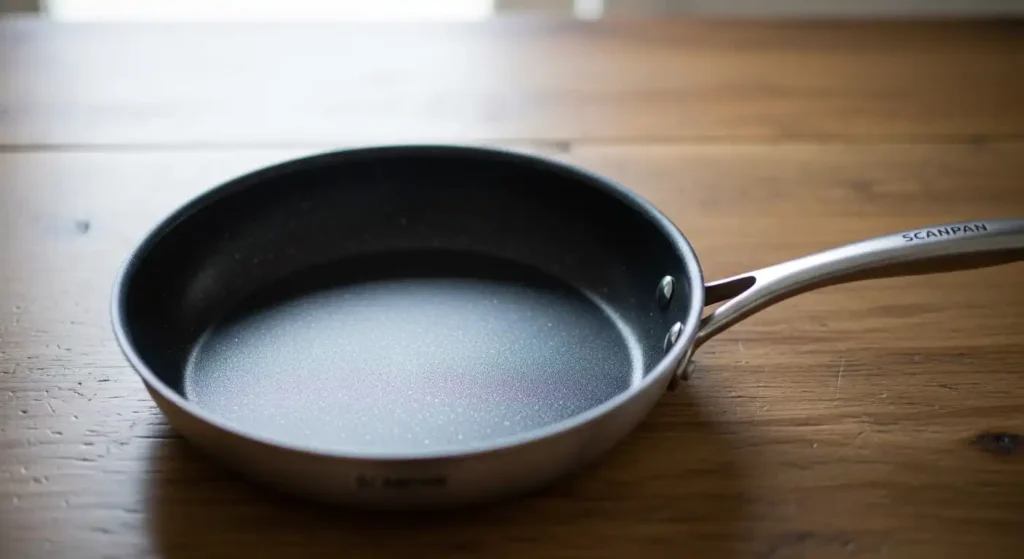
ScanPan is a Danish cookware brand known for its professional-grade nonstick pans.
The company has been around for decades and is highly regarded among chefs and home cooks alike.
ScanPan uses a proprietary Stratanium coating, which is a ceramic-titanium reinforced nonstick layer designed for durability, even heat distribution, and excellent food release.
Some key features of ScanPan include:
- Oven-safe construction (usually up to 500°F / 260°C)
- Durable nonstick coating that resists scratches and abrasions
- Even heat distribution due to a heavy-gauge aluminum base
- Induction compatible in most models
- PFOA-free and environmentally friendly manufacturing
ScanPan is known for combining professional quality with eco-conscious design, making it a popular choice for serious home cooks.
What Is GreenPan?
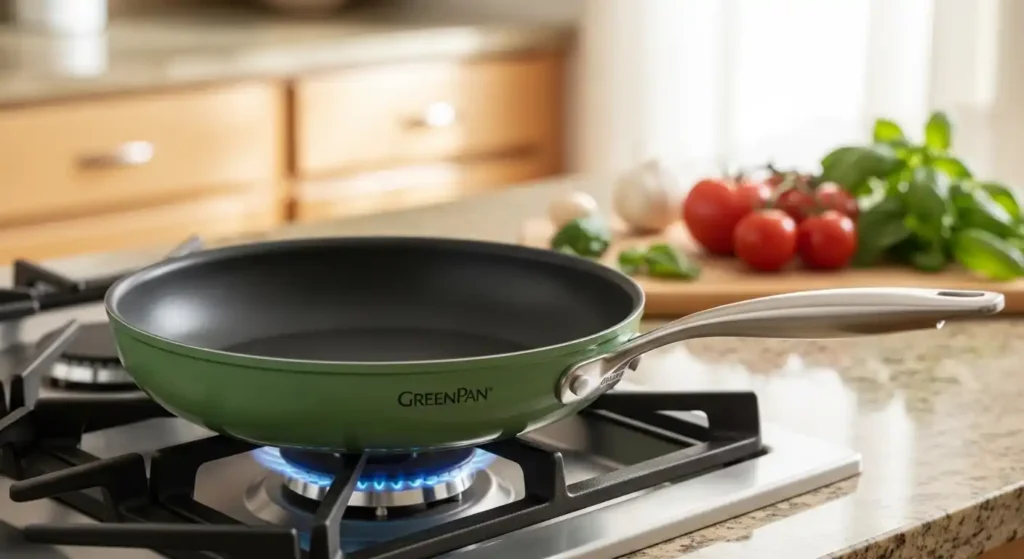
GreenPan is a Belgian brand that pioneered thermolon, a ceramic nonstick coating made without PFAS, PFOA, lead, or cadmium.
The main focus of GreenPan is healthy, non-toxic cooking, which appeals to people looking for a safer alternative to traditional nonstick pans.
Key features of GreenPan include:
- Ceramic nonstick coating that is free of harmful chemicals
- Even heat distribution thanks to aluminum or hard-anodized bases
- Oven-safe construction (usually up to 420°F / 215°C)
- Lightweight and easy to handle
- Available in a wide variety of colors and designs
GreenPan’s emphasis on eco-friendly and safe cooking has made it a favorite among home cooks who prioritize health-conscious cooking tools.
ScanPan vs GreenPan: Key Differences
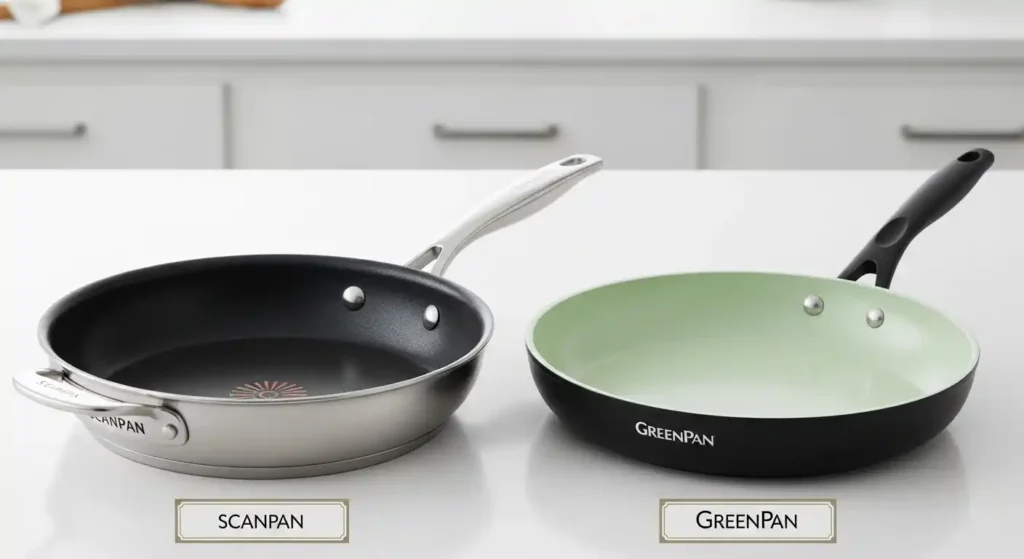
When comparing ScanPan vs GreenPan, several factors set them apart, from coating technology to durability and price.
1. Nonstick Coating Technology
ScanPan: Uses Stratanium, a ceramic-titanium reinforced coating. This makes it extremely durable and resistant to scratches, even from metal utensils in most cases.
GreenPan: Uses Thermolon, a ceramic coating that is non-toxic and free from PFAS and PFOA. While it is excellent for healthy cooking, it may not be as scratch-resistant as ScanPan’s Stratanium.
2. Durability
ScanPan is generally considered more durable than GreenPan. Its reinforced coating and heavy-gauge aluminum base allow it to withstand frequent use and higher temperatures. Many chefs report that ScanPan maintains its nonstick performance for years.
GreenPan, while reliable, is slightly more delicate. The ceramic coating can wear faster if exposed to high heat or metal utensils. Proper care is essential to prolong its lifespan.
3. Heat Tolerance
ScanPan: Oven-safe up to 500°F (260°C) and can handle high-heat searing. It’s suitable for recipes that start on the stovetop and finish in the oven.
GreenPan: Oven-safe up to 420°F (215°C), which is enough for most home recipes but slightly less tolerant of extreme heat.
For searing meats or high-temperature roasting, ScanPan may have a slight edge. For everyday cooking and baking at moderate temperatures, GreenPan performs well.
4. Safety and Eco-Friendliness
Both brands are PFOA-free, but GreenPan goes a step further with PFAS-free ceramic coatings that emphasize non-toxic cooking. If avoiding chemical exposure is your top priority, GreenPan may be the better choice.
ScanPan is also eco-conscious but focuses more on durability and professional-grade performance than on chemical-free branding.
5. Weight and Handling
GreenPan cookware is usually lighter than ScanPan, making it easier to maneuver, especially for people who prefer lighter pans for everyday cooking. ScanPan’s heavier build helps with even heat distribution but can be more cumbersome for some users.
6. Price
ScanPan is generally more expensive than GreenPan due to its professional-grade build and reinforced coating. GreenPan offers a variety of price points, making it more accessible to casual cooks while still maintaining quality.
Cooking with ScanPan
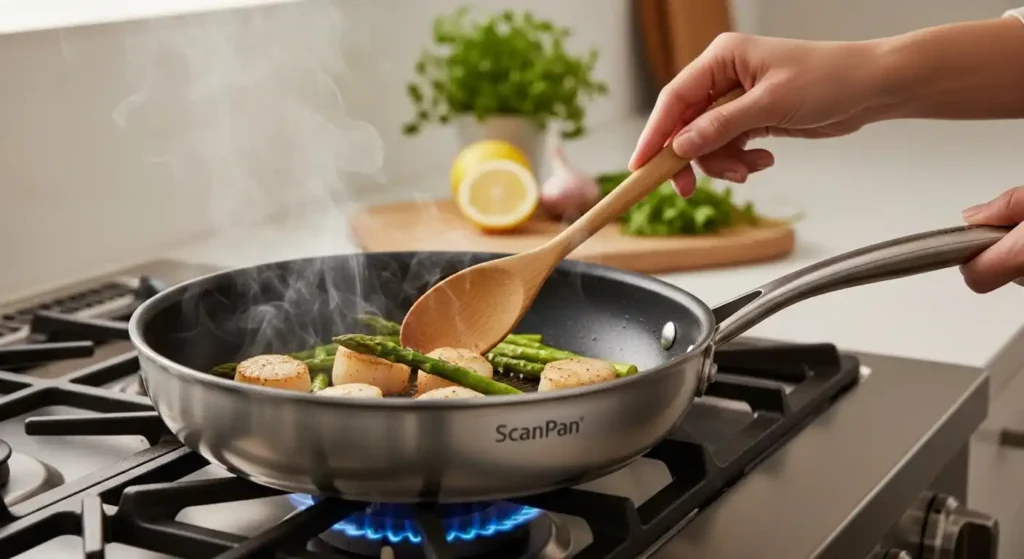
ScanPan is ideal for cooks who want durable, long-lasting nonstick cookware. Its even heat distribution and strong coating allow you to:
- Sauté vegetables or proteins without sticking
- Cook delicate dishes like eggs or fish
- Start a dish on the stovetop and finish in the oven
- Use metal utensils in some models without damaging the surface
ScanPan is particularly popular for recipes that require high heat or long cooking times.
Cooking with GreenPan
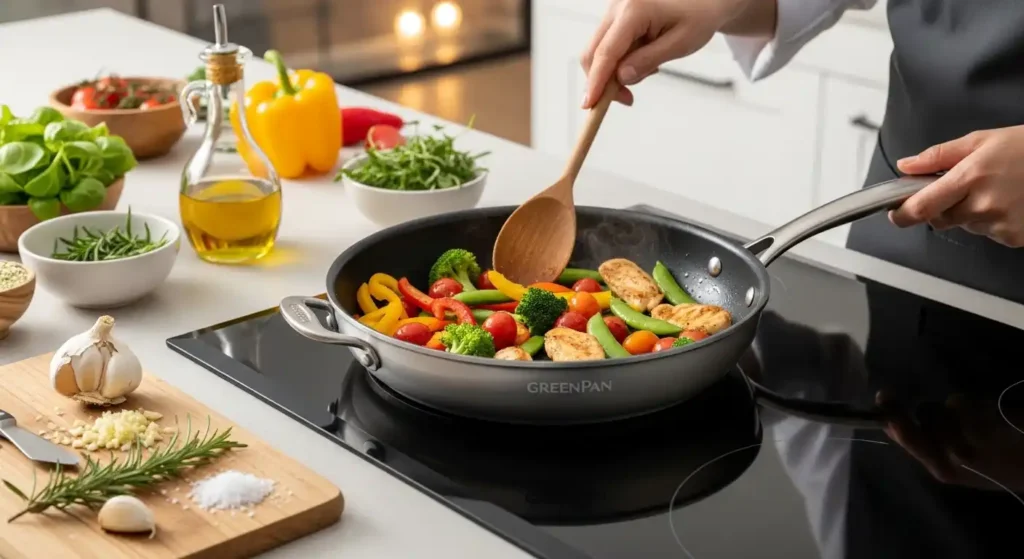
GreenPan excels for everyday healthy cooking. Its ceramic coating allows you to cook with minimal oil while ensuring food releases easily from the pan. Ideal uses include:
- Eggs, omelets, and pancakes
- Sautéed vegetables and grains
- Lightly seared chicken or fish
- Simmered sauces and stir-fries
Because it’s lighter, GreenPan is convenient for quick meals, lunch prep, or cooking for small families.
Its colorful designs also make it visually appealing for modern kitchens.
Pros and Cons of ScanPan
Advantages:
- Extremely durable, long-lasting
- Scratch-resistant coating
- High-heat tolerant
- Oven-safe up to 500°F (260°C)
- Professional-grade construction
Disadvantages:
- Heavier than GreenPan
- More expensive upfront
- Some models are bulky for small kitchens
Pros and Cons of GreenPan
Advantages:
- Ceramic coating free of PFAS and PFOA
- Lightweight and easy to handle
- Health-conscious cooking with minimal oil
- Affordable options
- Available in various colors and designs
Disadvantages:
- Less durable than ScanPan
- Ceramic coating can wear faster if misused
- Oven tolerance slightly lower than ScanPan
ScanPan vs GreenPan: Which One Should You Choose?
Choosing between ScanPan and GreenPan depends on your cooking style, priorities, and budget:
- Choose ScanPan if durability, high-heat cooking, and professional-grade performance are your priorities. It’s excellent for long-term investment and heavy-duty use.
- Choose GreenPan if you prefer lighter cookware, non-toxic ceramic coatings, and eco-friendly cooking. Ideal for health-conscious home cooks and everyday meals.
Many kitchens benefit from having both types of pans: a ScanPan for high-heat tasks and a GreenPan for delicate, quick meals.
Care Tips for Both Cookware Types
Proper care can significantly extend the life of your pans:
- Avoid metal utensils on GreenPan ceramic coatings. Use silicone, wood, or heat-resistant plastic instead.
- Moderate heat is best for ceramic nonstick to prevent coating wear.
- Hand wash when possible to preserve nonstick properties. Avoid harsh abrasives.
- For ScanPan, although it’s scratch-resistant, avoid excessive force with metal utensils to prolong the surface.
- Store carefully to avoid scratches or damage to the nonstick coating.
Final Thoughts
In the ScanPan vs GreenPan debate, there’s no single “best” option—only the best choice for your needs.
ScanPan offers professional durability, high heat tolerance, and long-term performance, making it ideal for serious cooks or anyone who wants long-lasting cookware.
GreenPan offers health-conscious, lightweight, and environmentally friendly nonstick cooking, perfect for everyday home use and quick meals.
For many kitchens, having both is the ultimate solution: ScanPan for high-heat, heavy-duty tasks and GreenPan for light, everyday cooking with minimal oil.
Investing in either brand ensures you’ll have reliable, high-quality cookware that improves your cooking experience, whether you’re making a quick breakfast or preparing a weekend feast.


