

The Best Sugar Alternatives for Perfect Cookies
So you’ve baked a batch of cookies, the smell fills your kitchen, and then you take that first bite… only to realize you accidentally added too much sugar, or maybe you’re trying to cut back for health reasons.
Fear not, cookie lovers! You don’t have to sacrifice flavor, texture, or that blissful melt-in-your-mouth magic just because you’re exploring the best sugar alternatives for baking that won’t wreck your cookies.
Today, we’re diving into sweet swaps that will keep your treats dreamy and guilt-free.
Why You Might Want Sugar Alternatives
Before we dig into the fun stuff, let’s be real: sugar isn’t evil.
But too much refined sugar can lead to energy crashes, and some folks just want to experiment with healthier baking options.
Using alternatives can also help with dietary restrictions, diabetes management, or even just changing up flavor profiles.
The trick is picking the right sugar substitute for your specific baked goods. Not all sweeteners play nicely with butter, eggs, and flour.
Some can make your cookies cakey instead of chewy, or worse—leave them tasting weirdly artificial.
But don’t worry, we’ve got your back.
Types of Sugar Alternatives for Baking
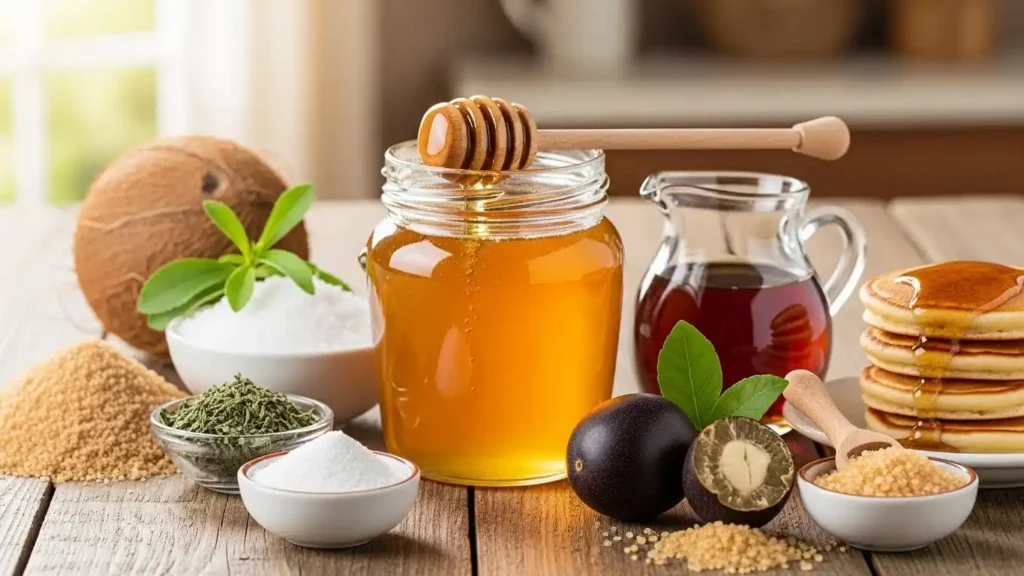
Here’s the lowdown on the sugar alternatives that actually work in cookies.
1. Honey
Yes, that golden, sticky goodness in your pantry is more than just a breakfast sweetener. Honey is sweeter than sugar, so you can use less of it. It adds moisture, which makes cookies soft and chewy.
Pro tip: Since honey is liquid, reduce other liquids in your recipe slightly to avoid overly soft dough. Also, it can brown your cookies faster, so keep an eye on baking time.
2. Maple Syrup
If you want a deep, rich flavor with a hint of caramel, maple syrup is your friend.
It’s slightly thinner than honey but just as effective in sweetening. Perfect for oatmeal cookies or spiced cookies that need that extra cozy vibe.
Pro tip: Like honey, adjust other liquids to prevent soggy dough, and consider lowering oven temperature by 25°F to prevent over-browning.
3. Coconut Sugar
Coconut sugar is a favorite among health-conscious bakers because it has a lower glycemic index than regular sugar.
It has a subtle caramel flavor that enhances chocolate, nuts, and spices.
Best of all, it behaves similarly to regular sugar, so you don’t have to drastically change your cookie recipes.
Pro tip: Use a 1:1 ratio swap for brown sugar, but keep in mind it won’t dissolve as much, so your cookies might be a touch grainier.
4. Stevia
Stevia is a zero-calorie sweetener derived from a plant. It’s much sweeter than sugar, so a little goes a long way. Great for diabetics or anyone looking to cut calories.
Pro tip: Stevia can sometimes leave a bitter aftertaste if overused. Look for blends designed for baking, and follow package directions for correct measurements.
5. Monk Fruit Sweetener
Monk fruit sweetener is another natural, zero-calorie option that works well in baking. It doesn’t spike blood sugar and has a clean, sweet taste. Many blends mimic sugar in volume, so it’s one of the easiest swaps.
Pro tip: Check if your monk fruit blend includes erythritol or another sugar alcohol—these can affect texture slightly, making cookies a bit crumblier.
6. Applesauce
Unsweetened applesauce is a liquid sweetener that adds moisture and a mild fruity flavor. It’s perfect for soft cookies, muffins, and cakes. Bonus: it reduces fat if you replace some butter with it.
Pro tip: Since it’s liquid, reduce other liquids in your recipe, and don’t expect crunchy cookies—these will be soft and chewy.
7. Date Sugar or Date Paste
Dates are naturally sweet, fiber-packed, and full of nutrients.
Date sugar can replace brown sugar, while date paste works like honey or maple syrup.
It’s ideal for oatmeal cookies, spiced cookies, or any dessert where a caramel-like flavor is welcome.
Pro tip: Date sugar doesn’t dissolve well, so you’ll need to blend or grind it for smoother texture. Date paste is best used as a liquid sweetener in 1:1 swaps with honey or syrup.
Tips for Baking with Sugar Alternatives
- Watch baking time: Many liquid sweeteners brown faster, so keep an eye on your cookies.
- Adjust liquids and fats: When using honey, syrup, or applesauce, slightly reduce other liquids to prevent soggy cookies.
- Taste as you go: Some sweeteners have stronger flavors (like coconut sugar or maple syrup), so start small and adjust.
- Expect texture differences: Your cookies may be softer, chewier, or more cake-like depending on the sweetener.
Why This Works
The key to why this sugar alternative approach works is balancing sweetness, moisture, and structure.
Regular sugar not only sweetens but also affects how cookies spread and brown.
By understanding your alternatives, you can replicate these effects without compromising taste.
Using alternatives thoughtfully ensures that your cookies still have that perfect chew, slight crisp, and just the right sweetness.
With these swaps, you won’t just survive sugar reduction—you’ll thrive.
How to Serve Your Cookies
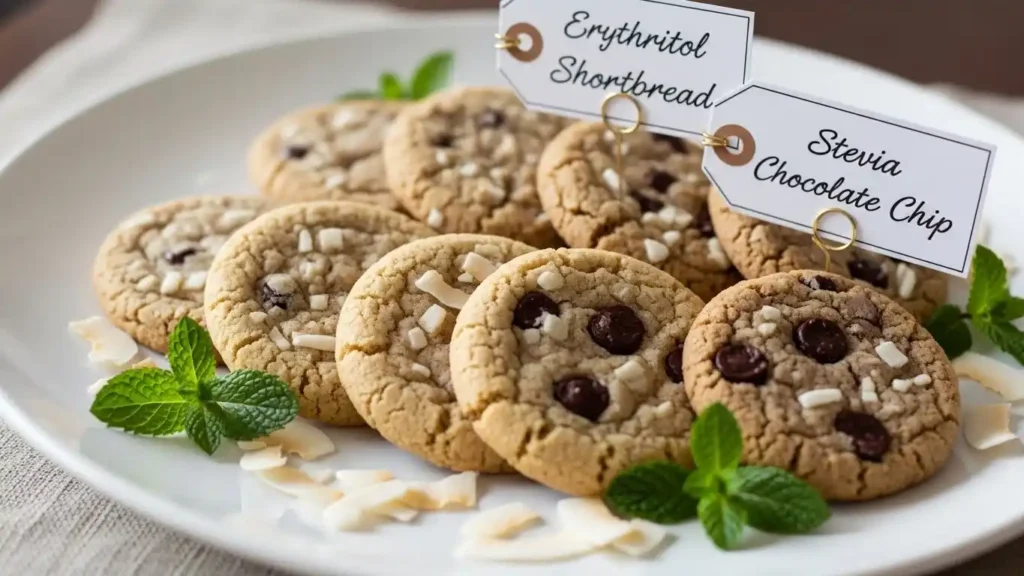
Once your cookies are baked, think beyond just a plate and napkin. Serve them with:
- A warm mug of tea or coffee for cozy vibes.
- A scoop of vanilla ice cream for a decadent treat.
- Fresh fruit for a naturally sweet contrast.
Presentation matters, even for cookies, and your sugar-conscious cookies can look just as indulgent as their sugar-loaded counterparts.
Common Mistakes to Avoid
- Overusing liquid sweeteners – Too much honey or syrup can make cookies spread too much.
- Ignoring sweetness intensity – Some sweeteners are stronger than sugar; using too much can be overpowering.
- Not adjusting oven temperature – Liquid sweeteners brown faster, so reduce temp slightly if needed.
- Expecting exact texture – Substitutes may slightly alter chewiness, so adjust expectations.
Alternatives & Substitutions Summary
- Honey → maple syrup or agave nectar
- Brown sugar → coconut sugar or date sugar
- Sugar → stevia or monk fruit blends
- Fat → applesauce (for lower-fat cookies)
Experiment and find your favorite combination! The fun of baking comes from discovering what works for your taste buds.
Final Thoughts
Cutting back on sugar doesn’t mean cutting back on flavor.
With the right choices, you can have cookies that taste just as indulgent—if not more satisfying—than the original recipe.
Keep a few sweeteners on hand, experiment with combinations, and you’ll never feel like you’re sacrificing anything.
By embracing the best sugar alternatives for baking that won’t wreck your cookies, you’re making your desserts friendlier for your health, diet, or just a little experimentation.
Your cookie tray will still disappear in minutes—trust me.
Now go ahead, whip up a batch, and enjoy the sweet victory without any of the sugar guilt.
FAQ (Frequently Asked Questions)
Q: Can I replace sugar 1:1 with honey or maple syrup?
A: Not exactly—both are liquid, so slightly reduce other liquids in your recipe.
Q: Will coconut sugar work in every cookie recipe?
A: Mostly yes, especially in recipes using brown sugar. Expect minor texture changes.
Q: Can I mix multiple sugar alternatives?
A: Absolutely! Honey + coconut sugar or applesauce + date paste can create amazing flavor.
Q: Are these alternatives safe for diabetics?
A: Stevia, monk fruit, and coconut sugar are good options, but always check with a doctor if needed.
Q: Do cookies bake differently with sugar alternatives?
A: Sometimes—cookies may brown faster or be softer. Adjust baking time and oven temperature as needed.
Q: Will my kids notice the difference?
A: Likely not! Many alternatives taste sweeter or richer than sugar. Just avoid stevia in large amounts—it can be bitter.
Q: Can I store cookies made with these alternatives the same way?
A: Yep! Store in an airtight container at room temp or freeze for later.


