

What Is a Jelly Roll Pan? A Simple Guide for Everyday Bakers
If you enjoy baking cookies, roasting vegetables, or trying fun dessert recipes, you’ve probably seen the term jelly roll pan in recipes.
Many home cooks pause at that moment and wonder: Do I really need a special pan for this?
The good news is that a jelly roll pan isn’t complicated or fancy. In fact, it’s one of the most useful baking tools you can have in your kitchen.
Whether you’re baking thin cakes, roasting veggies, or preparing quick sheet-pan meals, this pan can handle it all.
In this guide, we’ll break down everything you need to know about jelly roll pans—what they are, how they’re used, and why they’re so helpful for home cooks.
What Is a Jelly Roll Pan?
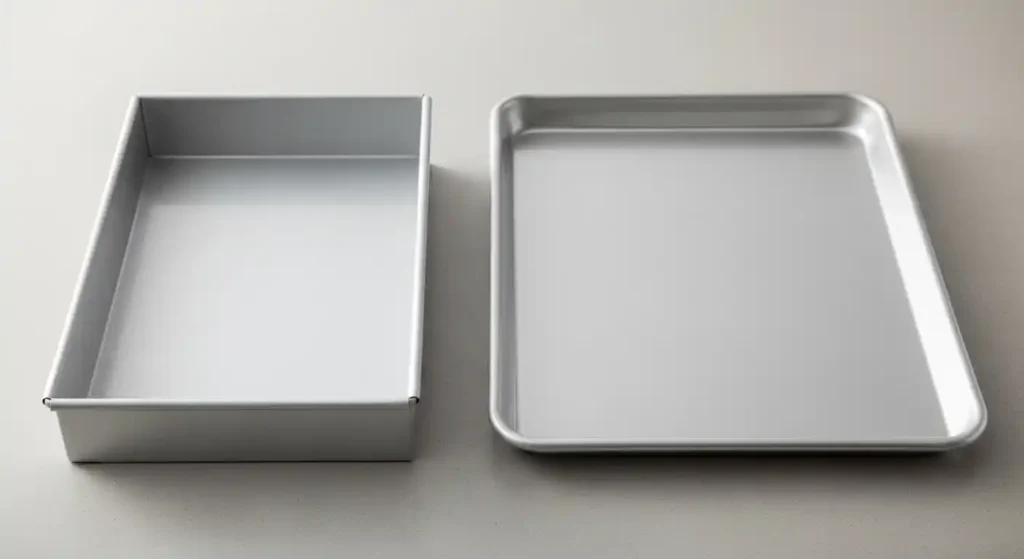
A jelly roll pan is a shallow rectangular baking pan with a small raised rim around the edges. The standard size is 10 x 15 inches with about a 1-inch edge.
That rim is the key feature. It prevents batter, oils, or juices from spilling over the sides while baking.
The pan is usually made from aluminum or stainless steel, which helps heat distribute evenly.
The name comes from the classic dessert called a jelly roll cake, a thin sponge cake baked in this pan and then rolled with filling inside.
Even though the name sounds very specific, the pan is actually very versatile and useful for many different recipes.
Why It’s Called a Jelly Roll Pan
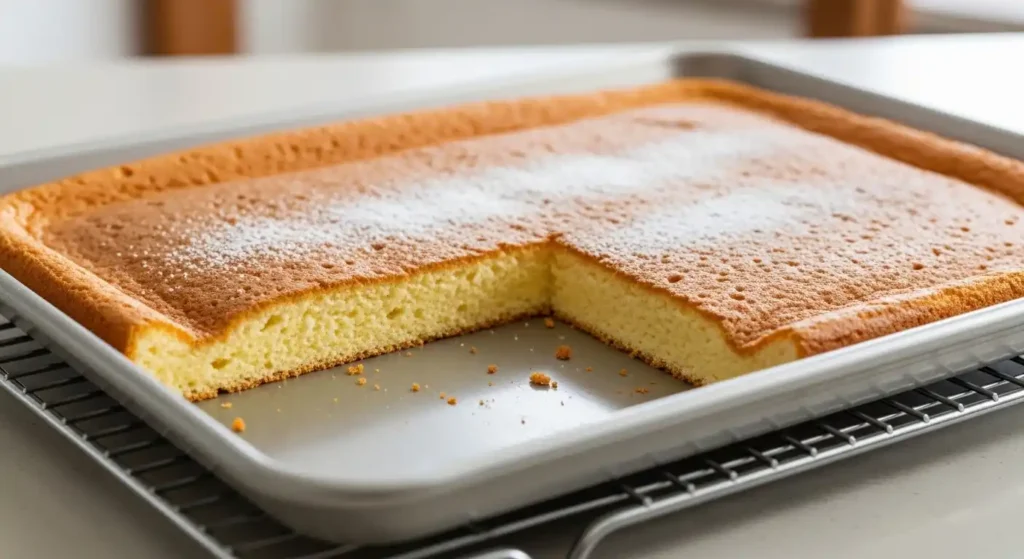
The jelly roll pan was originally designed for baking thin sponge cakes used in rolled desserts.
These cakes are spread into a thin layer, baked quickly, and then rolled with filling like fruit spread or cream.
Because the pan is shallow, the cake cooks evenly and stays flexible enough to roll without breaking.
Over time, bakers discovered that the same pan worked well for many other kitchen tasks. Today it’s commonly used for:
- Roasting vegetables
- Baking cookies
- Toasting nuts
- Cooking sheet-pan meals
- Baking small cakes or bars
So while the name comes from a dessert, the pan itself is far more versatile.
Jelly Roll Pan Size and Dimensions
One of the most important things to know is the size.
A standard jelly roll pan typically measures:
- 10 x 15 inches
- 1-inch rim around the edges
This size is smaller than a typical baking sheet, which is why recipes sometimes specifically call for it.
Because the sides are shallow, the pan allows heat to circulate evenly. This helps foods cook faster and more evenly than in deeper pans.
If you substitute a different pan size, the cooking time and thickness of the food can change.
Jelly Roll Pan vs Baking Sheet
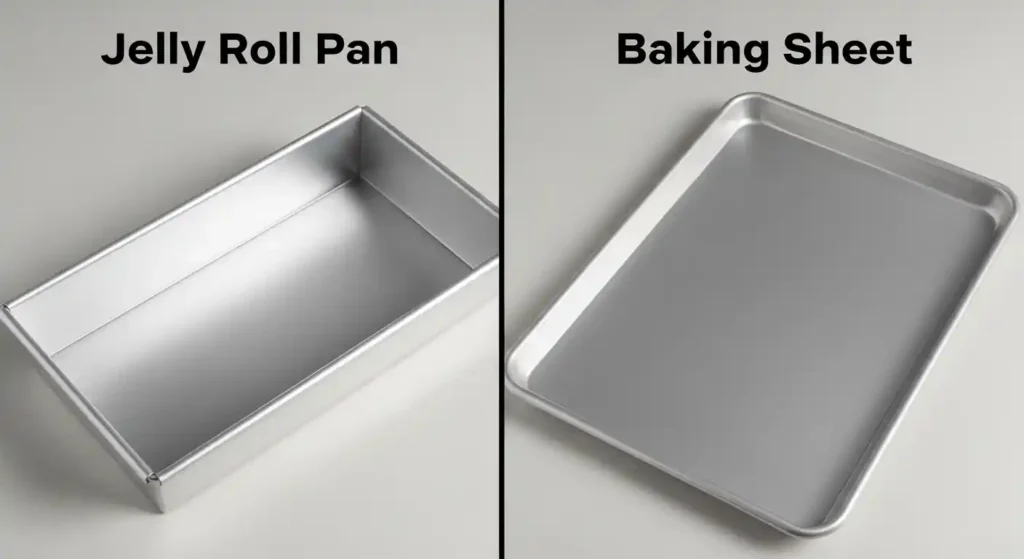
Many people confuse a jelly roll pan with a baking sheet, but they are not exactly the same.
Here are the main differences.
1. Edge Height
A baking sheet often has one flat edge or no edge, while a jelly roll pan has raised edges on all four sides.
This raised rim helps contain liquids or batter.
2. Size
A jelly roll pan is usually smaller than a standard baking sheet.
Typical sizes:
- Jelly roll pan: 10 x 15 inches
- Half sheet pan: 13 x 18 inches
3. Best Uses
Jelly roll pans are ideal for foods that release juices or require batter.
Baking sheets work best for foods like cookies or biscuits that don’t spread liquid.
Because of these differences, using the correct pan can help ensure your recipe turns out properly.
Common Uses for a Jelly Roll Pan

Although it was originally made for rolled cakes, this pan has many everyday uses in the kitchen.
Here are some of the most popular ways people use it.
Baking Thin Cakes
This is the pan’s original purpose. Thin sponge cakes bake evenly and stay flexible enough to roll with filling.
These cakes are often used for desserts that look impressive but are surprisingly simple to make.
Roasting Vegetables
The shallow sides allow heat to circulate around vegetables, helping them roast evenly and develop a golden texture.
Vegetables like carrots, broccoli, potatoes, and zucchini work especially well.
Baking Cookies
If you prefer cookies that bake evenly and spread nicely, a jelly roll pan can be a great option.
The edges prevent melted butter or toppings from dripping into the oven.
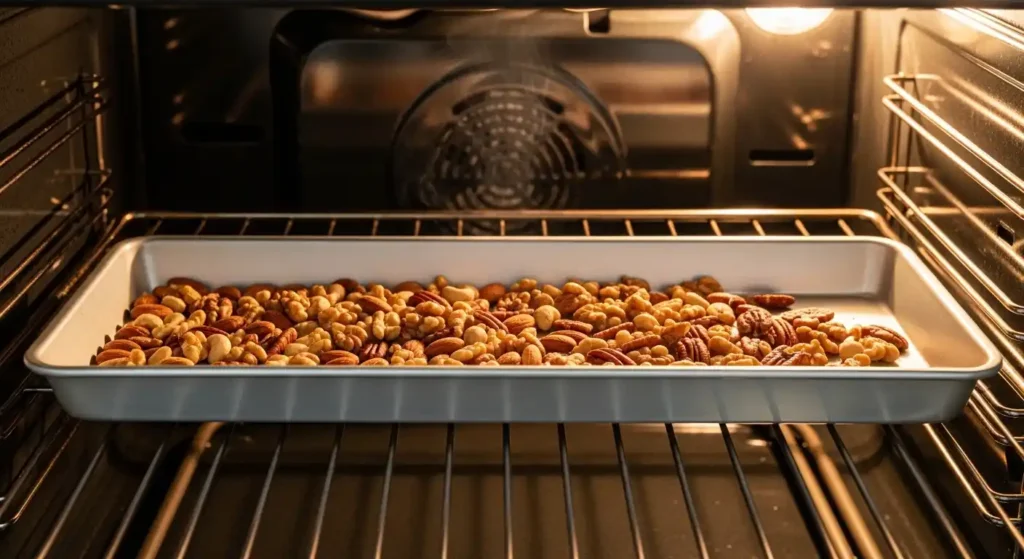
Toasting Nuts or Seeds
Because the pan heats quickly and evenly, it’s perfect for lightly toasting nuts or seeds.
Just spread them in a single layer and bake for a few minutes.
Sheet Pan Meals
Many cooks now use jelly roll pans for quick sheet pan dinners, where vegetables and protein cook together in one pan.
This makes cleanup simple and saves time in the kitchen.
Materials Used in Jelly Roll Pans
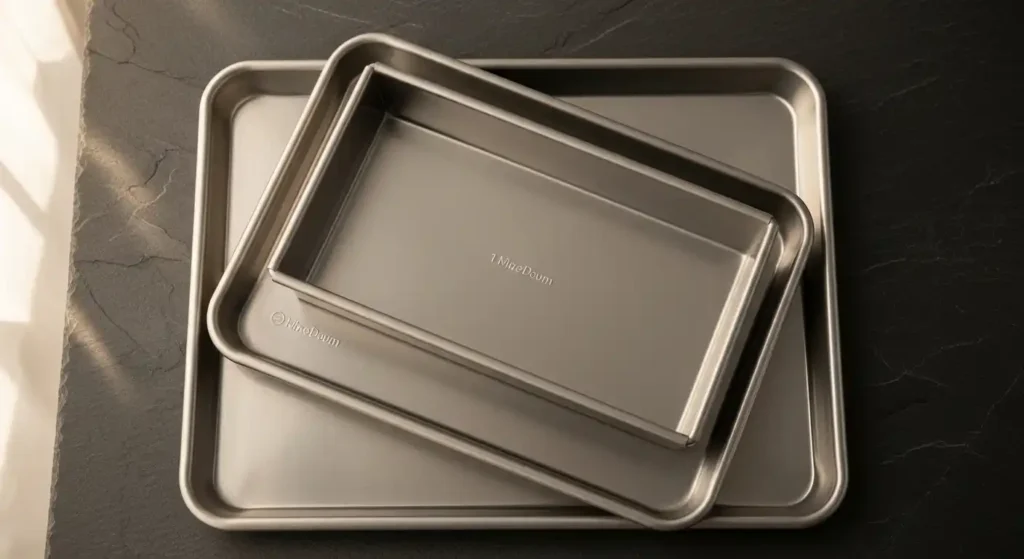
Jelly roll pans are usually made from materials that distribute heat well and are durable.
Aluminum
Aluminum is the most common material. It heats quickly and evenly, which helps prevent uneven baking.
Many professional bakers prefer aluminum pans.
Stainless Steel
These pans are durable and resistant to rust. However, they may not conduct heat as evenly as aluminum.
Nonstick Coated Pans
Nonstick pans make cleanup easier and help delicate cakes release smoothly.
However, they should be used carefully to avoid scratching the coating.
When choosing a pan, sturdy construction and even heat distribution are the most important factors.
Tips for Using a Jelly Roll Pan
If you’re new to using this type of pan, a few simple tips can make baking easier.
Line the Pan with Parchment Paper
This helps prevent sticking and makes cleanup quick.
It’s especially helpful when baking thin cakes or sticky desserts.
Don’t Overfill the Pan
Because the sides are only about 1 inch high, overfilling can cause batter to spill.
Follow recipe measurements carefully.
Spread Ingredients Evenly
For roasting vegetables or baking bars, spread ingredients in a single layer so everything cooks evenly.
Rotate the Pan if Needed
Some ovens heat unevenly. Rotating the pan halfway through baking can help ensure consistent results.
Can You Substitute a Jelly Roll Pan?
Sometimes recipes call for a jelly roll pan, but you might not have one.
In many cases, you can use alternatives such as:
- A rimmed baking sheet
- A smaller sheet pan
- A 9 x 13 baking dish (for thicker recipes)
However, substitutions may change the cooking time or thickness of the final dish.
If the recipe depends on a thin layer—like rolled cakes—it’s best to use the correct pan size.
Why Every Home Baker Should Have One
Even if you don’t plan on making rolled cakes, a jelly roll pan is incredibly useful.
It works for:
- Everyday baking
- Roasting vegetables
- Quick weeknight meals
- Preparing desserts
Because it’s smaller than a large sheet pan, it also fits easily in most ovens and is simple to store.
Many home cooks eventually realize they reach for this pan more often than they expected.
Final Thoughts
A jelly roll pan might sound like a specialized baking tool, but it’s actually one of the most versatile pans you can own.
Its shallow depth, raised edges, and compact size make it ideal for baking, roasting, and preparing many everyday recipes.
Whether you’re making thin cakes, roasting vegetables, or baking cookies, this simple pan can make cooking easier and more efficient.
If you enjoy baking or sheet-pan cooking, adding a jelly roll pan to your kitchen tools is a smart and practical choice.


