

What Is PFOA? A Complete Guide to Understanding This Common Chemical

If you’ve ever shopped for nonstick cookware, you’ve probably seen labels that say “PFOA-free.”
But what does that really mean? Many people still ask the important question: what is PFOA, and why is it often mentioned when discussing kitchen safety?
PFOA has been widely used in manufacturing for decades, especially in products designed to resist heat, stains, and sticking.
However, concerns about its impact on health and the environment have made it a topic of increasing interest.
In this guide, we’ll break down everything you need to know about PFOA, including what it is, where it’s found, whether it’s safe, and how to avoid it in your daily life.
What Is PFOA?
Let’s start with the basics: what is PFOA?
PFOA stands for perfluorooctanoic acid, a man-made chemical that belongs to a larger group of substances known as PFAS (per- and polyfluoroalkyl substances).
These chemicals are often used to create products that are resistant to heat, water, and grease.
PFOA was commonly used in the production of nonstick cookware, stain-resistant fabrics, and certain types of packaging. Its unique properties made it highly useful—but also raised concerns over time.
Why Was PFOA Used?
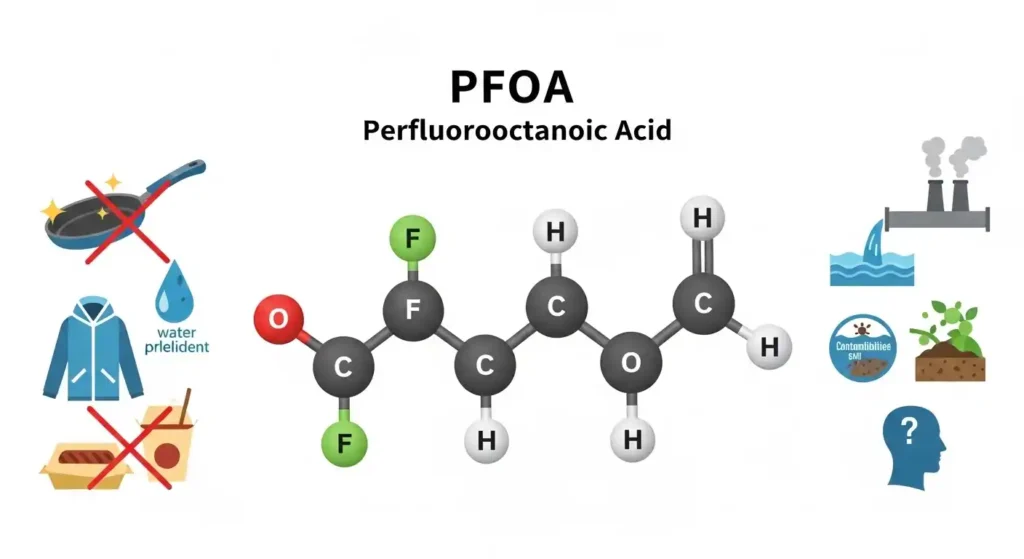
PFOA became popular because of its ability to improve product performance in several ways.
Heat Resistance
It can withstand high temperatures, making it ideal for cookware manufacturing.
Nonstick Properties
PFOA helped create smooth, nonstick surfaces that made cooking and cleaning easier.
Water and Stain Resistance
It was also used in coatings for fabrics and carpets to repel water and stains.
These benefits made PFOA widely used in many everyday products for years.
Where Is PFOA Found?
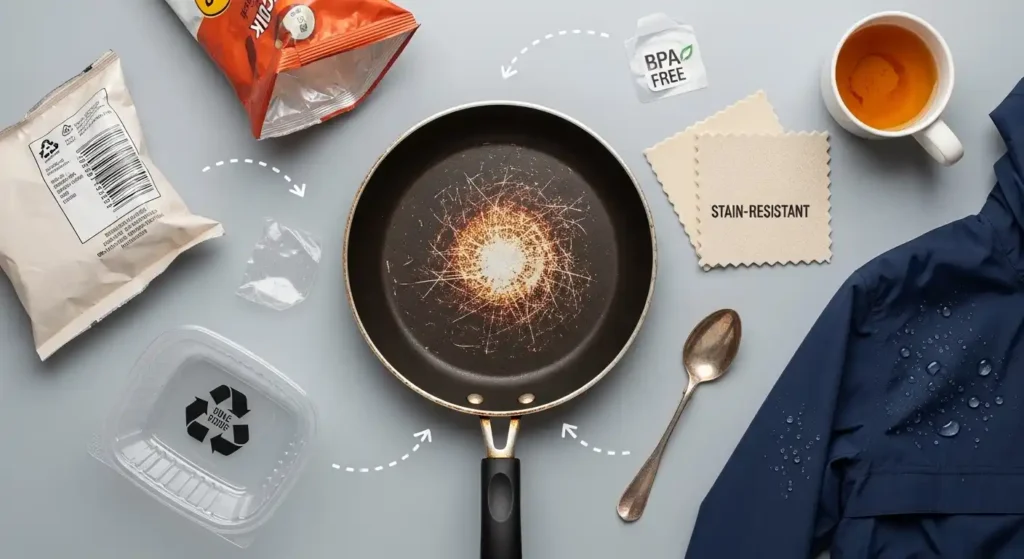
Although its use has declined, PFOA has been present in a variety of items.
Common Sources
- Older nonstick cookware
- Stain-resistant furniture and carpets
- Water-resistant clothing
- Certain food packaging materials
Today, many manufacturers have reduced or eliminated PFOA from their products, especially in cookware.
Is PFOA Safe?
One of the main reasons people ask what is PFOA is to understand its safety.
Health Concerns
Studies have linked long-term exposure to PFOA with potential health risks. Because of these concerns, regulatory agencies and manufacturers have taken steps to reduce its use.
Environmental Impact
PFOA is known for being persistent, meaning it does not break down easily in the environment. This can lead to long-term accumulation in water and soil.
Current Status
Many countries have restricted or phased out PFOA in manufacturing. Modern cookware is often labeled “PFOA-free,” indicating it does not contain this chemical.
What Does “PFOA-Free” Mean?

When you see a product labeled “PFOA-free,” it means that PFOA was not used in its manufacturing process.
Why It Matters
- Reduces potential health concerns
- Indicates updated manufacturing standards
- Provides peace of mind for consumers
However, it’s important to note that “PFOA-free” does not always mean the product is completely free from all related chemicals, but it is a positive step toward safer materials.
PFOA vs Nonstick Coatings
Many people confuse PFOA with nonstick coatings themselves, but they are not the same.
PFOA
- A chemical used during manufacturing
- Not the actual nonstick surface
Nonstick Coating
- The layer that prevents food from sticking
- Often made from different materials today
Modern nonstick cookware can be made without using PFOA, making it safer than older versions.
How to Reduce Exposure to PFOA
Even though PFOA is less common today, you can take steps to minimize exposure.
Choose PFOA-Free Cookware
Look for labels that clearly state “PFOA-free.”
Replace Old Cookware
If you have older nonstick pans, consider upgrading to newer versions.
Avoid Overheating
Using cookware at extremely high temperatures can degrade coatings over time.
Use Proper Utensils
Avoid scratching nonstick surfaces to maintain their integrity.
Alternatives to PFOA-Based Cookware
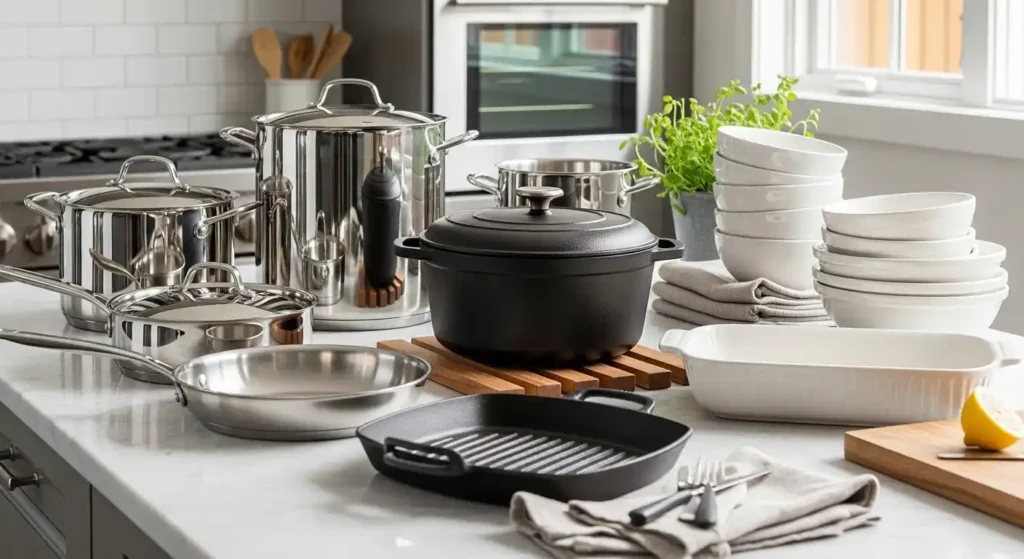
If you want to avoid PFOA entirely, there are several safe alternatives.
Stainless Steel
- Durable and non-reactive
- Does not require chemical coatings
Cast Iron
- Naturally nonstick when seasoned
- Long-lasting and versatile
Ceramic-Coated Cookware
- Often marketed as non-toxic
- Smooth, easy-to-clean surface
These options provide safe and effective cooking without relying on PFOA.
Common Myths About PFOA
There’s a lot of confusion surrounding PFOA, so let’s clear up a few myths.
Myth 1: All Nonstick Cookware Contains PFOA
Fact: Most modern nonstick cookware is PFOA-free.
Myth 2: PFOA Is Still Widely Used
Fact: Its use has been significantly reduced or eliminated in many countries.
Myth 3: PFOA-Free Means Completely Chemical-Free
Fact: It simply means PFOA is not used; other materials may still be present.
Why Is PFOA Still Discussed Today?
Even though PFOA use has declined, it remains a topic of discussion because:
- It was widely used in the past
- It can persist in the environment
- Consumers are more aware of product safety
Understanding what is PFOA helps you make informed choices about the products you use every day.
Should You Be Concerned?
For most people, occasional exposure to small amounts of PFOA is not a major concern. However, being aware of your cookware and household products is always a good practice.
When to Take Action
- If you’re using very old nonstick cookware
- If your pans are scratched or damaged
- If you prefer chemical-free cooking options
Making small changes can help improve both safety and peace of mind.
Tips for Safer Cooking

To ensure a safer cooking experience:
- Use moderate heat levels
- Avoid using damaged cookware
- Clean pans gently
- Choose high-quality, modern cookware
These habits not only reduce exposure to unwanted substances but also extend the life of your kitchen tools.
Final Thoughts
So, what is PFOA? It’s a man-made chemical once widely used in the production of nonstick cookware and other products.
While it offered useful properties like heat resistance and nonstick performance, concerns about its health and environmental impact have led to its decline.
Today, most cookware is labeled PFOA-free, making it safer for everyday use. By understanding what PFOA is and how it’s used, you can make smarter decisions when choosing cookware and maintaining your kitchen.
In the end, awareness is key. With the right information and a few simple precautions, you can enjoy safe, efficient cooking without worry.


