

11 Best Tips for Growing Herbs Indoors Year-Round

Fresh herbs can grow inside all year with the right light, water, and care. This article will help readers keep a small herb garden healthy through every season, even in limited space.
It focuses on simple steps that support steady growth, strong flavor, and easy harvesting.
Short, clear tips make indoor herb care feel manageable for beginners and useful for experienced gardeners too.
The goal is fresh herbs at home, not a fussy setup.
Selecting the correct location, balancing moisture levels, and providing adequate light are essential for maintaining healthy leaves during the colder months.
These straightforward practices ensure your culinary greens remain productive and full of life right on your windowsill.
With minimal effort and basic equipment, you can successfully maintain a thriving countertop setup all year long.
1. Growing herbs indoors
Growing herbs indoors is an incredibly rewarding way to bring the beauty of nature inside, turning empty windowsills into vibrant, living decor.
Whether you have a spacious sunroom or a compact apartment ledge, cultivating an indoor edible garden is a simple, budget-friendly project that keeps aromatic flavors within arm’s reach all year round.
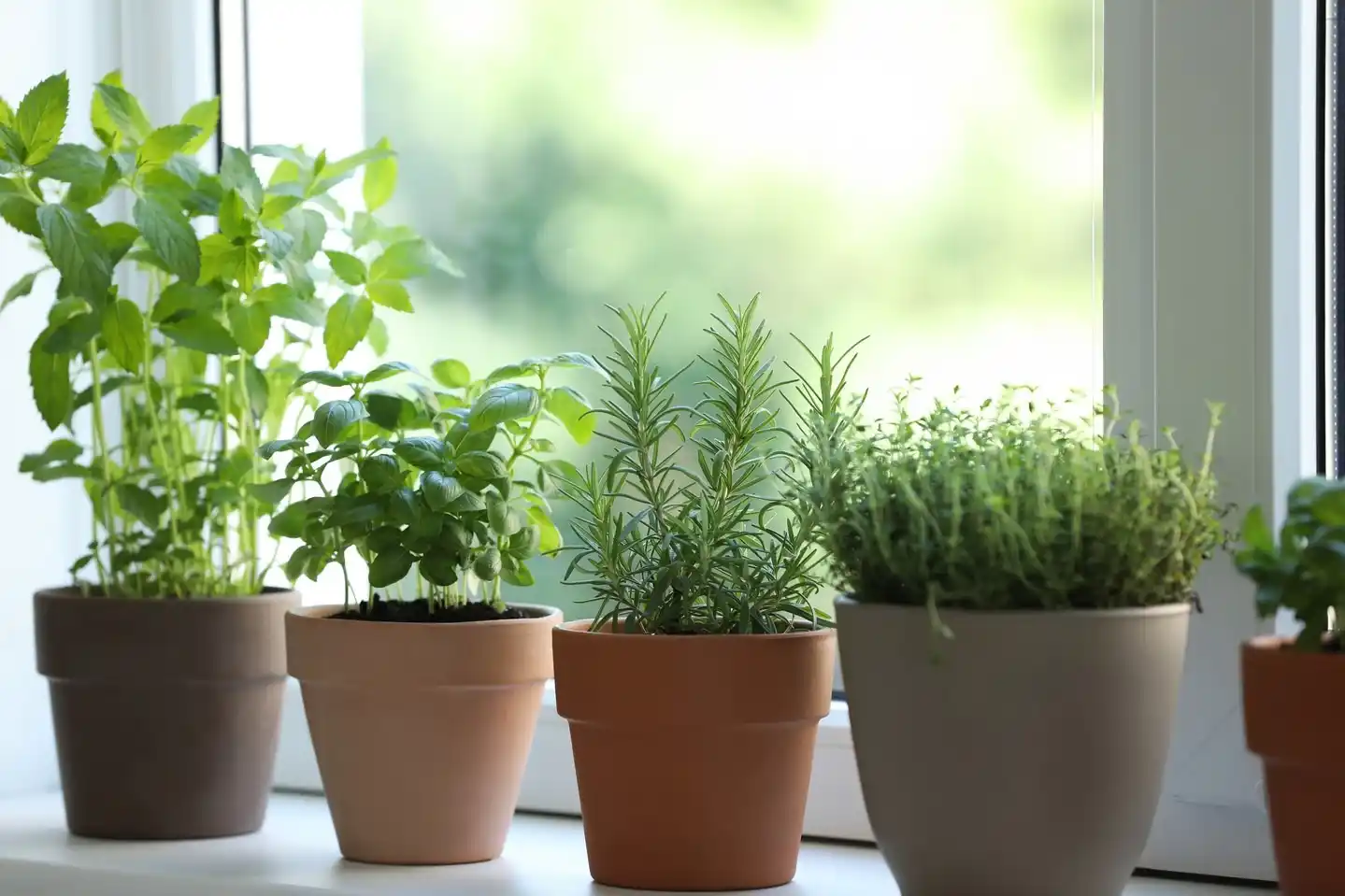
Several herb pots sit together on a bright windowsill, each holding a different plant with fresh green growth. The mix of tall, leafy stems and compact herbs shows how a sunny spot can support varied indoor herbs with simple pots and steady light.
2. Year round herb garden
An indoor oasis lets you bypass changing seasons, ensuring a steady supply of vibrant, homegrown flavors no matter the weather outside.
By utilizing a sunny windowsill, you can harvest crisp, nutrient-dense ingredients all 365 days of the year.
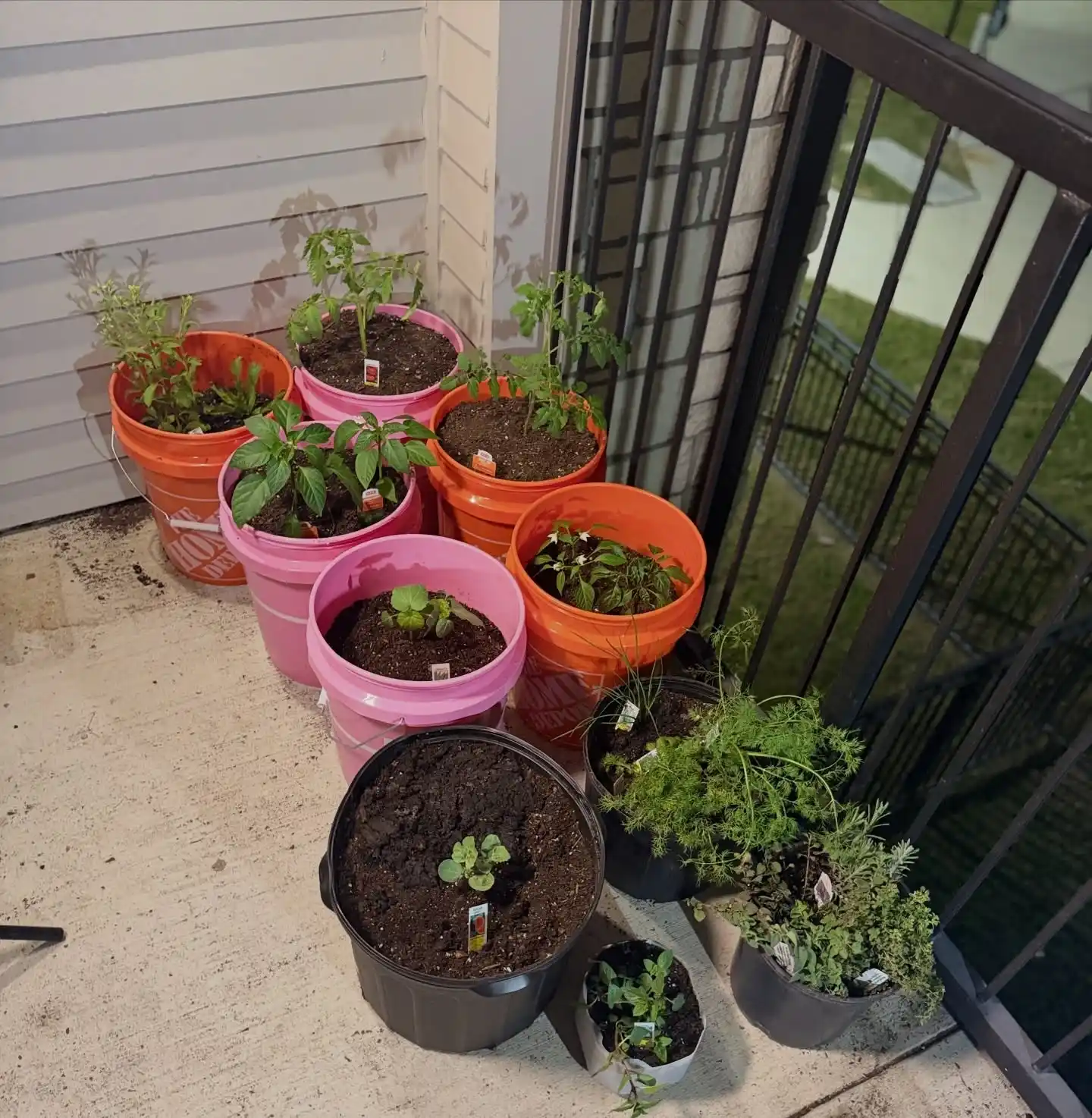
Large industrial buckets offer an affordable way to house indoor crops. These deep orange and pink plastic containers provide excellent root space for growing sturdier plants.
You can easily drill holes in the bottom to ensure proper water drainage.Placing these vibrant vessels near a balcony door or large window guarantees ample sunlight.
Green sprouts stay safe from cold floors when packed tightly together. This smart setup makes moving your small garden incredibly simple during season changes.
3. Kitchen herb garden
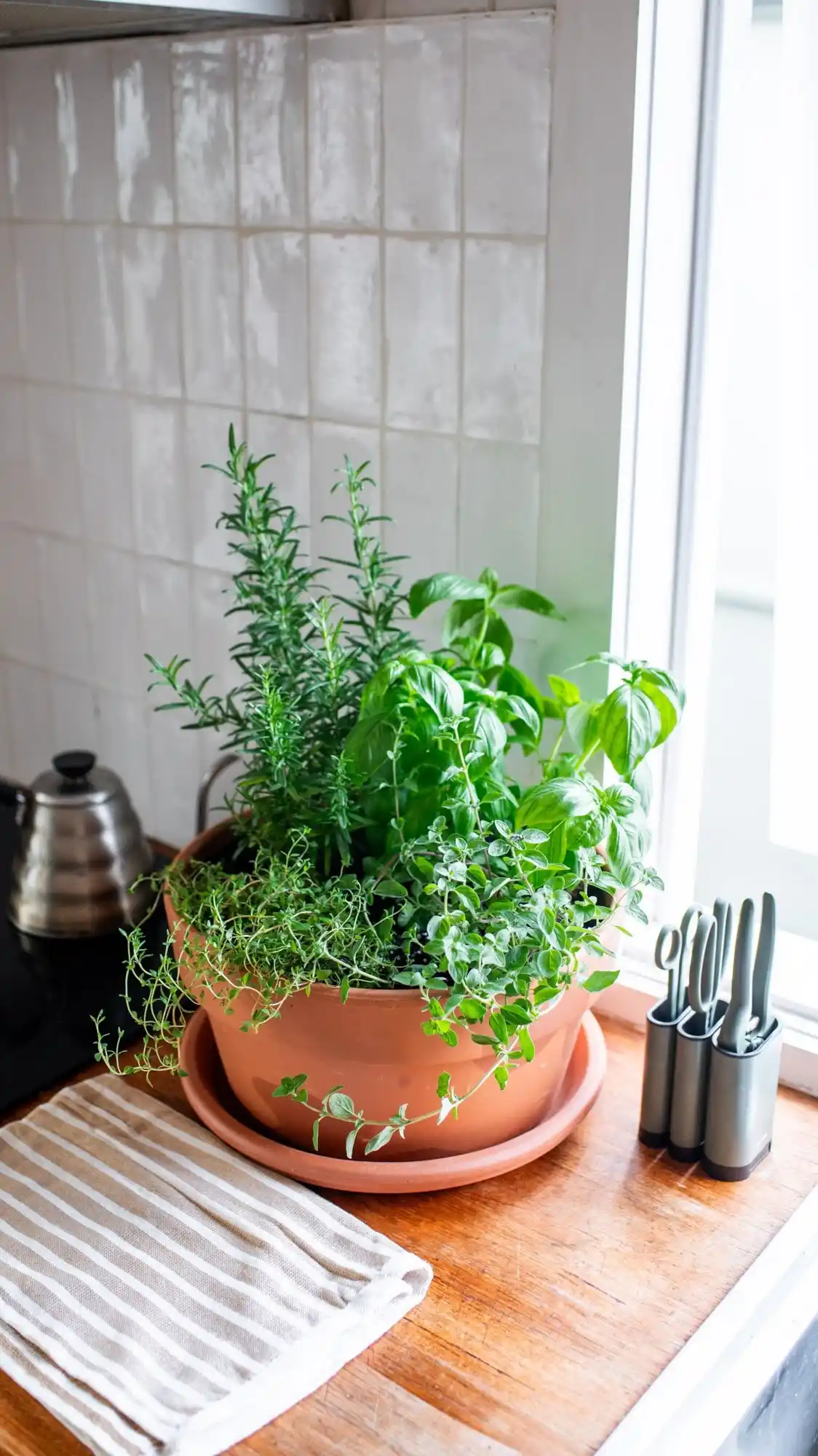
A wide terracotta dish lets you plant multiple edible greens together in one spot.
Natural clay absorbs excess moisture from the organic soil to prevent root damage.
This classic look blends beautifully with modern kitchen tiles and wooden countertops.
Placing your shared container right beside the glass ensures maximum daily light exposure.
Tall rosemary stalks stretch upward while delicate thyme trails over the rim. Fresh basil stays close to your stove for quick seasoning while cooking.
4. Indoor plant care
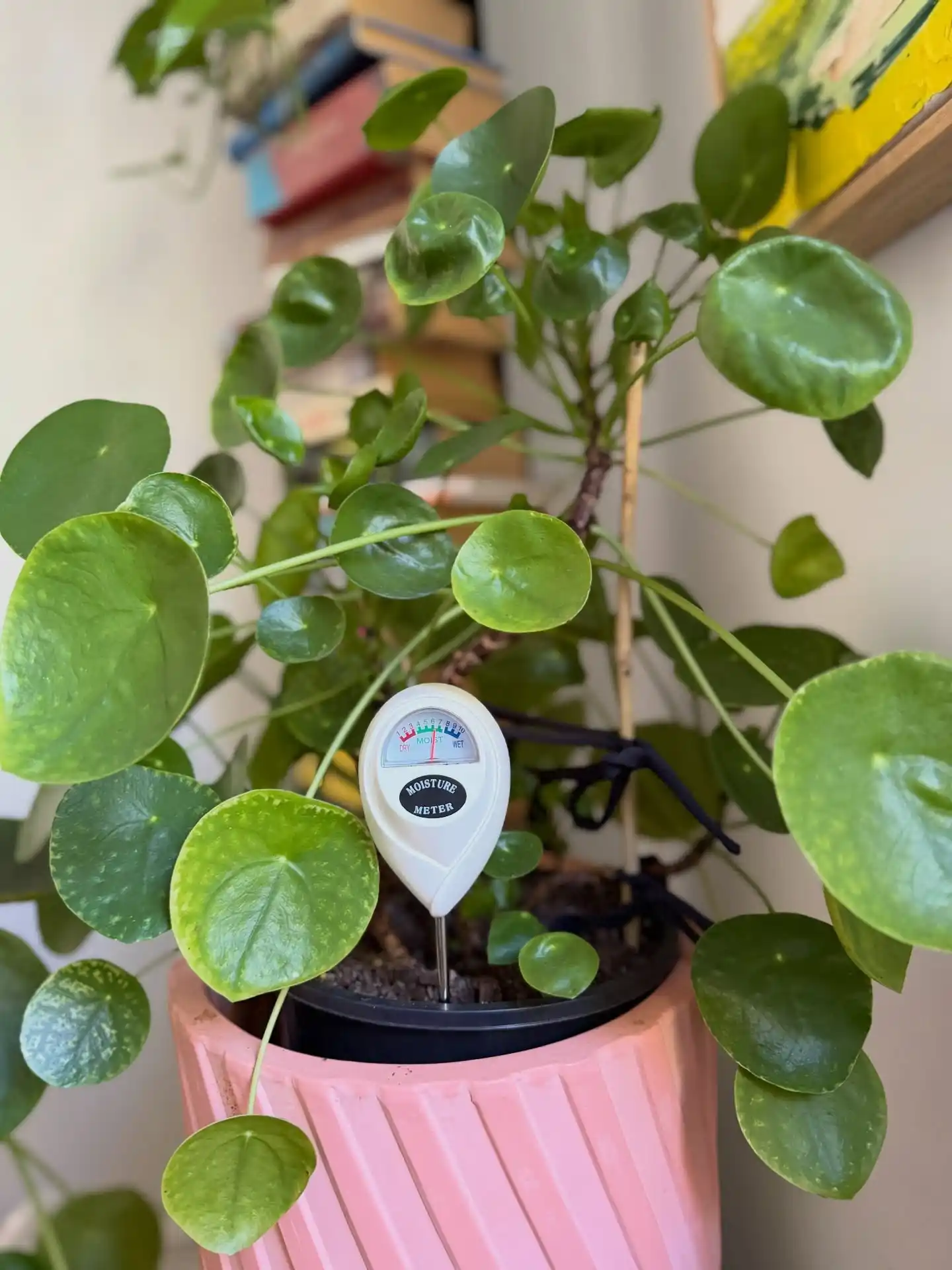
A dedicated testing device removes guesswork from your daily watering schedule.
Insert the long metal probe deep into the potting mix to check hidden dampness levels instantly.
The clear color coded display tells you if the roots are dry or wet.
Using this tool protects your delicate household crops from accidental drowning. Round green leaves stay strong and healthy when you only add moisture upon demand.
This simple habit keeps your indoor ecosystem perfectly balanced.
5.Home herb setup
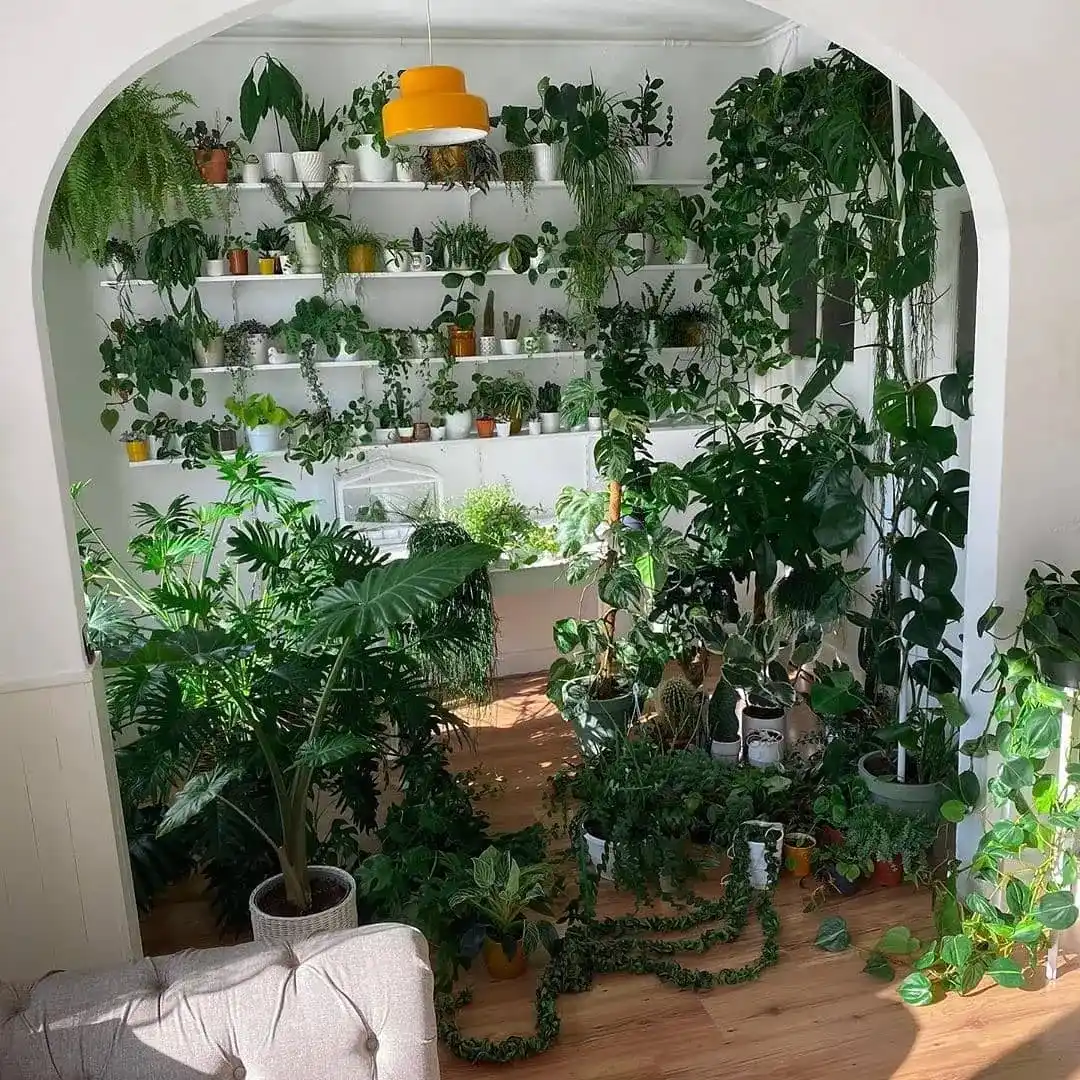
Creating a dedicated indoor growth zone allows you to maximize your harvest potential.
Transforming an entire corner into a lush green sanctuary ensures your collection thrives together.
White wall shelving units turn an empty alcove into a massive vertical growing space.
Dozens of small pots line the structure to keep individual plant varieties separated. Massive leafy floor plants catch pooling sunlight beneath the main display shelves.
Arranging trailing vines alongside your container crops creates a humid microclimate. A bright yellow overhead lamp offers additional visibility for monitoring new leaf growth.
This comprehensive layout provides a beautiful way to mass cultivate diverse flora at home.
6. Organic herbs indoors
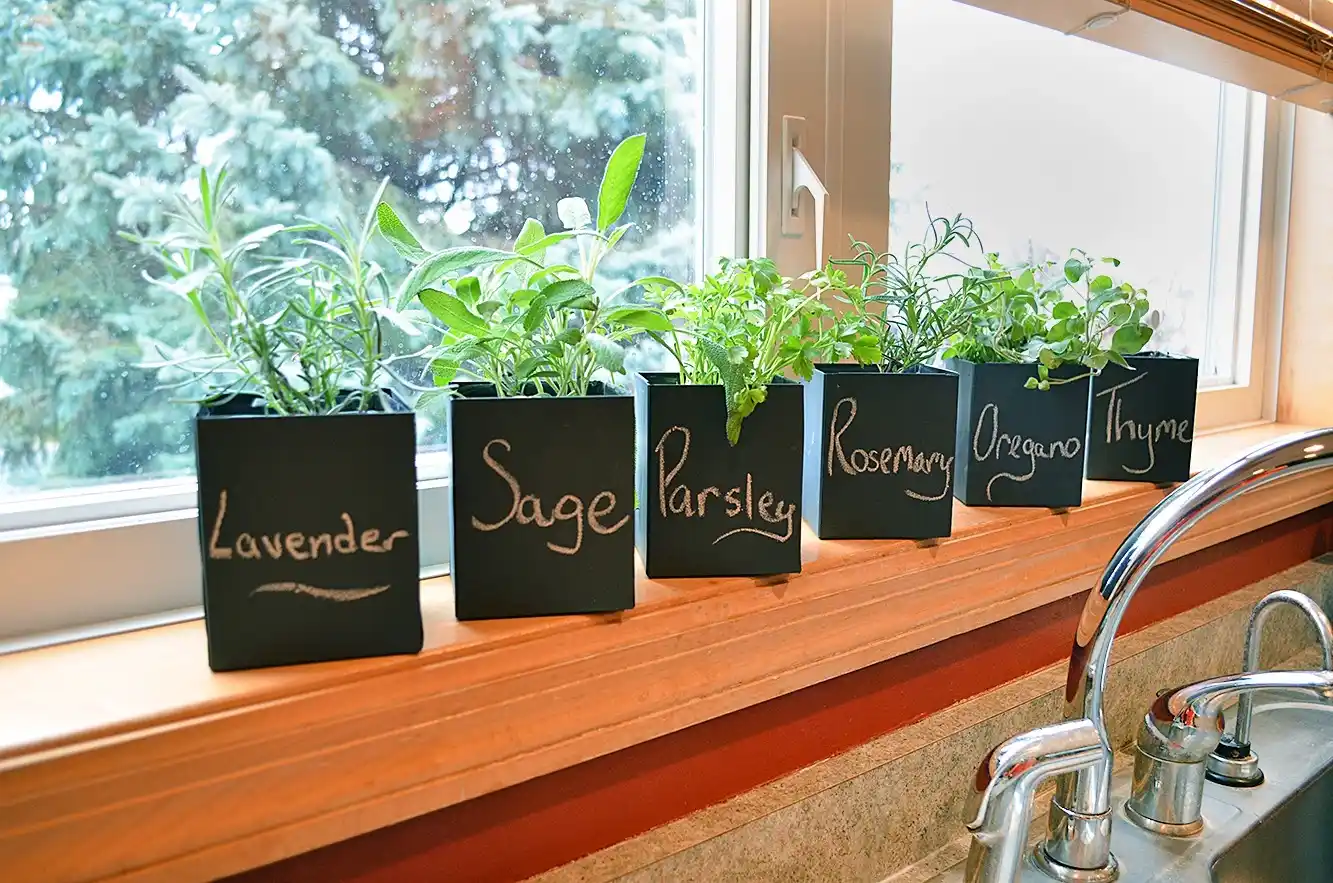
Black square pots line a bright kitchen windowsill, and each one has a hand written herb name in chalk.
The plants look fresh and well kept, with different leaf shapes that suggest a mixed herb setup for daily cooking and easy indoor growing.
Some common organic indoor growing herbs are mentioned here.
1. Basil indoors
This sun-loving favorite thrives on warm, south-facing windowsills and requires consistent moisture.
Harvest the top leaves regularly to encourage a bushier, more productive plant for your kitchen creations.
2. Mint indoors
Known for its vigorous growth, mint is perfect for indoor pots because containment keeps its aggressive roots in check.
It tolerates partial shade better than most herbs and loves moist, well-draining organic soil.
3. Thyme indoors
This hardy, drought-tolerant herb prefers plenty of direct sunlight and minimal watering.
Its low-maintenance nature makes it an excellent choice for sandy, fast-draining potting mixes on a bright ledge.
4. Lavender indoors
To successfully grow lavender indoors, place it in your absolute sunniest window and ensure excellent air circulation.
Be highly cautious with watering, as this Mediterranean plant needs its soil to dry out completely between drinks.
5. Cilantro indoors
Cilantro appreciates bright, indirect light and cooler indoor temperatures to prevent it from bolting (flowering) too quickly.
Keep the soil evenly moist and harvest the outer leaves frequently to prolong its lifecycle.
6. Dill indoors
With its delicate, feathery fronds, indoor dill requires a deeply set pot to accommodate its long taproot and at least six hours of bright sunlight.
Keep the soil damp but never soggy to help this aromatic herb flourish.
7. Tarragon indoors
French tarragon does wonderfully in a sunny indoor spot with slightly less watering once established.
It benefits from a brief period of winter dormancy, making it a unique, rewarding addition to a permanent indoor garden.
8. Oregano indoors
This flavor-packed herb loves soaking up intense afternoon sun and prefers its organic soil to lean on the drier side.
Trimming the stems regularly prevents it from getting woody and stimulates fresh, flavorful growth.
9. Sage indoors
Sage requires strong, direct sunlight and a very light hand when it comes to watering.
Its velvety, silver-green leaves are highly susceptible to root rot, so a breathable clay pot with sharp drainage is key to its indoor success.
7. Potting soil for herbs
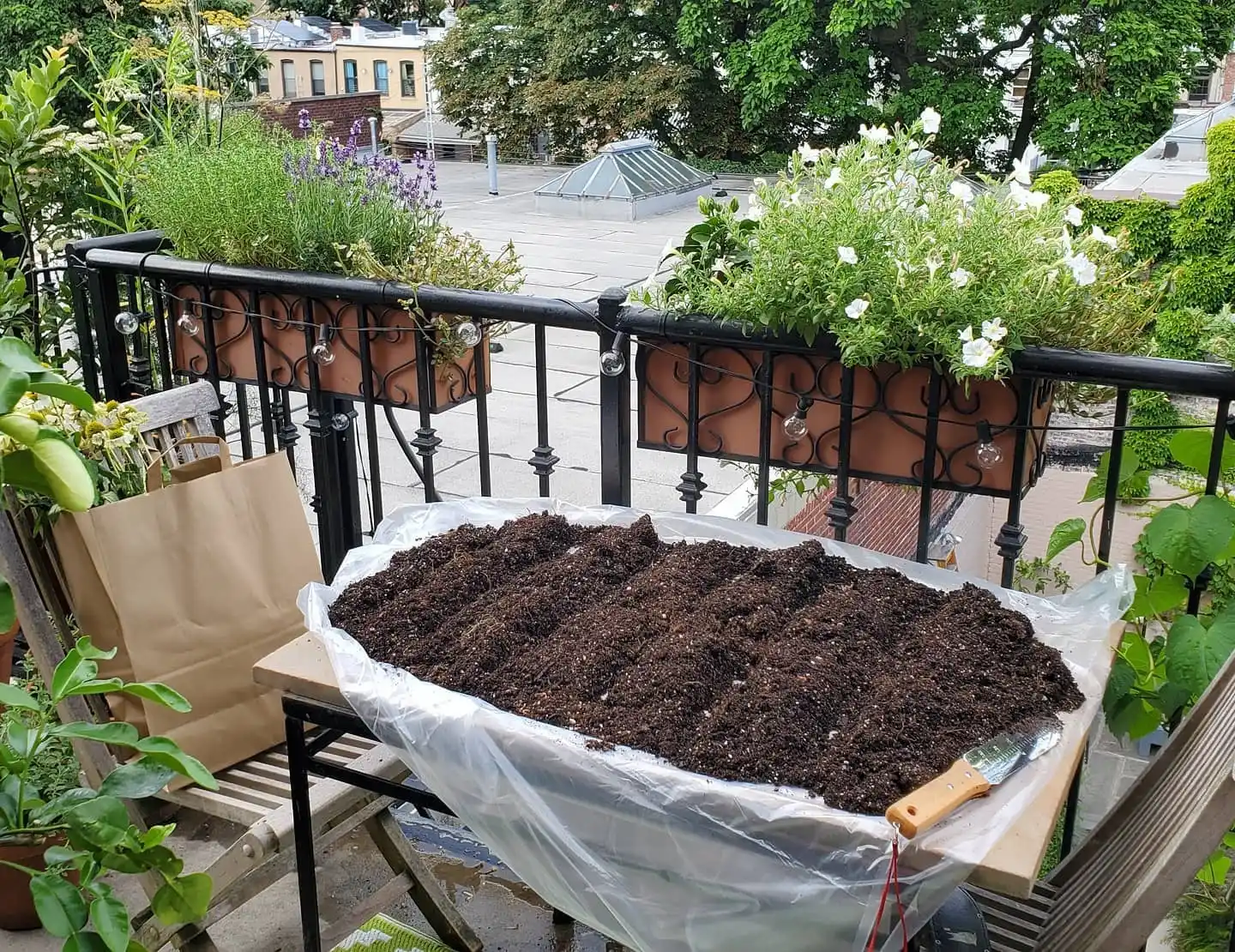
A large pile of rich dark dirt rests on a plastic sheet atop an outdoor table. This lightweight mixture provides the fluffy texture needed for delicate indoor root systems.
Small white flecks of perlite mixed throughout help keep the earth draining beautifully.
A handy wooden trowel stays nearby for scooping soil into containers easily.
Railing planters filled with blooming flowers frame this tidy balcony workspace. Using fresh organic matter gives your indoor culinary crops the strongest possible start.
8. Edible indoor plants
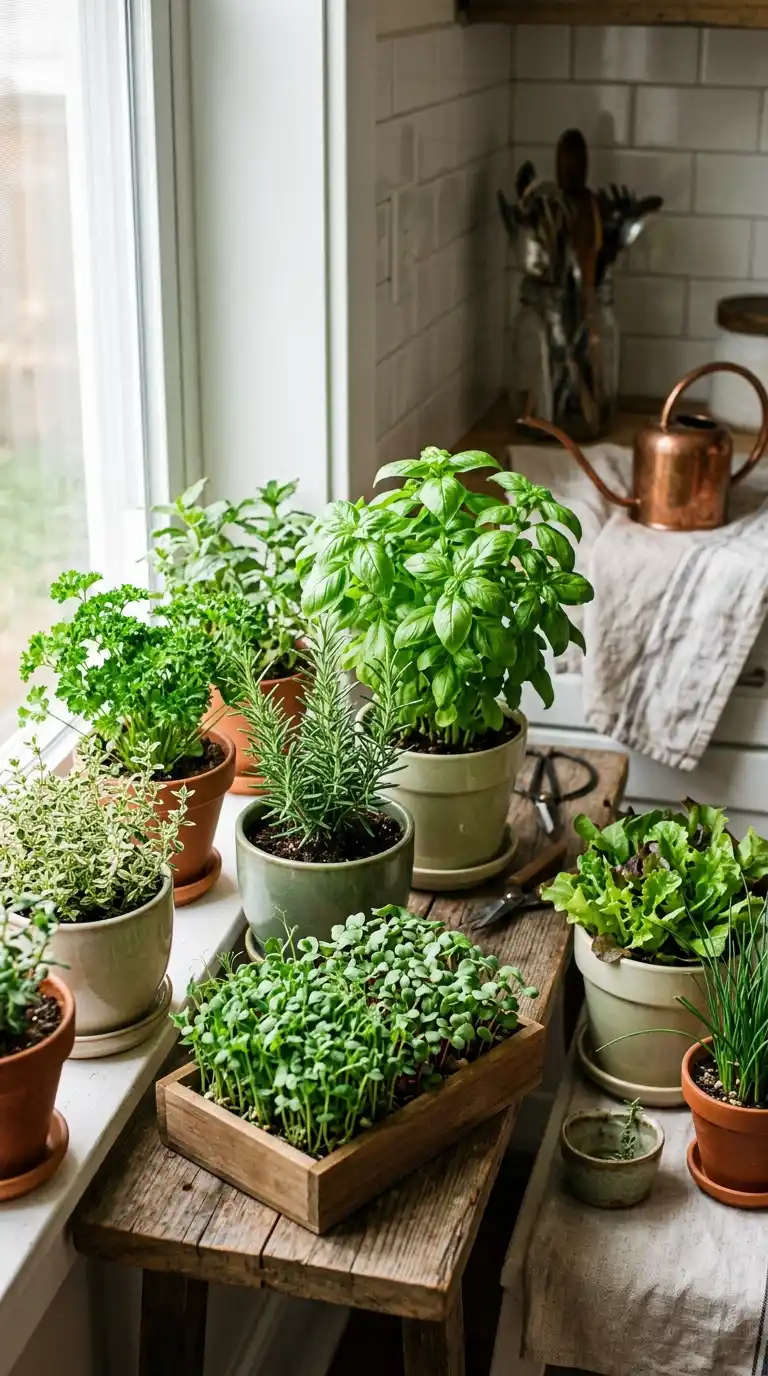
Growing microgreens and culinary vegetation right on a wooden bench maximizes your usable kitchen workspace.
Small ceramic pots in muted tones organize different species neatly next to the glass pane.
A rectangular wooden tray keeps dense sprouts contained while they soak up indirect morning rays.
Vibrant basil stalks and curly parsley leaves thrive when given dedicated space near a bright window view.
Pruning shears rest on the bench for quick harvesting during your daily meal preparation.
This compact setup ensures organic ingredients remain fresh and accessible all year.
9. Watering herbs indoors
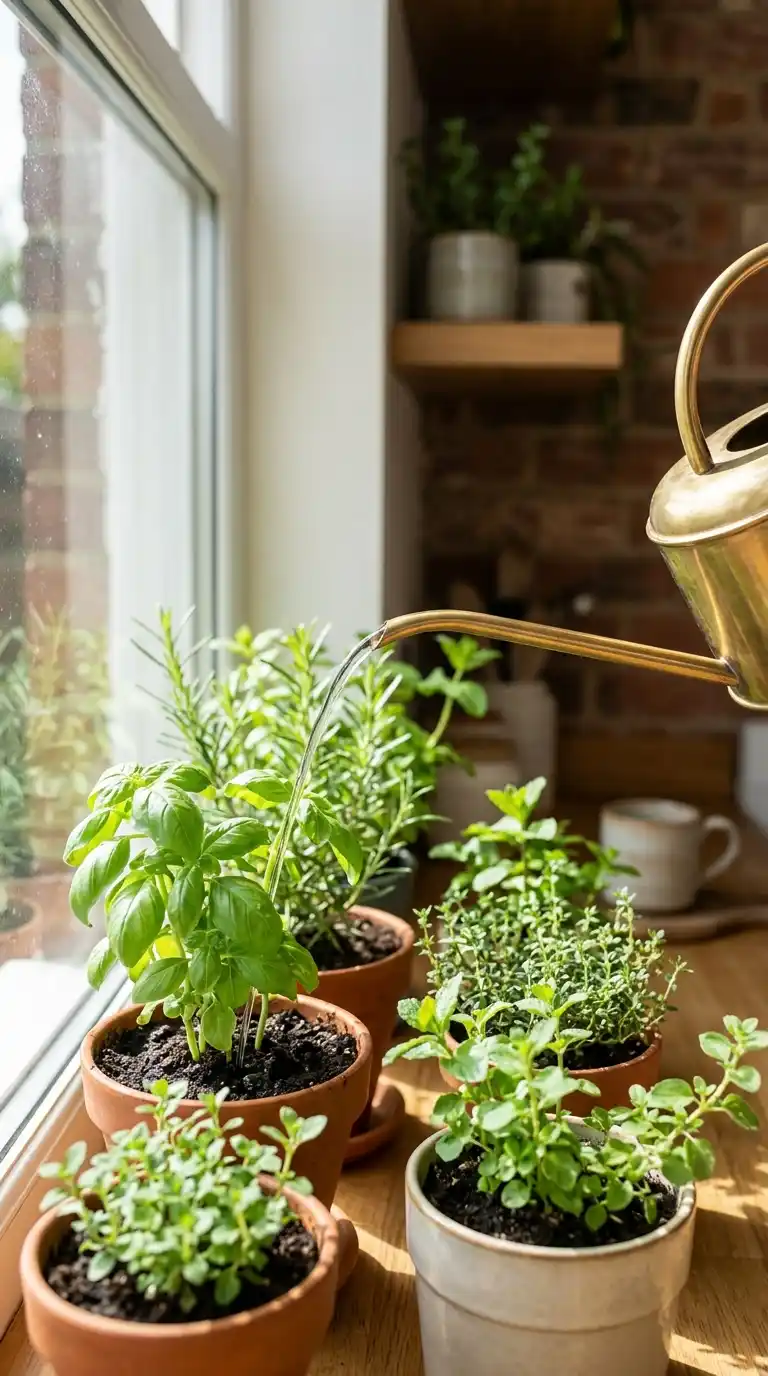
A long brass spout delivers water precisely to the base of your indoor crops. This targeted method keeps delicate green leaves dry to prevent fungal growth.
Small terracotta pots sit neatly on a sunny wooden ledge to drain well after each hydration session.
Consistent moisture levels help potted basil and rosemary thrive throughout the year.
You can monitor the earth closely by watching the liquid soak into the dark soil.
This simple maintenance routine keeps your tabletop kitchen garden lush and productive.
10. Apartment gardening
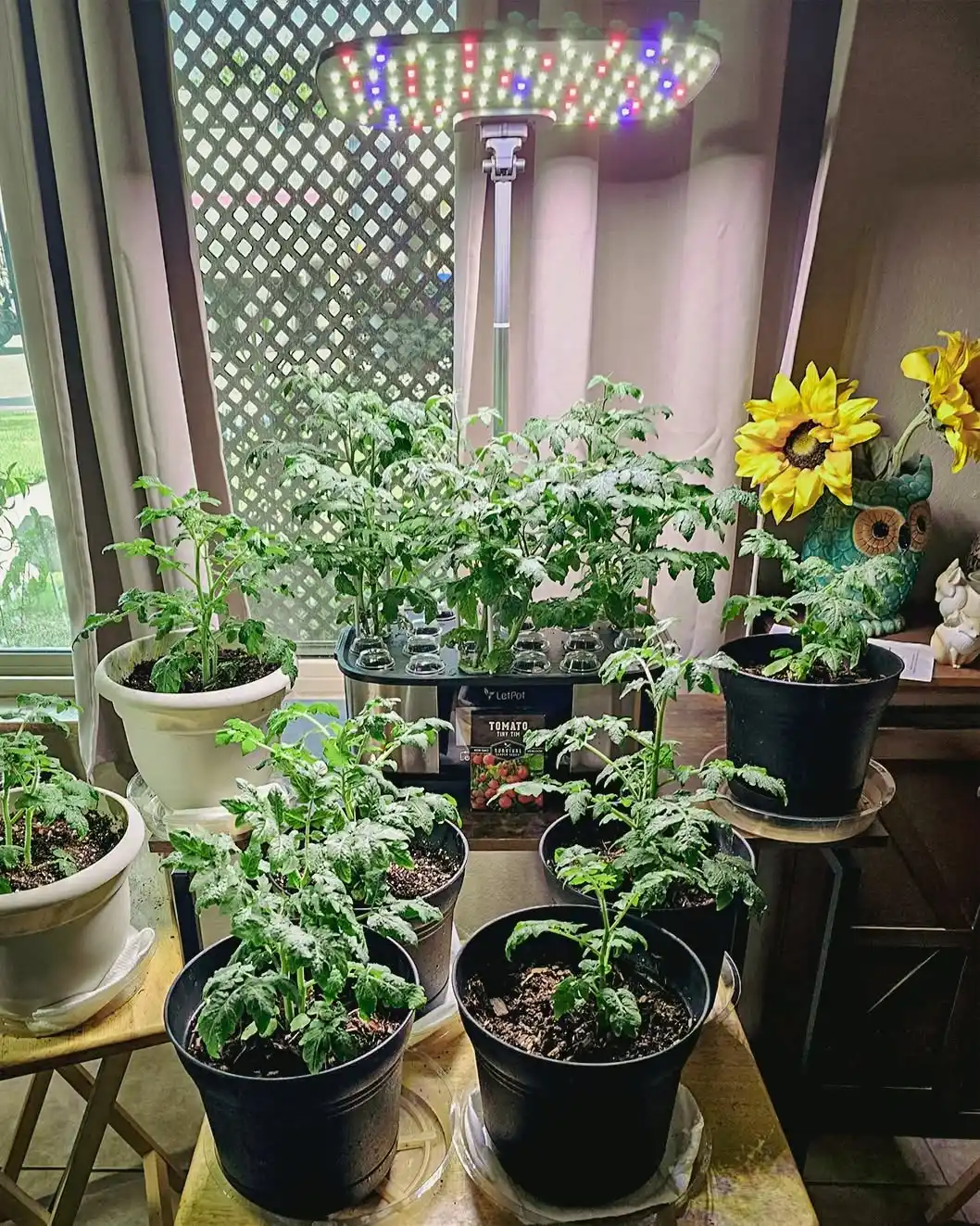
An automated indoor growing machine simplifies apartment food production by using water instead of traditional soil.
The compact unit utilizes small plastic pods to cultivate multiple plants right on your living room table.
Clear plastic humidity domes shield fragile new sprouts during their initial growth phase.
This high-tech system sits comfortably next to a standard window for a blended lighting approach.
Surrounding soil pots maximize the output of this indoor agricultural zone. Fresh produce develops rapidly under this highly controlled urban setup.
11. Seasonal herb care
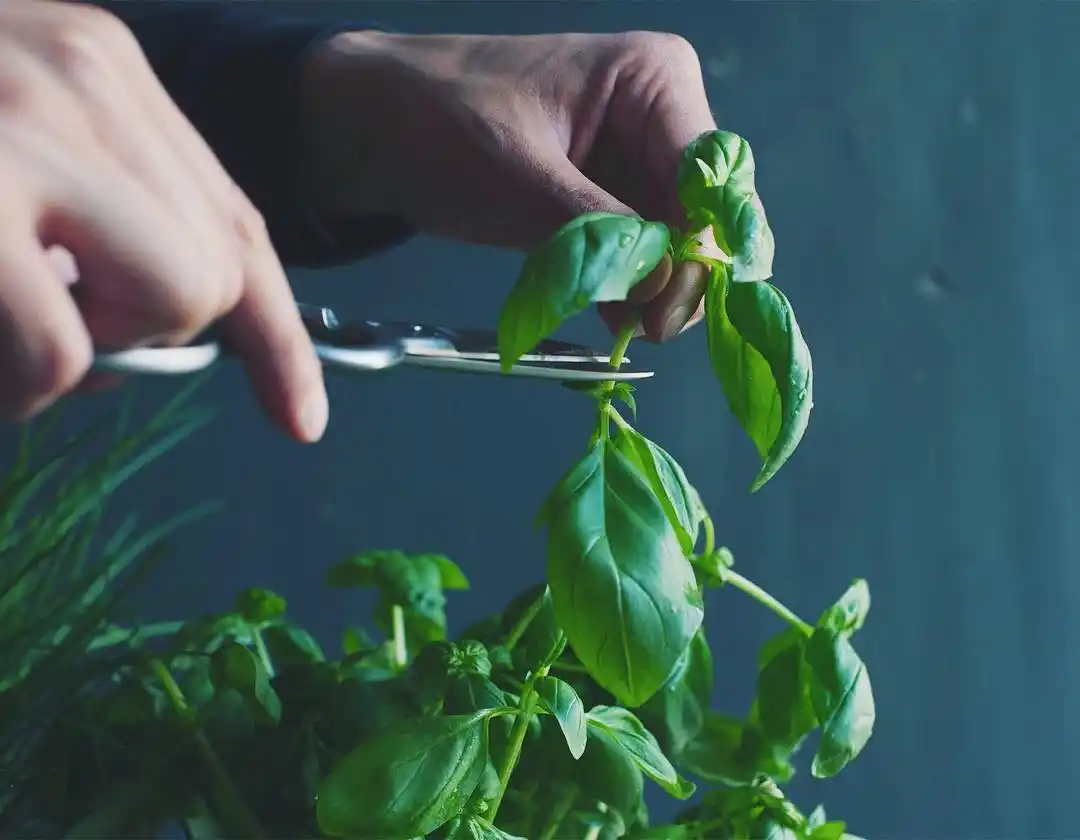
Sharp metal scissors cut a fragrant basil stem right above a leaf node.
This careful clipping technique encourages your indoor crops to grow bushier instead of tall and sparse.
Your hands hold the top sprig gently to keep the remaining plant tissue clean.
Removing old sections regularly stimulates new leaf production during different seasons.
Fresh green cuttings provide immediate ingredients for your evening cooking routine. Regular trimming keeps your indoor collection thriving and productive for months.
Year round herbs
Maintaining a continuous indoor harvest seamlessly blends culinary convenience with vibrant home decor. Keeping these fresh greens flourishing inside protects your kitchen supply from harsh seasonal changes and freezing temperatures.
Every home chef benefits from having a constant supply of aromatic leaves just a few steps away from the stove.
Transitioning your window ledges into living food stations ensures constant vitality fills your daily cooking routines.


