

10 Companion Planting Secrets for a Herb Garden Outdoor

Growing herbs outdoors becomes twice as powerful when you pair the right plants together.
Companion planting in an outdoor herb garden is an age old technique that boosts flavor, repels pests, and maximizes every inch of garden space.
Many gardeners plant herbs in isolation and miss the full potential their garden holds. Pairing herbs with the right companions creates a natural, self sustaining growing system that works around the clock.
This guide reveals 10 companion planting secrets that transform any outdoor herb garden into a thriving, productive, and beautifully balanced growing space.
1. Basil and Tomato Companion Planting Outdoor
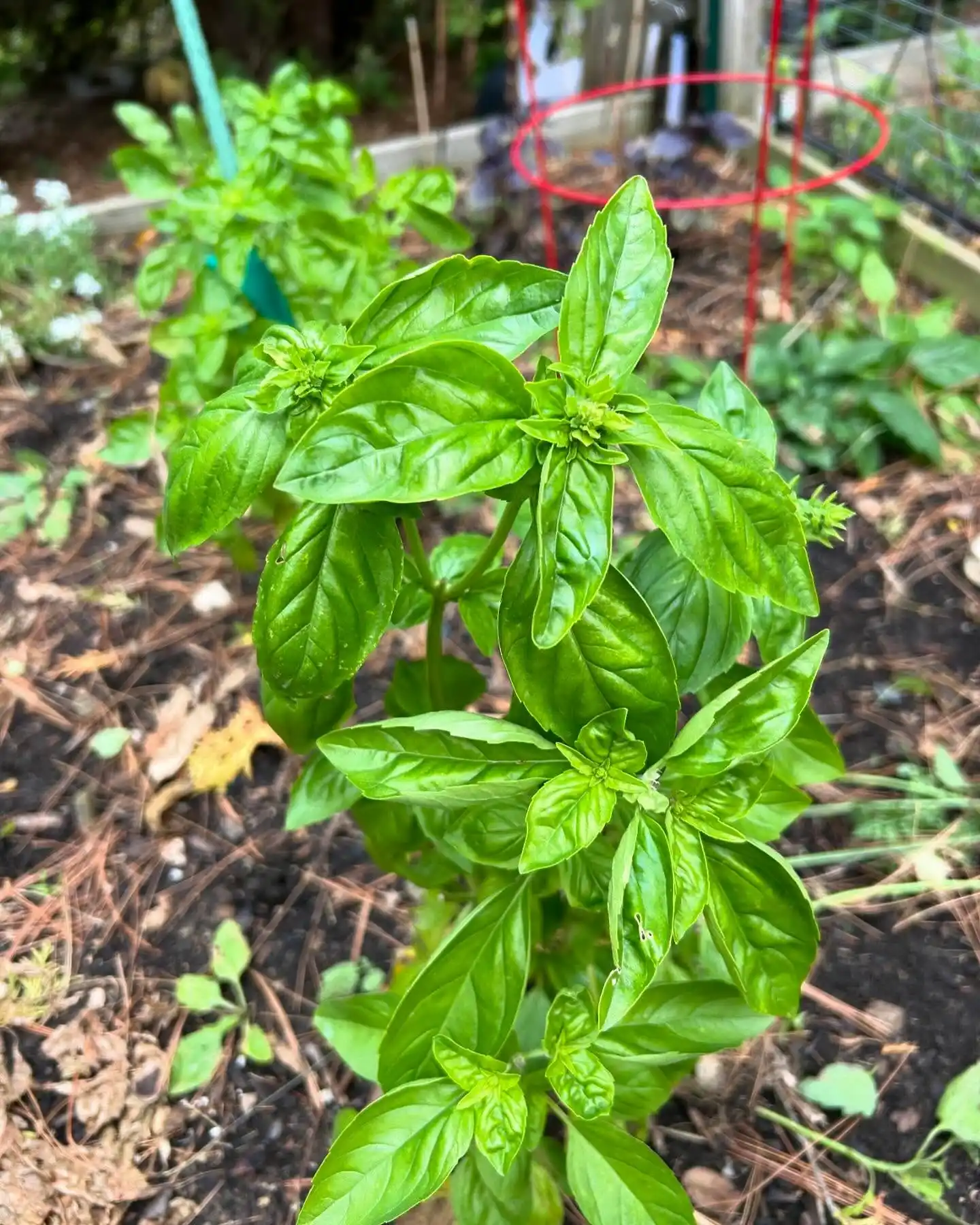
A lush basil plant stands tall in an outdoor garden bed, showing thick stems and large, glossy green leaves just beginning to form flower buds.
Red tomato cages are visible in the background, confirming this is an active tomato growing space.
Basil planted this close to tomatoes helps repel thrips, aphids, and hornworms. Many gardeners also report that basil improves the flavor of tomatoes grown nearby.
Keeping basil bushy by pinching off flower buds, as seen here, extends its growing season and keeps the oils potent.
Those oils are what make basil such a strong pest deterrent in the first place. Both plants love full sun and regular watering, so they thrive under the same care routine.
Growing them together saves space and gives you fresh ingredients from a single garden bed.
2. Mint and Cabbage Pest Repelling Pair
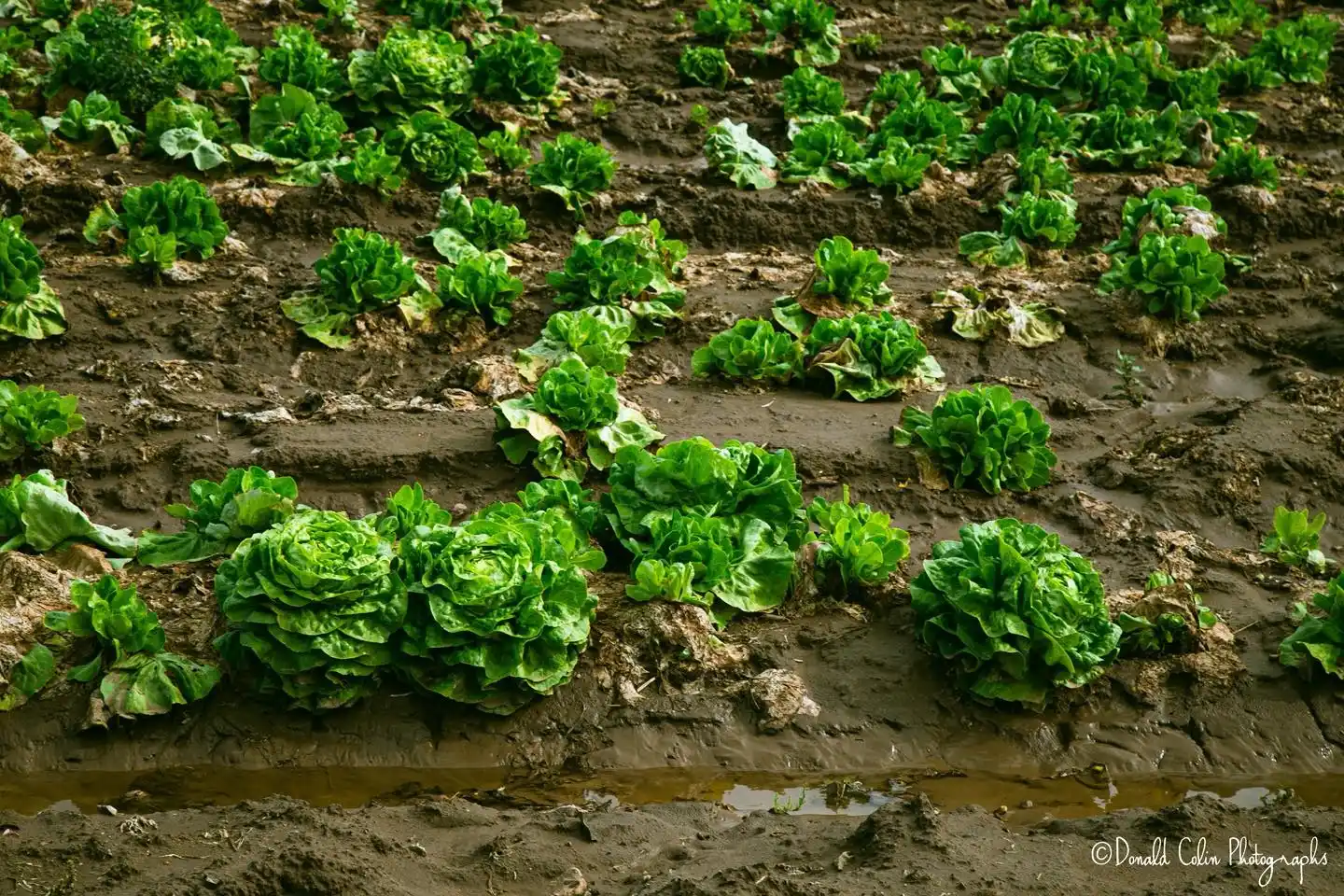
Rows of leafy green cabbage heads grow across a wide, muddy field with irrigation channels running between them.
Each head is full and tightly packed, showing healthy growth at a mature stage. Planting mint nearby acts as a strong deterrent against cabbage moths, aphids, and whiteflies.
The sharp scent of mint masks the smell of cabbage and keeps harmful insects away.
Mint spreads fast, so growing it in containers near cabbage rows gives you control without letting it take over.
Cabbage grows heavy and low while mint stays contained, making them space-friendly companions.
Farmers and home gardeners both use this pairing to cut down on pesticide use. Fewer chemicals means cleaner, safer produce straight from the garden.
3. Rosemary and Bean Garden Companions
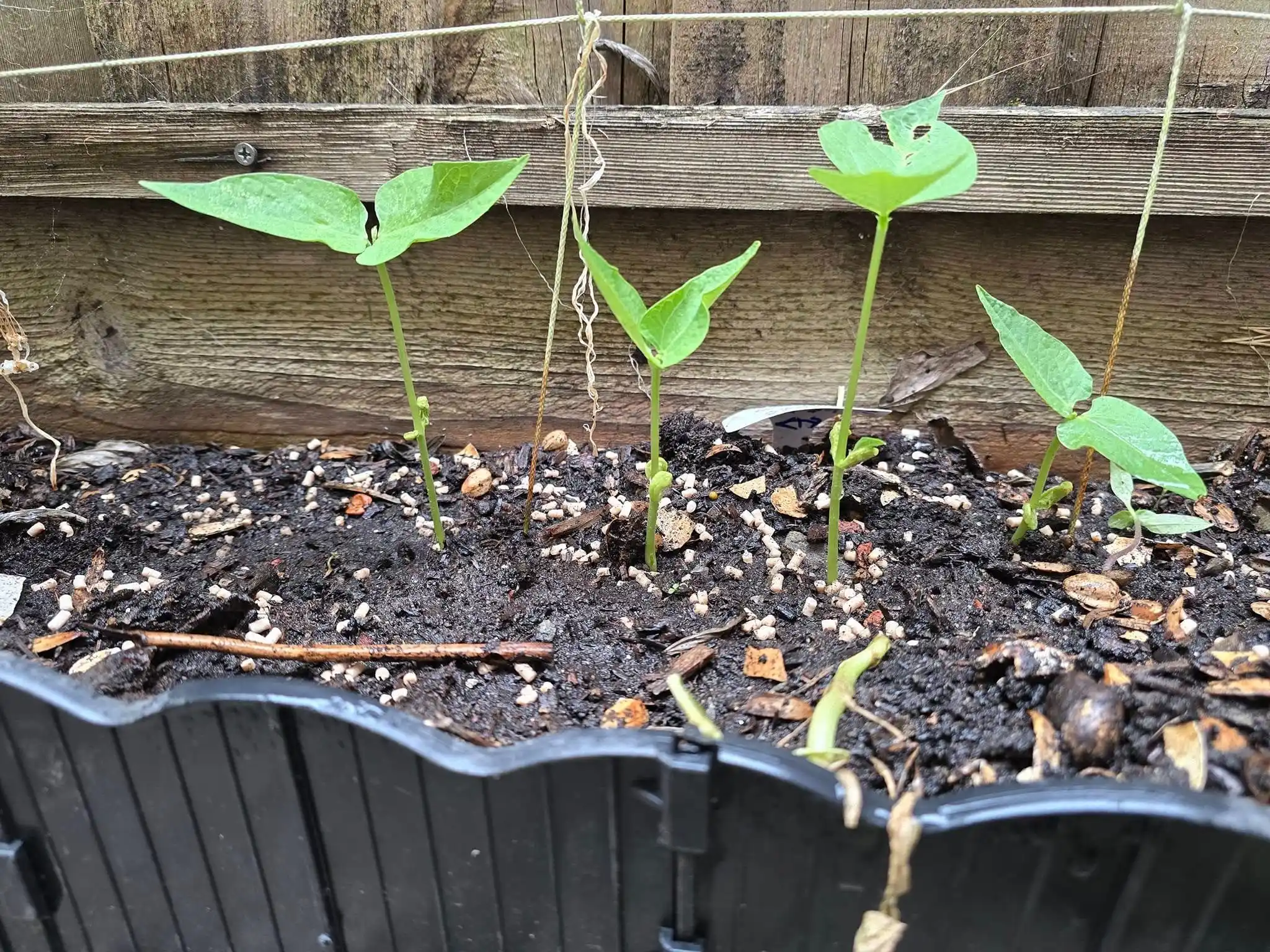
Bean seedlings are climbing toward twine supports in a container filled with rich, perlite mixed soil.
These young pole beans are at the first true leaf stage, strong and reaching upward. Planting rosemary nearby gives these beans a powerful natural shield.
Rosemary’s strong scent confuses and repels bean beetles before they even land.
This container setup shows how small spaces can still use smart companion planting.
Rosemary stays low and woody while beans climb high, so neither plant crowds the other.
Together, they use vertical and ground space efficiently. Gardeners get pest protection and a fresh herb harvest from the same small bed.
4. Chives and Carrot Growth Boosting Combo
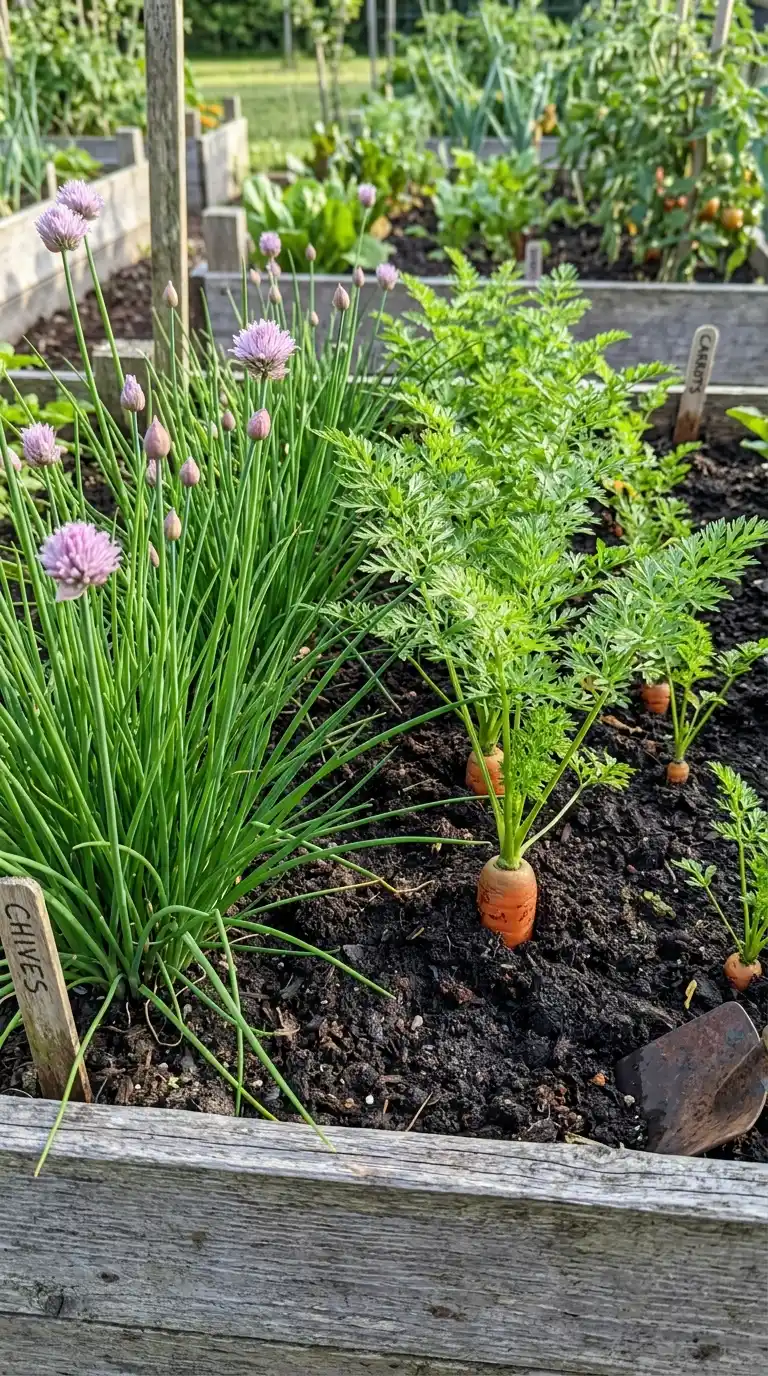
Flowering chives labeled with a wooden stake grow side by side with plump orange carrots pushing up through rich dark soil in a weathered wooden raised bed.
Purple chive blooms stand tall on the left while fully formed carrots peek above the soil surface on the right, both clearly thriving in the same shared growing space.
A small garden trowel rests at the bed edge, ready for harvest at any moment.
Chive roots release sulfur compounds into surrounding soil that naturally repel carrot flies, one of the most damaging carrot pests in any outdoor garden.
Carrots loosen deep soil as they grow downward, improving drainage and aeration that benefits shallow chive roots growing alongside them.
This labeled raised bed setup proves that the chive and carrot growth boosting combo delivers real, visible results season after season.
5. Lavender and Sage Pollinator Attracting Duo
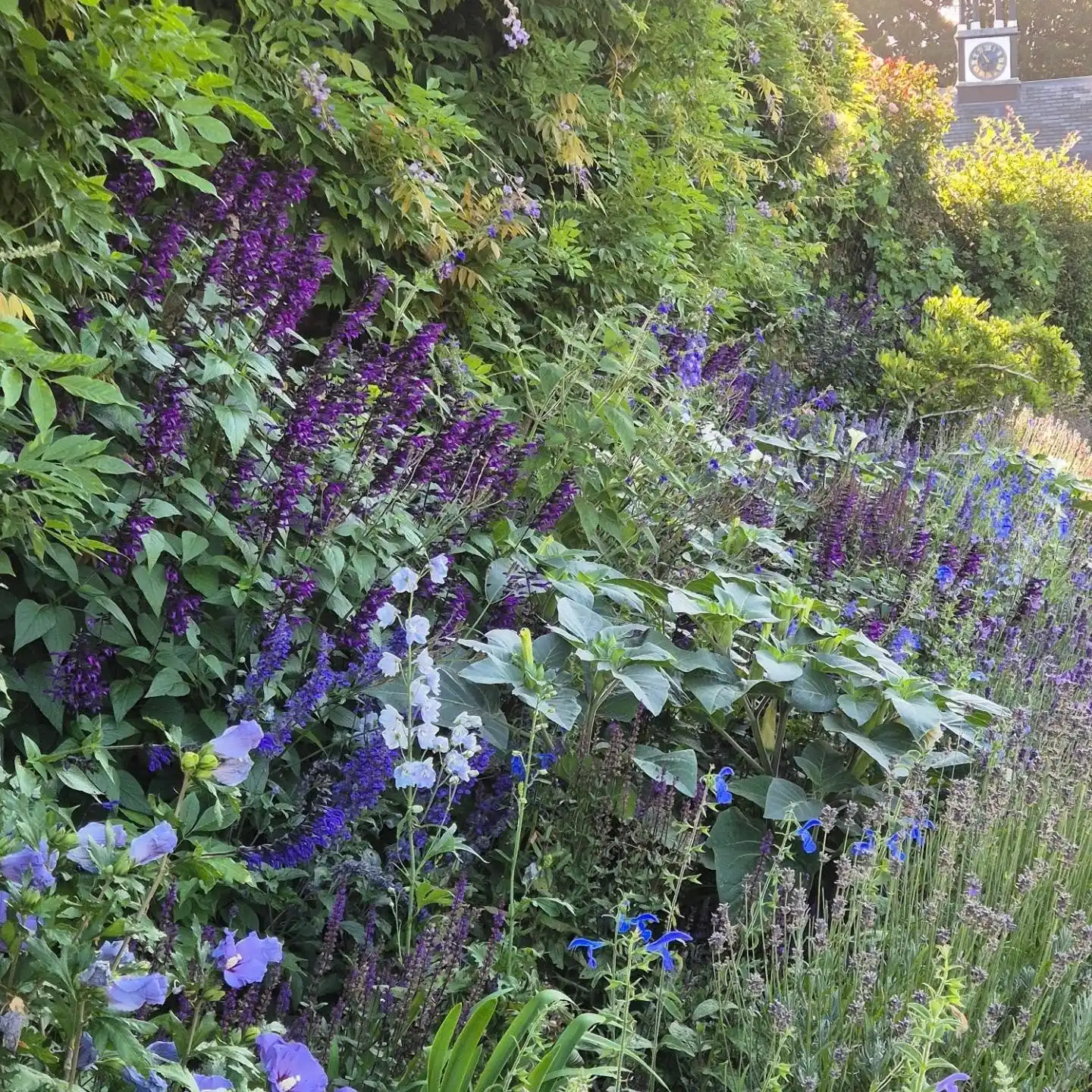
Deep purple sage spikes and soft blue lavender stems rise together in a richly layered outdoor garden border, creating a stunning pollinator magnet in full bloom.
Tall salvia towers behind lower lavender rows, building a tiered wall of purple and blue flowers that bees and butterflies find completely irresistible.
A historic clock tower visible in the background confirms this thriving companion planting bed sits in a well established outdoor garden space.
Sage and lavender share the same love for full sun, well drained soil, and minimal watering, making them naturally compatible outdoor companions.
Bees drawn to this purple duo cross pollinate surrounding herb and vegetable plants throughout the entire garden effortlessly.
Planting this pair together builds a living pollinator corridor that boosts yields across every companion plant growing nearby.
6. Dill and Cucumber Outdoor Companion Setup
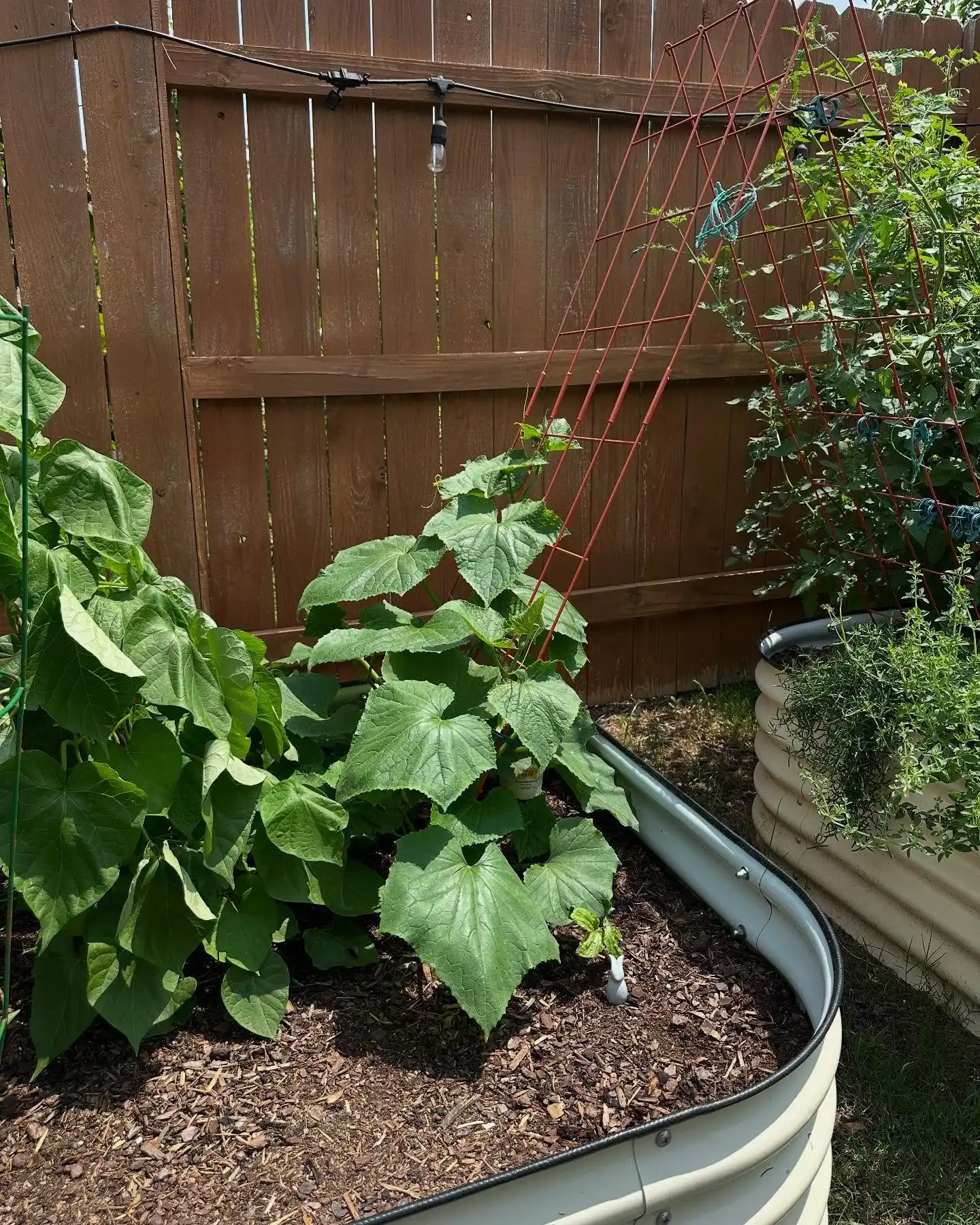
A cucumber plant climbs a red trellis in a raised metal garden bed, its broad leaves spreading wide in full sun.
Bean plants grow alongside on the left, and a separate container holds what appears to be a bushy herb on the right.
Dill planted near cucumbers attracts beneficial insects like wasps and ladybugs that prey on cucumber beetles and aphids.
This natural insect management keeps the cucumber vines healthy without sprays.
Note that mature dill can actually slow cucumber growth, so plant it young and harvest it often.
Keeping dill trimmed and active ensures it stays a helper rather than a competitor. The raised bed setup shown here makes rotation and spacing easy to manage.
Smart spacing between the two plants gives you the benefits of companionship without the drawbacks of overcrowding.
7. Thyme and Strawberry Ground Cover Pairing
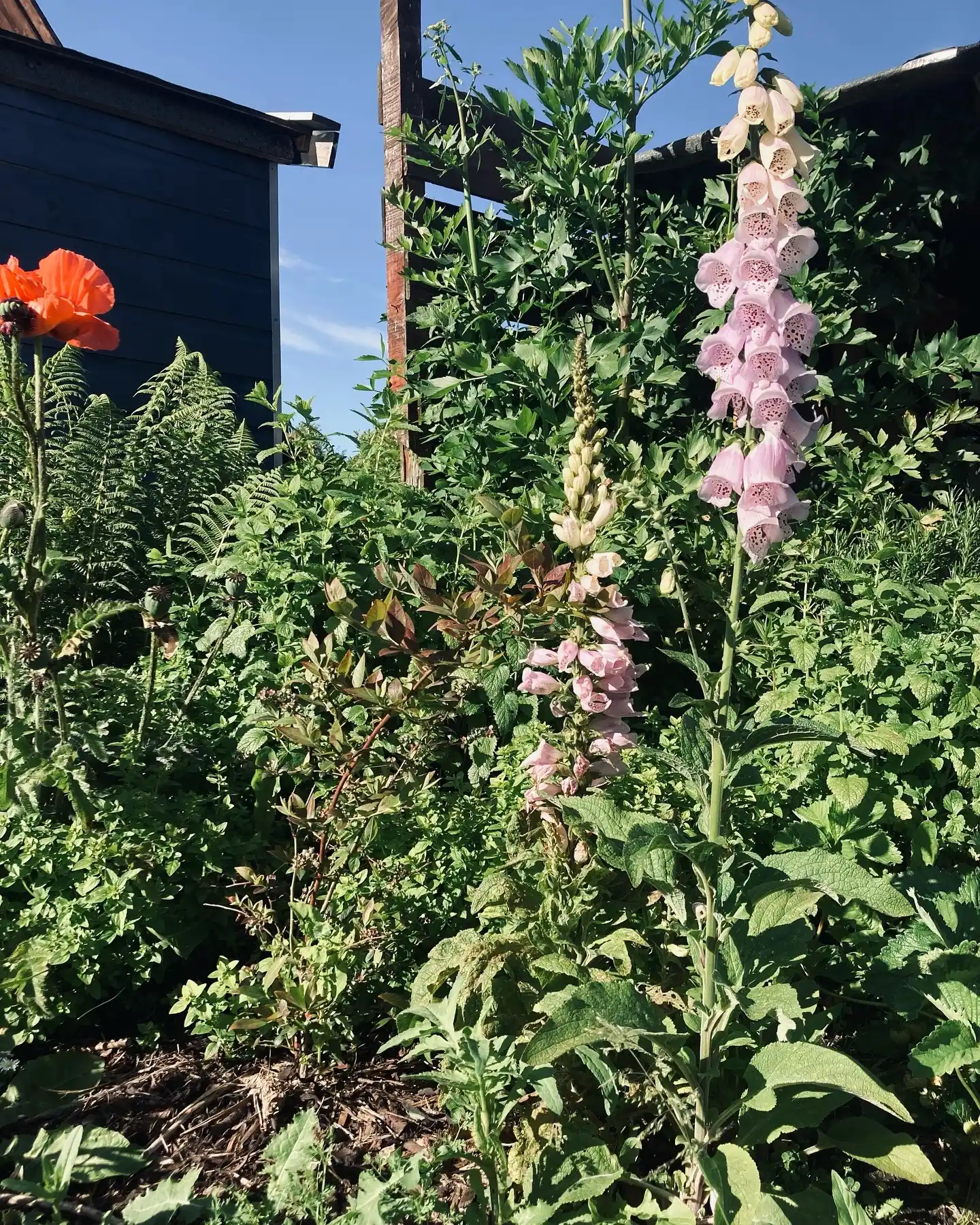
A tall foxglove spike with soft pink bell shaped flowers rises dramatically above a dense mixed cottage garden bed.
Bold red poppies bloom beside lush ground covering herbs and leafy plants, all thriving together under a clear blue summer sky.
Woody mulch at the base retains soil moisture and keeps competing weeds from invading the companion planting space.
Tall flowering plants like foxglove draw pollinators downward toward low growing thyme and strawberry ground covers beneath them.
Ground cover herbs spread naturally between taller plants, suppressing weeds and keeping soil cool and moist during warm outdoor growing months.
Layering tall bloomers with creeping ground cover herbs builds a self sustaining outdoor companion garden that works on multiple levels simultaneously.
8. Parsley and Asparagus Deep Root Companions
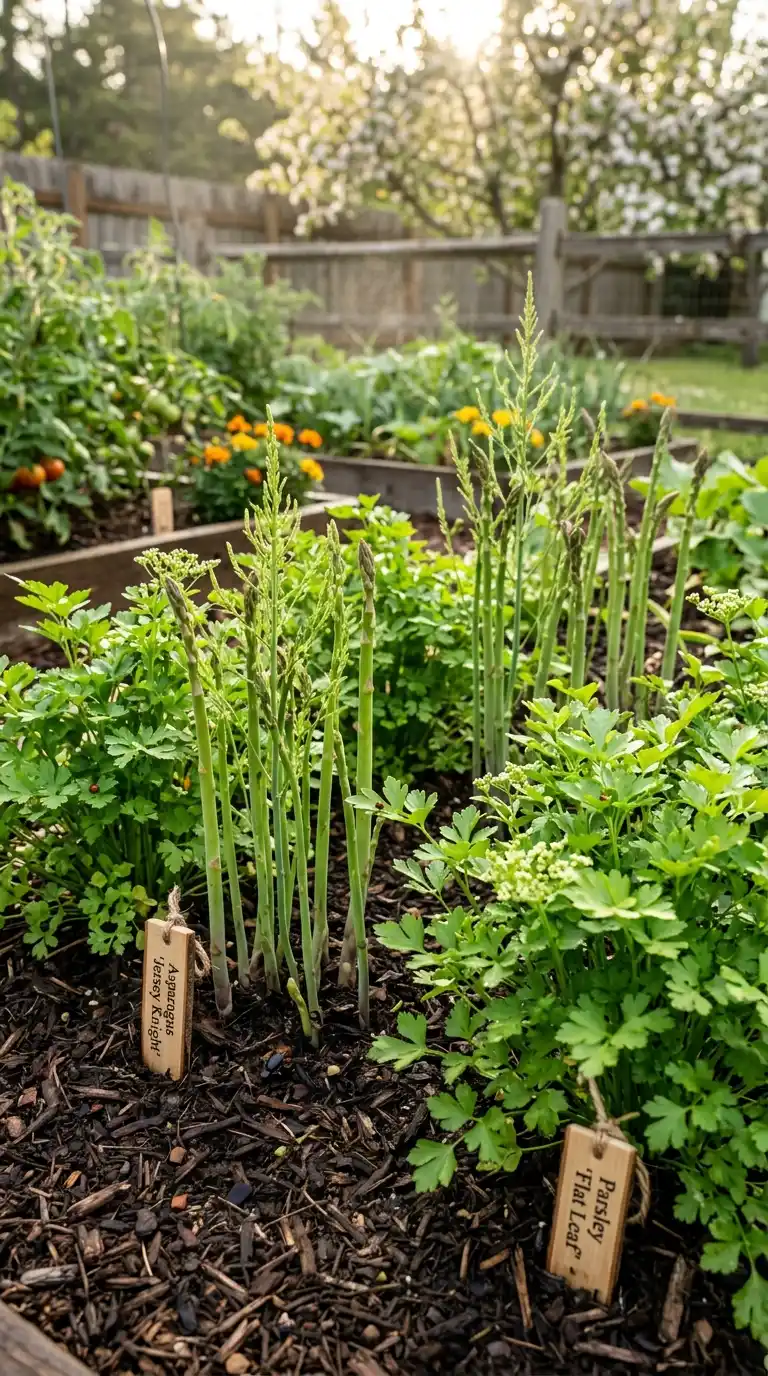
Tall asparagus spears labeled “Jersey Knight” shoot upward through a dense bed of flat leaf parsley marked with a matching wooden tag in rich dark mulched soil.
Both plants share the same raised bed space efficiently, with asparagus reaching toward the sky while parsley fills the ground level beneath.
Warm golden evening light washes across the entire bed, showing both companion plants thriving side by side naturally.
Asparagus roots grow deep while parsley roots stay shallow, meaning both plants never compete for the same soil nutrients.
Parsley attracts predatory insects that protect asparagus from the asparagus beetle, one of its most damaging outdoor pests.
Planting this deep root companion pair together saves space, reduces pest pressure, and produces two harvests from a single well managed garden bed.
9. Oregano and Pepper Natural Pest Shield
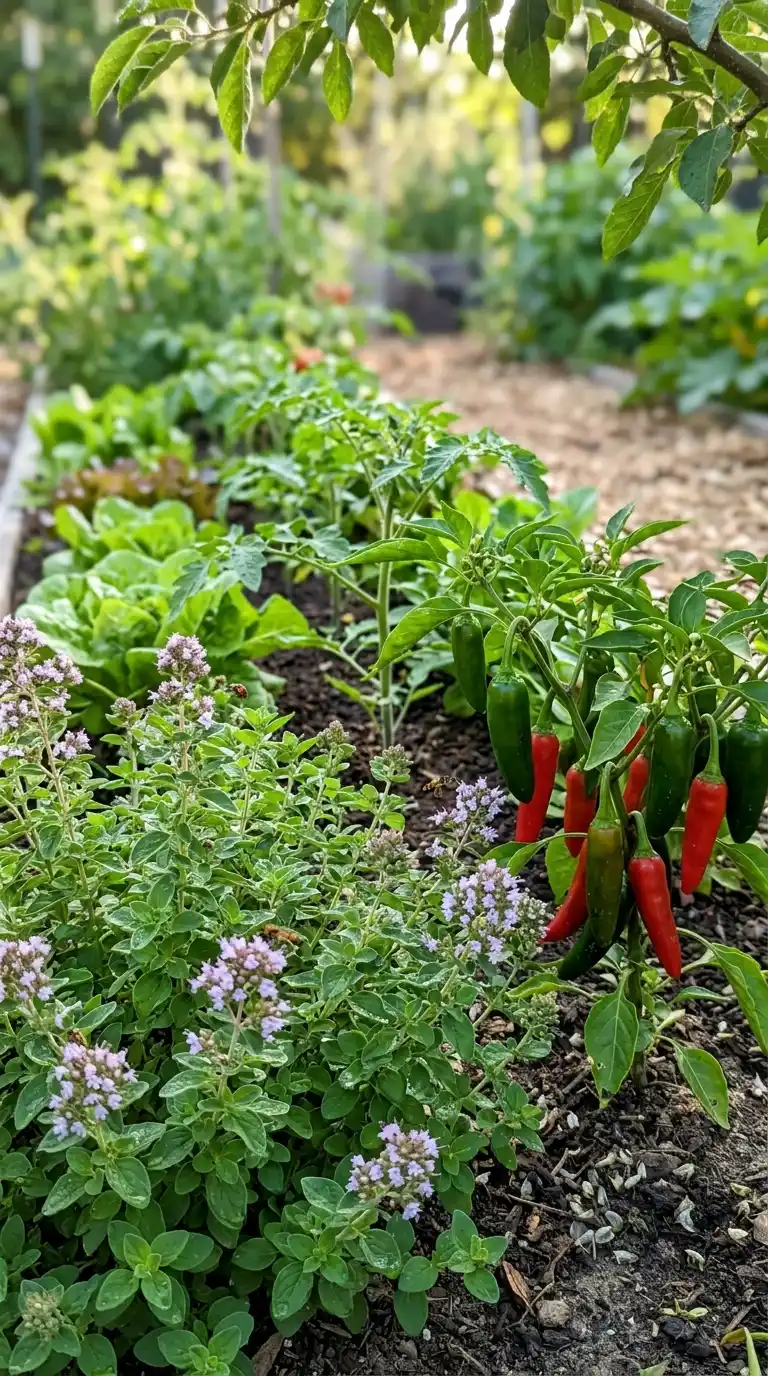
Flowering oregano spreads densely along the front edge of a raised garden bed, growing directly beside a thriving red and green chili pepper plant.
Soft purple oregano blooms attract beneficial insects while creating a natural aromatic barrier that confuses and repels common garden pests.
Rich dark soil and wood chip mulch pathways between beds keep moisture locked in throughout the growing season.
Oregano’s strong scent acts as a natural shield, reducing aphid and spider mite activity around pepper plants significantly.
Planting oregano as a low border in front of taller pepper plants uses vertical garden space efficiently and smartly.
This classic companion pairing produces healthier peppers with fewer pest problems and zero need for chemical sprays.
10. Chamomile and Herb Garden Soil Enrichment
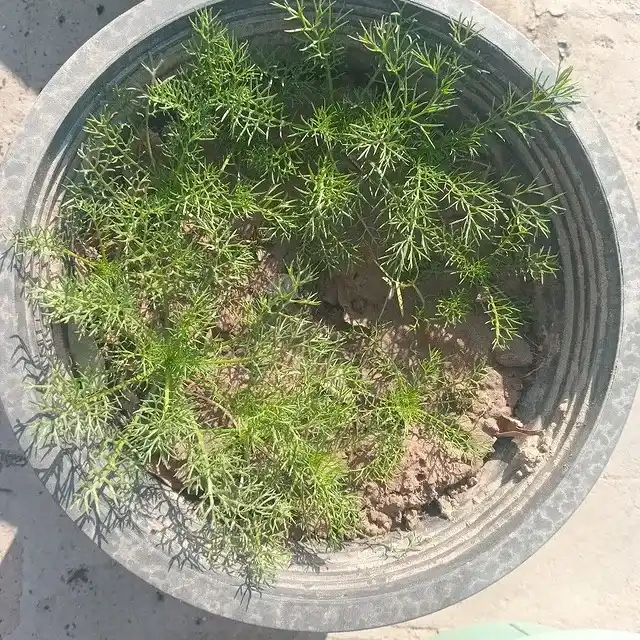
Young chamomile plants spread their feathery, fine textured foliage across a wide round metal container filled with dry sandy soil.
Multiple chamomile seedlings grow closely together, their delicate thread like leaves reaching outward in every direction under direct outdoor sun.
Growing chamomile in a dedicated pot allows root development without competing aggressively with neighboring herbs nearby.
Chamomile roots release nutrients that enrich surrounding soil, making it a natural fertilizer companion for any outdoor herb garden.
Sandy, well drained soil like this suits chamomile growth and mirrors the conditions many Mediterranean herbs also love.
Planting chamomile alongside herbs like thyme, basil, and dill visibly improves their overall health and flavor over time.


