
Lazy Susans vs Tiered Shelves for Spices

A well-organized seasoning station is the true backbone of an efficient kitchen.
When you are in the middle of preparing a complex recipe, nothing slows down your culinary momentum faster than digging through a dark, cluttered cabinet to find a single missing jar.
Spices are small, numerous, and easily lost behind larger pantry staples, making them notoriously difficult to keep in order.
To solve this classic storage dilemma, home chefs typically face a direct choice between two primary organizational systems: rotating turntables or stepped risers.
Deciding between Lazy Susans vs tiered shelves for spices requires a close look at your cabinet depth, jar sizes, and personal cooking habits.
Both layouts offer distinct structural advantages, but choosing the wrong system for your specific cabinet dimensions can actually waste premium storage space.
This breakdown will evaluate both configurations to help you establish a streamlined, stress-free seasoning station.
The Mechanical Appeal of the Lazy Susan
Rotating turntables bring dynamic, fluid accessibility to deep corners and hard-to-reach upper shelves.
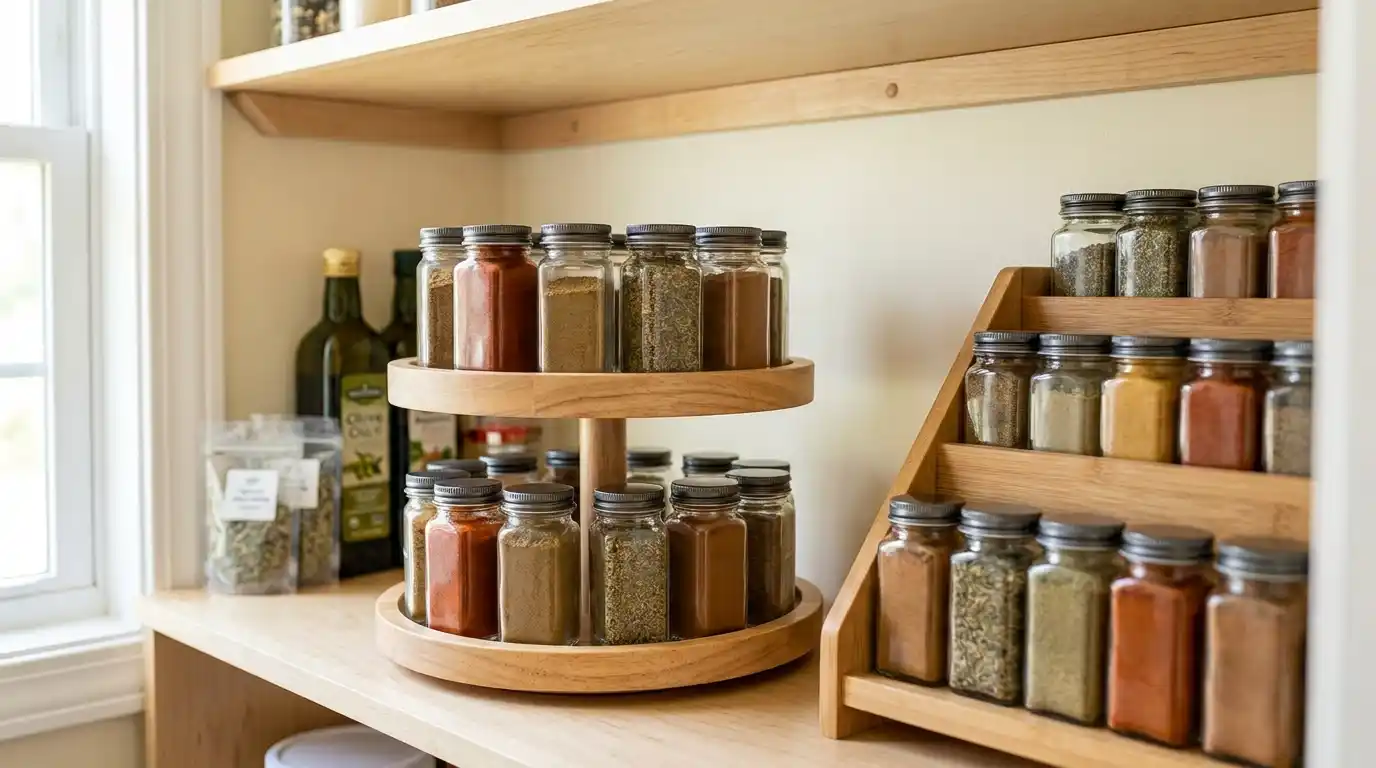
The core strength of a Lazy Susan lies in its spinning mechanism, which brings hidden items directly to the front of the cabinet with a simple flick of the wrist.
Instead of reaching over multiple rows and risking knocking over delicate glass containers, you simply spin the tray to access your entire collection.
This layout excels in deep cabinetry where items naturally get lost in the shadows. A circular turntable prevents jars from being buried in the back corners, turning an inefficient space into a fully functional zone.
Furthermore, because a Lazy Susan accommodates various container shapes, you can comfortably store tall oil misters, bulky spice grinders, and wide seasoning tins on the same flat surface.
This flexibility makes it highly adaptable for diverse collections that do not rely on uniform jar sizes.
The Limitations of Round Turntables
Despite their excellent accessibility, rotating trays possess inherent design limitations that can lead to wasted real estate.
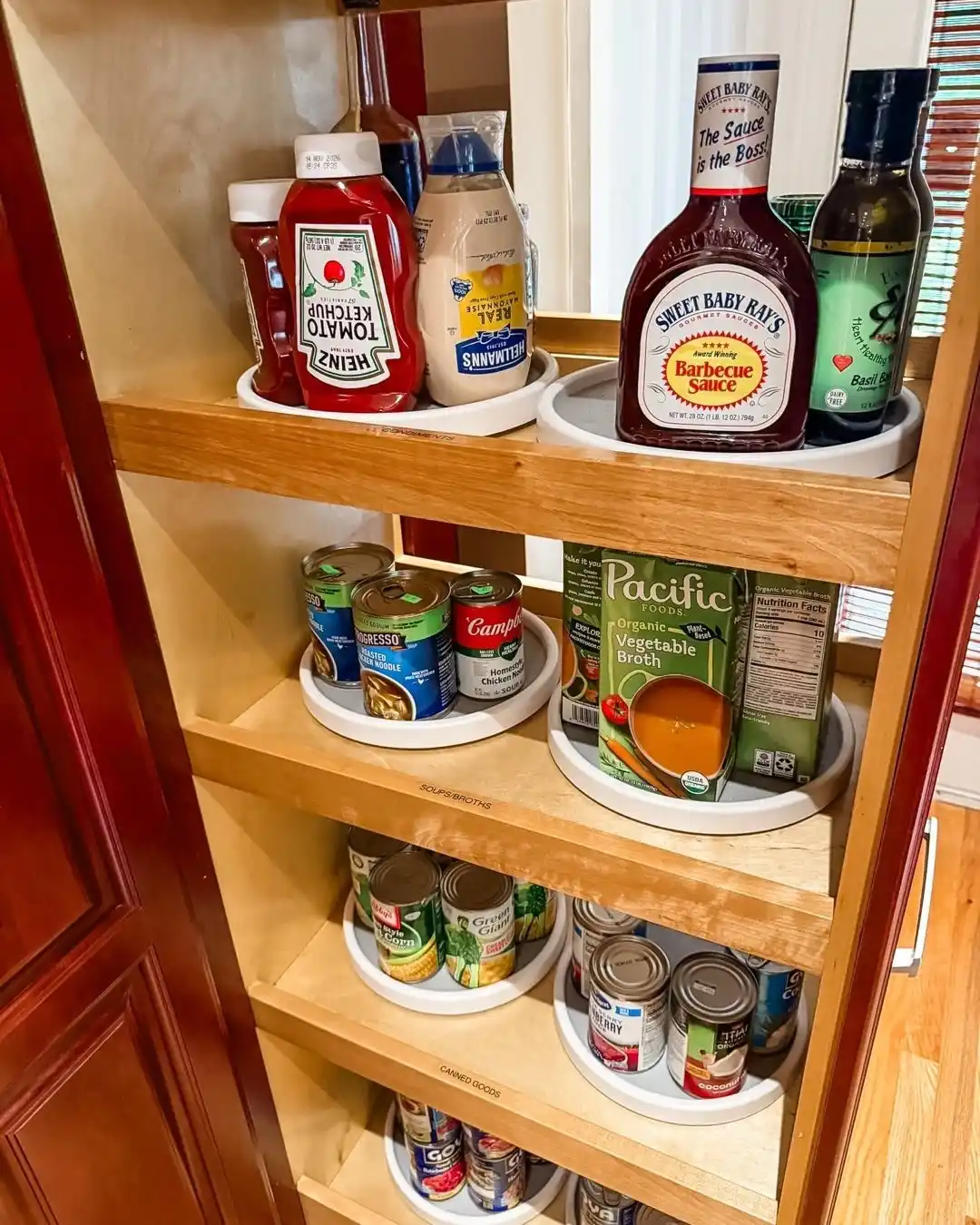
Because a turntable is a perfect circle placed inside a square or rectangular cabinet, it naturally leaves the four outer corners of the shelf completely empty.
If you are dealing with tight, narrow cabinet spacing, losing those corner zones can significantly reduce your total storage capacity.
Additionally, if your spice jars are crowded too closely together without support, a rapid spin can cause top-heavy containers to tip over.
When a jar falls in the center of a spinning turntable, it creates a frustrating domino effect that disrupts the entire arrangement.
To combat this, many modern turntables feature raised outer lips or individual dividers, but these structural additions reduce the usable flat surface area even further, limiting the sizes of containers you can place inside.
The Structural Logic of Tiered Shelves
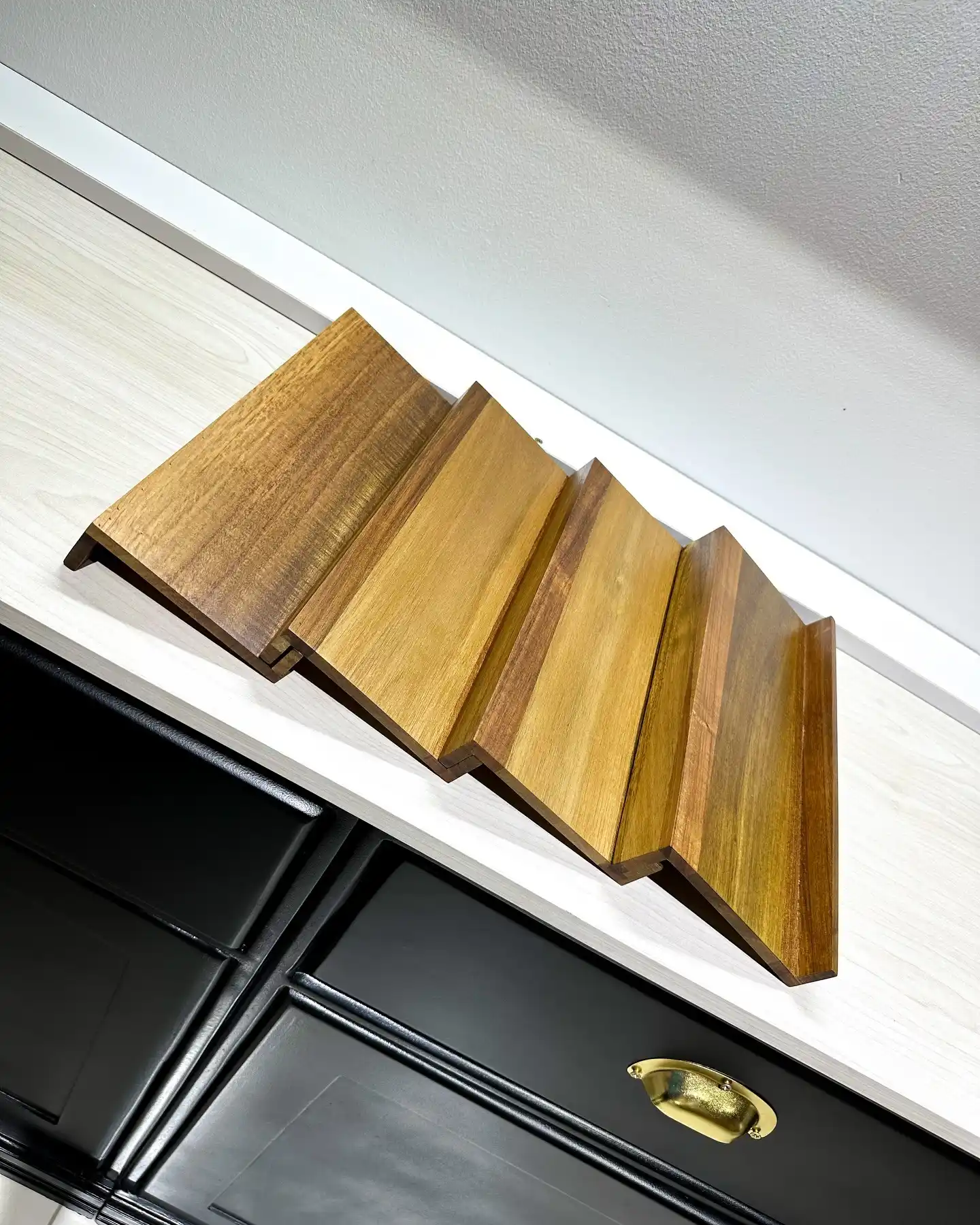
Stepped risers approach organization with a rigid, high-visibility layout that mimics a stadium seating arrangement.
By lifting each consecutive row of jars a few inches higher than the one in front of it, tiered shelves ensure that every single label remains perfectly visible from the front of the cabinet.
This setup eliminates the need to lift or shift containers just to read a name, allowing you to scan your entire spice collection at a glance.
+-----------------------------------+-----------------------------------+
| Lazy Susan Features               | Tiered Shelf Features             |
+-----------------------------------+-----------------------------------+
| Perfect for deep or corner spaces | Ideal for shallow, eye-level rows |
| Fits varied and bulky containers  | Best for uniform, standard jars   |
| Brings rear items to the front    | Offers total label visibility     |
| Leaves cabinet corners empty      | Utilizes full shelf width         |
+-----------------------------------+-----------------------------------+
Risers are incredibly space-efficient because they utilize the full width and depth of standard rectangular cabinets without leaving empty gaps.
This linear configuration keeps your jars perfectly aligned, creating a clean, organized aesthetic that appeals to minimalist design sensibilities.
It is an ideal solution for shallow upper cabinets or pantry shelves where your collection sits directly at eye level.
The Practical Drawbacks of Stepped Risers
While stadium shelves offer unmatched visibility, they require a specific type of environment to function effectively.
The most notable limitation of a tiered shelf is its vertical height requirement. Because each step raises the jars higher, you must ensure your cabinet has enough vertical clearance so the tops of the containers do not hit the upper shelf ceiling.
In tight or non-adjustable cabinets, this height restriction can prevent you from using the top tier entirely.
Furthermore, tiered shelves are highly unforgiving when it comes to mismatched or oversized containers.
If you purchase seasonings in bulk bags, wide tins, or tall grinders, they will rarely fit neatly onto the narrow steps of a standard riser.
If a container is too wide for a tier, it sits awkwardly on the edge, creating an unstable setup that easily topples when you reach into the cabinet.
This system functions best when paired with a committed set of uniform, standardized glass jars.
Evaluating Accessibility During Active Cooking
When you are managing multiple pots on the stovetop, speed is absolutely critical. A Lazy Susan offers a fluid, low-precision experience.
You can spin the tray blindly with one hand while stirring a sauce with the other, grabbing your target container without needing to look directly into the cabinet.
This tactile ease of use makes it a favorite for fast-paced, intuitive home cooks who prioritize physical momentum over perfect visual order.
Conversely, tiered shelves demand a bit more visual precision but offer faster recognition. Because every label faces forward, you can locate a specific ingredient instantly without needing to touch or rotate anything first.
However, if the target jar sits on the back tier, you must lift it carefully over the front rows to avoid knocking them down.
This linear structure rewards a steady hand and an organized mind, making it perfect for bakers and chefs who prefer a systematic, highly structured workspace.
Maximizing Space in Different Cabinet Layouts
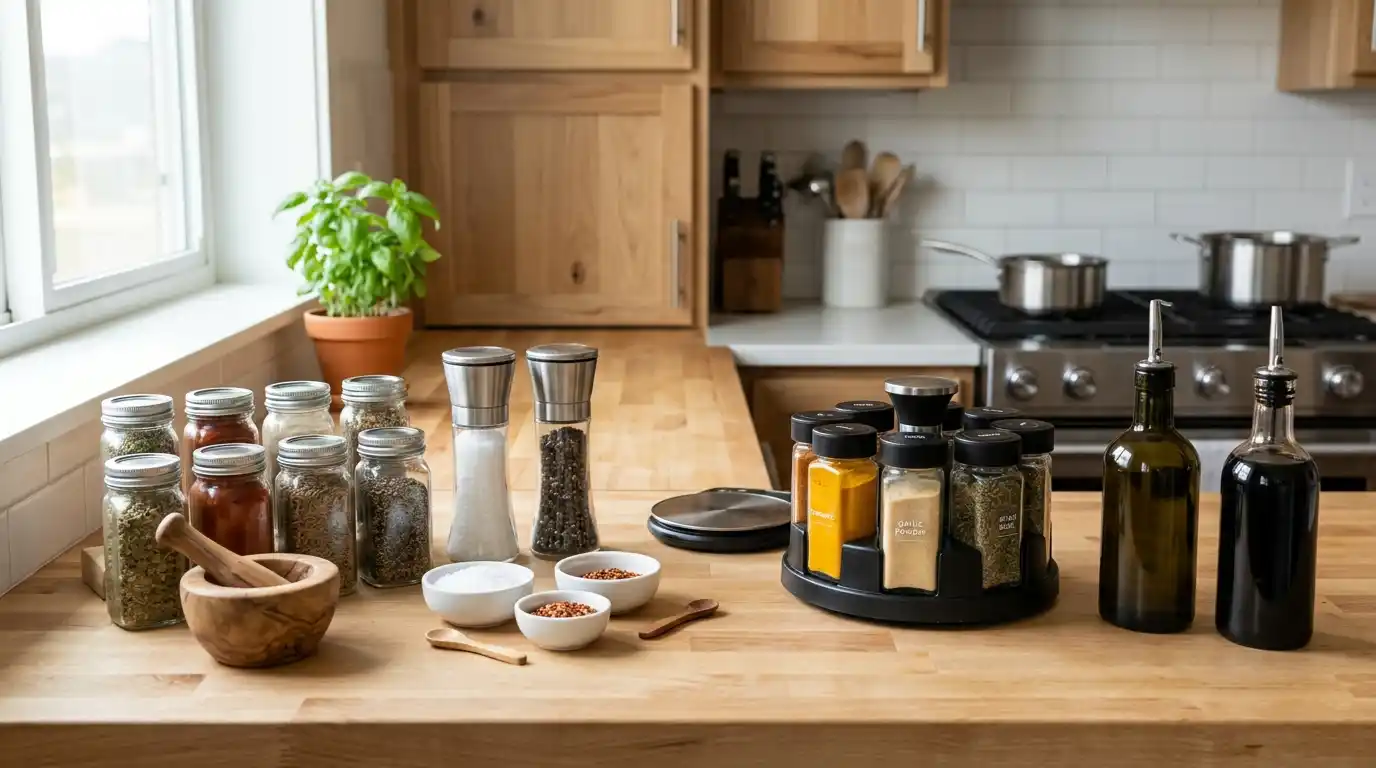
Your existing kitchen architecture should ultimately dictate which organizational tool you choose. Deep corner cabinets are notoriously difficult to organize, often becoming a graveyard for forgotten ingredients.
Placing a large, heavy-duty Lazy Susan into a corner cabinet immediately solves this issue, maximizing accessibility in a zone where linear risers would completely fail.
For shallow, eye-level upper cabinets ranging from 10 to 12 inches deep, tiered shelves are the undisputed winner.
They align your ingredients into a compact, beautiful wall of flavor that maximizes every millimeter of shelf space.
Attempting to place a round turntable into a shallow cabinet results in significant wasted space along the sides, severely limiting the size of the collection you can display.
Customizing Your Setup with Modern Materials
Both storage solutions are available in a wide variety of materials to match your kitchen design style.
If you love a warm, organic look, bamboo turntables or wooden stepped risers bring an earthy texture into your cabinetry.
For sleek, modern spaces, clear acrylic variants offer a minimalist look that keeps the focus entirely on the colorful spices themselves.
Many modern tiered shelves feature expandable designs, allowing you to slide the riser horizontally to fit the exact width of your cabinet shelf.
Similarly, double-decker Lazy Susans utilize vertical space by adding a second spinning tier above the base, doubling your storage capacity within the same footprint.
Exploring these material options allows you to tailor your storage choice to both your functional needs and your aesthetic preferences.
Designing the Ultimate Hybrid Seasoning Zone
If you possess a large, diverse spice collection, you do not have to limit yourself to a single organizational system.
Many professional organizers recommend a hybrid approach that utilizes the unique strengths of both tools within the same pantry or cabinet layout.
Consider placing an expandable tiered shelf on your primary eye-level cabinet rack to hold your standard, everyday baking and cooking spices like cumin, garlic powder, and paprika.
This keeps your most active ingredients highly visible and easy to audit. On the shelf above or in a deep corner, place a Lazy Susan to corral your taller grinders, specialty oils, vinegars, and odd-sized seasoning tins.
This combination ensures that every container, regardless of its shape or usage frequency, receives an optimal, highly efficient home.


