

Tangy Fish in Mustard Sauce: Weeknight Wow in 30 Minutes
I’m telling you up front: tangy fish in mustard sauce is the kind of dish that pretends to be fancy but is secretly your new weeknight bestie.
Quick, bright, and almost annoyingly flavorful, it makes plain fish feel like it’s wearing a little red dress to the grocery store.
Ready to get tangy, saucy, and confident in under 30 minutes? Let’s do this.
Fish in Mustard Sauce Recipe
Ingredients
- 4 boneless skinless fish fillets (tilapia, cod, or haddock work nicely)
- 2 tablespoons Dijon or table mustard
- 2 tablespoons whole-grain mustard for texture, optional but recommended
- 2 tablespoons lemon juice fresh preferred
- 1/4 cup chicken or vegetable broth
- 1 tablespoon olive oil
- 1 small shallot finely chopped (or 1/2 small onion)
- 1 clove garlic minced
- Salt and pepper to taste
- Chopped fresh parsley or dill for garnish optional but cute
Instructions
- Pat the fish dry and season lightly with salt and pepper. This is the part where you reveal you’re serious about flavor.
- Heat olive oil in a skillet over medium heat. When it shimmers, lay in the fish and sear about 2–3 minutes per side until lightly golden. Don’t overcook—fish hates drama and rubbery textures.
- Remove the fish to a plate. In the same pan, add shallot and garlic; sauté until fragrant and translucent, about 1–2 minutes.
- Whisk in the mustards, lemon juice, and broth. Scrape up any tasty bits from the bottom. Simmer 2–3 minutes until the sauce thickens slightly.
- Return the fish to the pan, spooning the sauce over it. Warm through for another minute so the flavors mingle without turning the fish into mush.
- Taste and adjust with a pinch more salt, pepper, or lemon if you’re feeling feisty. Garnish with parsley or dill and serve.
Why This Recipe is Awesome
It’s fast, bold, and surprisingly forgiving. The tang from the lemon and vinegar wakes up the mustard, and the fish stays juicy thanks to a quick, skillet-friendly technique.
It’s idiot-proof, even I didn’t mess it up. Plus, the sauce clings like a clingy bestie—you’ll want seconds just to soak up every last drop.
Ingredients You’ll Need
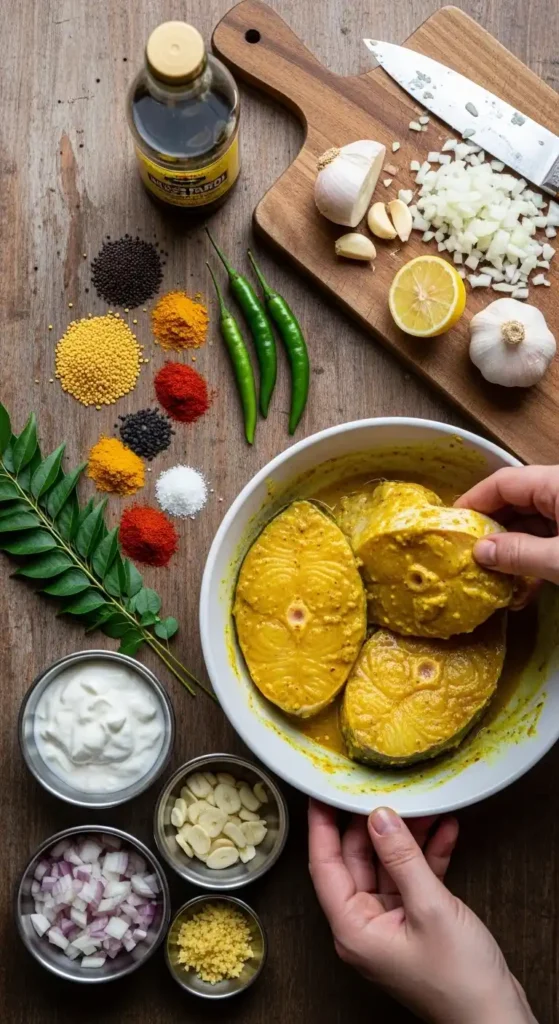
- 4 boneless, skinless fish fillets (tilapia, cod, or haddock work nicely)
- 2 tablespoons Dijon or table mustard
- 2 tablespoons whole-grain mustard (for texture, optional but recommended)
- 2 tablespoons lemon juice (fresh preferred)
- 1/4 cup chicken or vegetable broth
- 1 tablespoon olive oil
- 1 small shallot, finely chopped (or 1/2 small onion)
- 1 clove garlic, minced
- Salt and pepper to taste
- Chopped fresh parsley or dill for garnish (optional but cute)
Step-by-Step Instructions
- Pat the fish dry and season lightly with salt and pepper. This is the part where you reveal you’re serious about flavor.
- Heat olive oil in a skillet over medium heat. When it shimmers, lay in the fish and sear about 2–3 minutes per side until lightly golden. Don’t overcook—fish hates drama and rubbery textures.
- Remove the fish to a plate. In the same pan, add shallot and garlic; sauté until fragrant and translucent, about 1–2 minutes.
- Whisk in the mustards, lemon juice, and broth. Scrape up any tasty bits from the bottom. Simmer 2–3 minutes until the sauce thickens slightly.
- Return the fish to the pan, spooning the sauce over it. Warm through for another minute so the flavors mingle without turning the fish into mush.
- Taste and adjust with a pinch more salt, pepper, or lemon if you’re feeling feisty. Garnish with parsley or dill and serve.
How to Serve
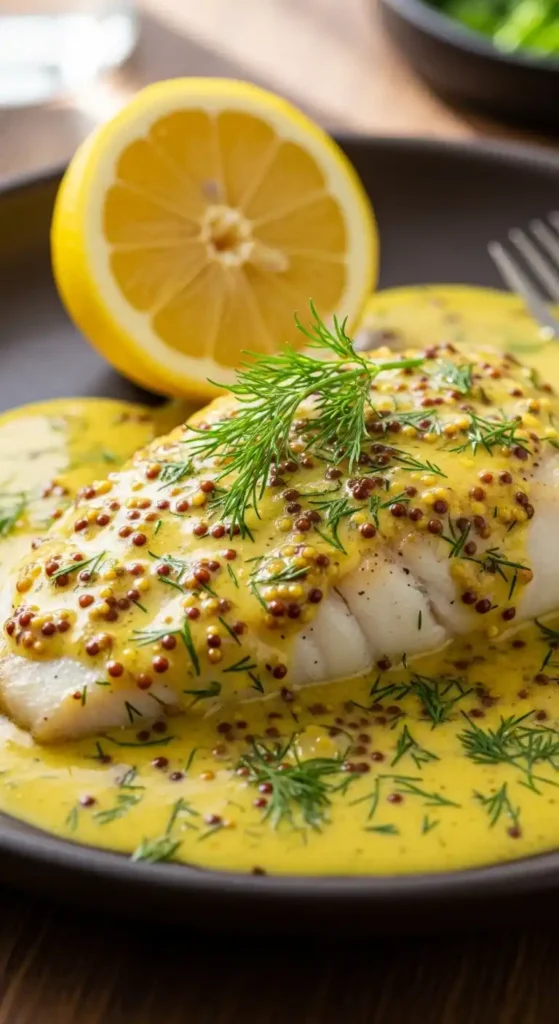
– Plate the fish with a generous spoonful of tangy mustard sauce on top.
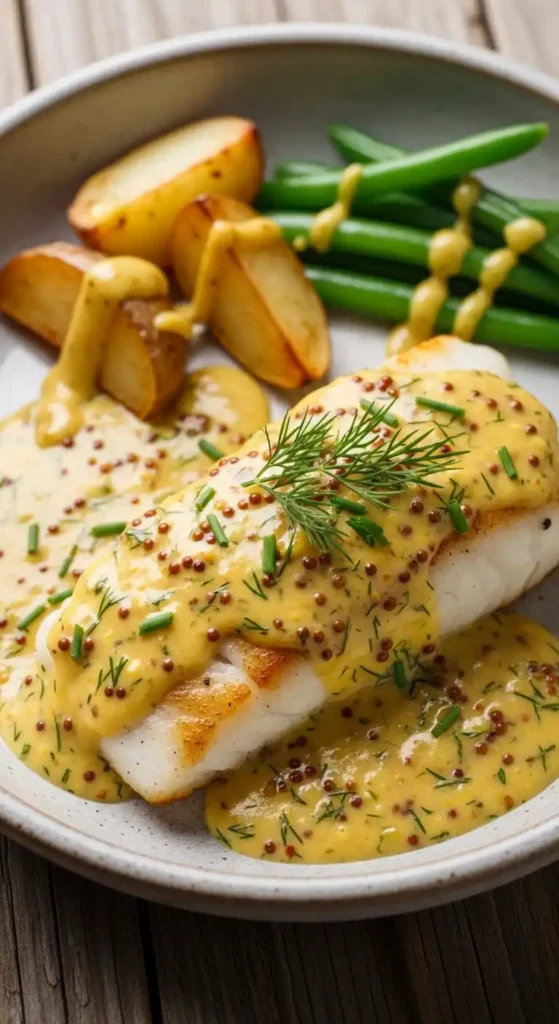
– Pair with simple sidekick sides: roasted potatoes, steamed green beans, or a bright salad.
– For a classy touch, serve over a bed of rice or quinoa to soak up the sauce.
– A crisp white wine works if you’re into that, otherwise sparkling water with a lemon wheel keeps things refreshing.
– Presentation idea: drizzle a tiny bit of extra sauce on the plate’s edge for color, and finish with a green herb flourish. It looks chef-y without the stress.
Nutrition Facts (approximate)
Per serving (approximate, because we live in reality):
– Calories: 260–320
– Carbohydrates: 6–8 g
– Protein: 28–34 g
– Fat: 12–16 g
– Fiber: 0–1 g
– Sugar: 1–2 g
Note: values vary with fish type and exact amounts used. Consider this a quick estimate, not a nutrition label.
Common Mistakes
– Overcooking the fish. It dries out faster than your sense of humor on a Monday.
– Skipping the deglaze step. Those brown bits are flavor gold; don’t ignore them.
– Using all mustard at once. It can turn sharp; balance with lemon and broth.
– Not letting the sauce simmer long enough. It needs a minute or two to mellow and emulsify.
– Forgetting to season the sauce separately. Salt here, salt there—season everywhere.
Simple Alternatives or Ingredient Substitutions
– Fish options: salmon works well, but it’s richer; white fish keeps it light and bright.
– Mustard: if you’re out of Dijon, a grainy mustard or even a dab of yellow mustard can still sing, just adjust salt and lemon.
– Dairy-free tweak: no problem—this recipe is naturally dairy-free. If you want extra creaminess, a splash of coconut milk at the end won’t hurt, but it changes the vibe.
– Veggie boost: toss in a handful of capers or a few cherry tomatoes during the deglazing for extra zing.
– Heat level: add a pinch of red pepper flakes with the garlic if you like some kick.
Conclusion
Tangy fish in mustard sauce is your new go-to: quick, breezy, and surprisingly elegant.
It proves that a few pantry staples can deliver a bright, confident dish that feels a touch fancy without demanding your life in the kitchen.
Crack open a lemon, heat the pan, and let the sauce do the talking.
FAQ
Can I use frozen fish for this recipe?
Absolutely. Thaw it fully, pat dry, and proceed as usual. Your patience will pay off with better texture.
What if I don’t have whole-grain mustard?
Use extra Dijon or a splash of prepared mustard for the tang. The texture won’t be exactly the same, but it’ll still taste delicious.
How do I prevent the sauce from breaking?
Keep the heat moderate and simmer gently after adding the broth. If it looks oily, whisk in a tiny bit of water or broth to bring it back together.
Can I make this ahead?
The sauce can be prepared ahead and gently reheated. The fish is best cooked fresh, but reheated fillets with a quick re-warm and sauce finish work in a pinch.
Is this suitable for kids?
Yes—milder mustard is kid-friendly, and you can dial down the lemon a notch. Let the kids help whisk the sauce for a fun cooking moment.


