

HexClad vs Caraway: Which Cookware Brand Is Right for Your Kitchen?

Choosing the right cookware can feel overwhelming, especially with so many modern brands promising better performance, durability, and healthier cooking.
If you’ve been comparing them, you’re probably wondering: hexclad vs caraway—which one actually wins? These Two names often come up in this conversation.
Both brands are popular for different reasons.
One focuses on hybrid technology and durability, while the other emphasizes non-toxic materials and aesthetic design.
In this guide, we’ll break down everything you need to know so you can decide which cookware fits your cooking style best.
HexClad vs Caraway: Quick Overview
Before diving deeper, let’s look at a quick comparison of hexclad vs caraway:
- HexClad: Known for its hybrid stainless steel and nonstick surface, designed for durability and high-heat cooking
- Caraway: Known for its ceramic-coated, non-toxic cookware with a sleek, modern look
Both brands aim to make cooking easier—but they take very different approaches.
Material and Construction
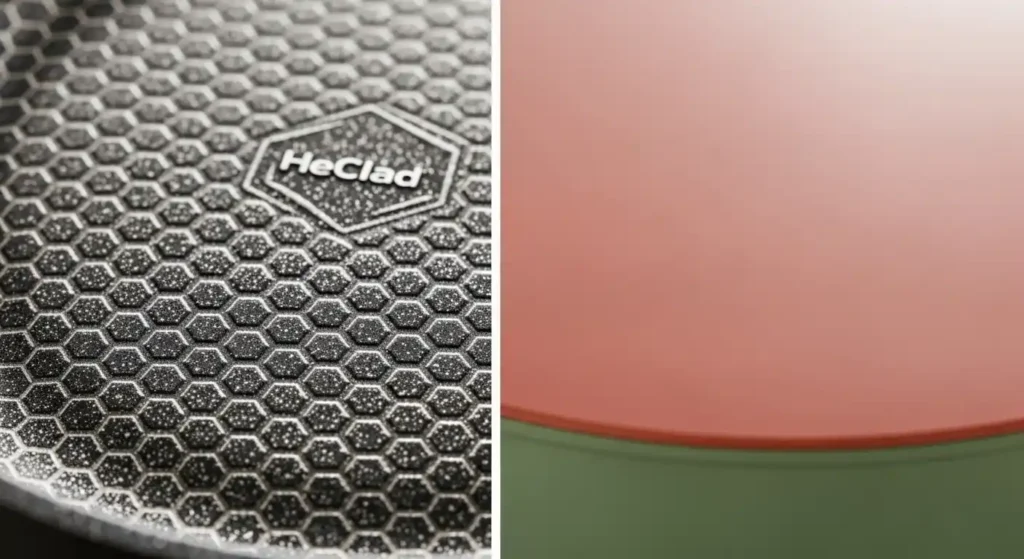
One of the biggest differences in the hexclad vs caraway debate is the material used in each cookware line.
HexClad Cookware
HexClad features a tri-ply construction, combining:
- Stainless steel
- Aluminum core
- Laser-etched hexagonal nonstick surface
This hybrid design gives you the durability of stainless steel with the convenience of nonstick cooking.
Caraway Cookware
Caraway cookware is made with:
- Aluminum core
- Ceramic nonstick coating
It focuses on non-toxic, chemical-free cooking surfaces, making it appealing to health-conscious users.
Which Is Better?
- Choose HexClad if you want durability and high-heat performance
- Choose Caraway if you prioritize non-toxic materials and a smooth nonstick surface
Cooking Performance
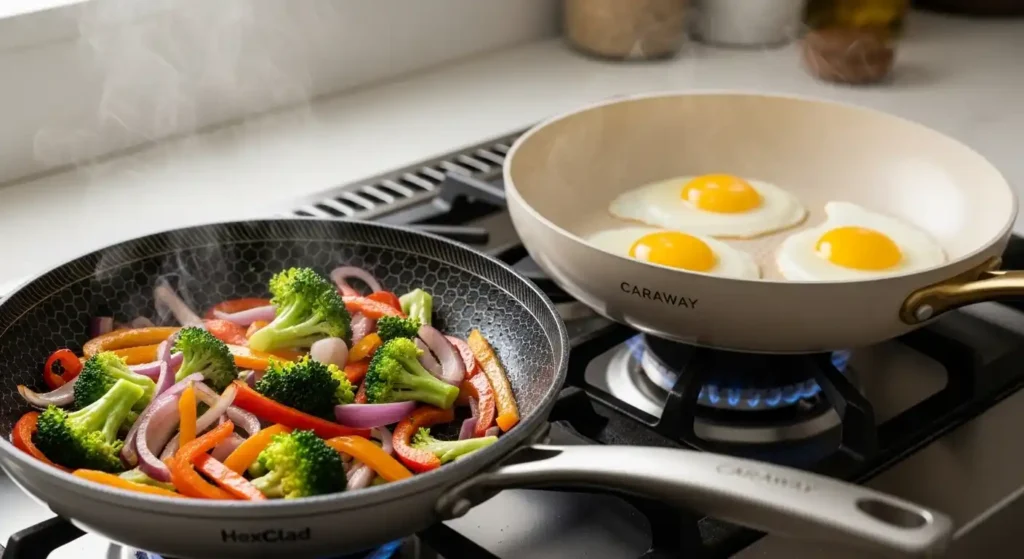
Performance is where these two brands really show their strengths.
HexClad Performance
- Excellent for searing and browning
- Can handle higher heat levels
- Works well for a variety of cooking techniques
The hybrid surface allows you to use metal utensils and still maintain performance.
Caraway Performance
- Smooth, slick nonstick surface
- Ideal for delicate foods like eggs, pancakes, and sauces
- Performs best at medium heat
Caraway excels in everyday cooking but is not designed for very high temperatures.
Durability and Longevity
When investing in cookware, durability matters.
HexClad Durability
- Scratch-resistant surface
- Can withstand metal utensils
- Built for long-term use
HexClad is designed to last and handle more demanding cooking conditions.
Caraway Durability
- Nonstick coating is effective but more delicate
- Requires gentle utensils (wood or silicone)
- Needs careful handling to maintain performance
While Caraway is durable with proper care, it’s not as rugged as HexClad.
Ease of Cleaning
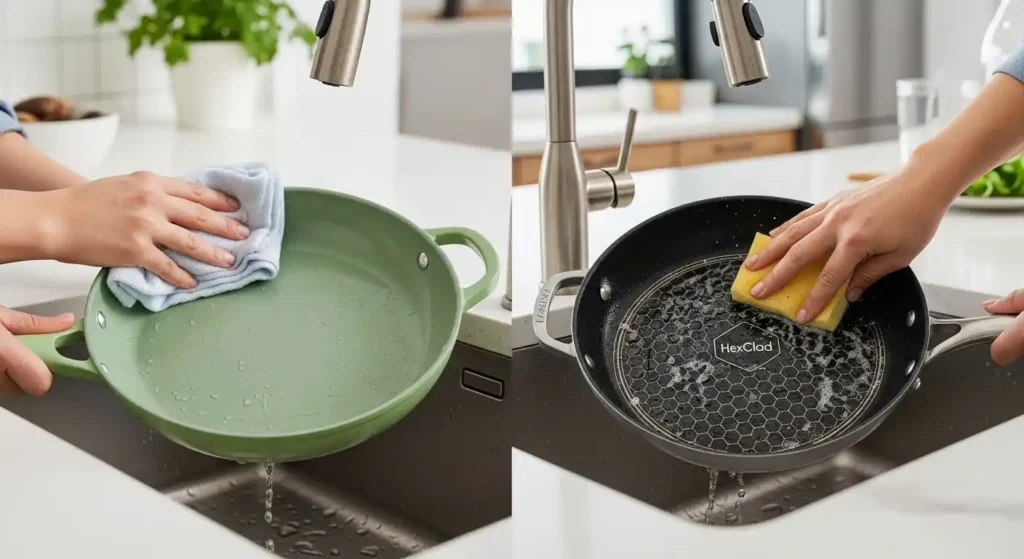
No one enjoys scrubbing pans after cooking, so cleaning is a major factor.
HexClad Cleaning
- Dishwasher-safe (though hand washing is recommended)
- Food doesn’t stick easily, but some residue may require light scrubbing
Caraway Cleaning
- Extremely easy to clean
- Most food wipes off with minimal effort
- Best cleaned by hand to preserve coating
If easy cleanup is your top priority, Caraway has the edge.
Heat Compatibility
HexClad
- Works on all stovetops, including induction
- Oven-safe at higher temperatures
Caraway
- Also compatible with most stovetops
- Oven-safe but with lower temperature limits compared to HexClad
For high-heat cooking or oven use, HexClad offers more flexibility.
Design and Aesthetic Appeal
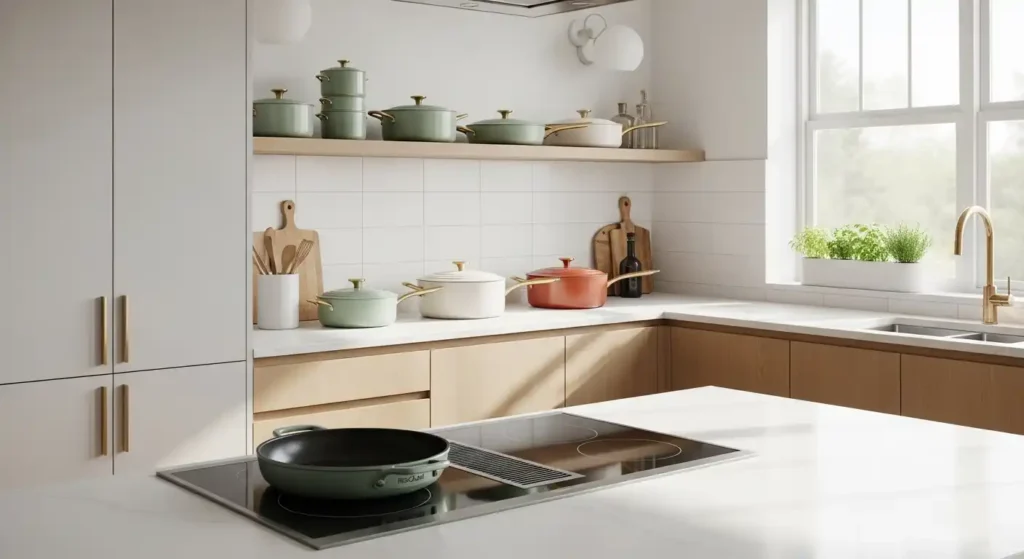
This is where Caraway really stands out in the hexclad vs caraway comparison.
Caraway Design
- Modern, minimalist look
- Available in stylish colors
- Designed to look beautiful in your kitchen
HexClad Design
- More functional and professional appearance
- Stainless steel with a unique hexagonal pattern
If you care about kitchen aesthetics, Caraway is the clear winner.
Health and Safety
Many people choose cookware based on safety and materials.
HexClad Safety
- Free from harmful chemicals
- Hybrid surface reduces need for excess oil
Caraway Safety
- Marketed as non-toxic
- Free from common chemical coatings
- Ideal for those seeking cleaner cooking options
Both brands are safe, but Caraway places a stronger emphasis on non-toxic materials.
Price and Value
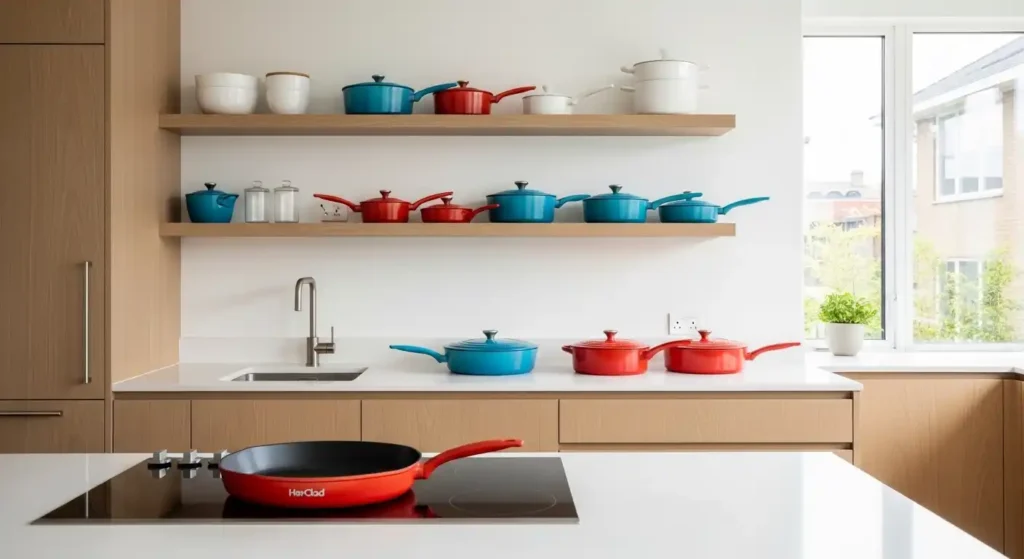
Cost is always an important consideration.
HexClad Pricing
- Generally more expensive
- Higher upfront cost but long-lasting
Caraway Pricing
- Also premium-priced
- Often sold in complete cookware sets
Value Comparison
- HexClad: Better for long-term durability
- Caraway: Better for design and ease of use
Your choice depends on whether you value longevity or convenience more.
Pros and Cons
HexClad Pros
- Durable hybrid construction
- Handles high heat
- Scratch-resistant
- Versatile cooking performance
HexClad Cons
- Higher price
- Slightly heavier
- Not as smooth as traditional nonstick
Caraway Pros
- Smooth nonstick surface
- Easy to clean
- Stylish design
- Non-toxic materials
Caraway Cons
- Less durable over time
- Cannot handle very high heat
- Requires careful handling
Which One Should You Choose?
When deciding between hexclad vs caraway, it comes down to your cooking habits and priorities.
Choose HexClad If You:
- Cook at high temperatures
- Want long-lasting, durable cookware
- Prefer versatility for different cooking methods
Choose Caraway If You:
- Want easy, everyday cooking
- Prefer non-toxic materials
- Care about aesthetics and design
Can You Use Both Together?
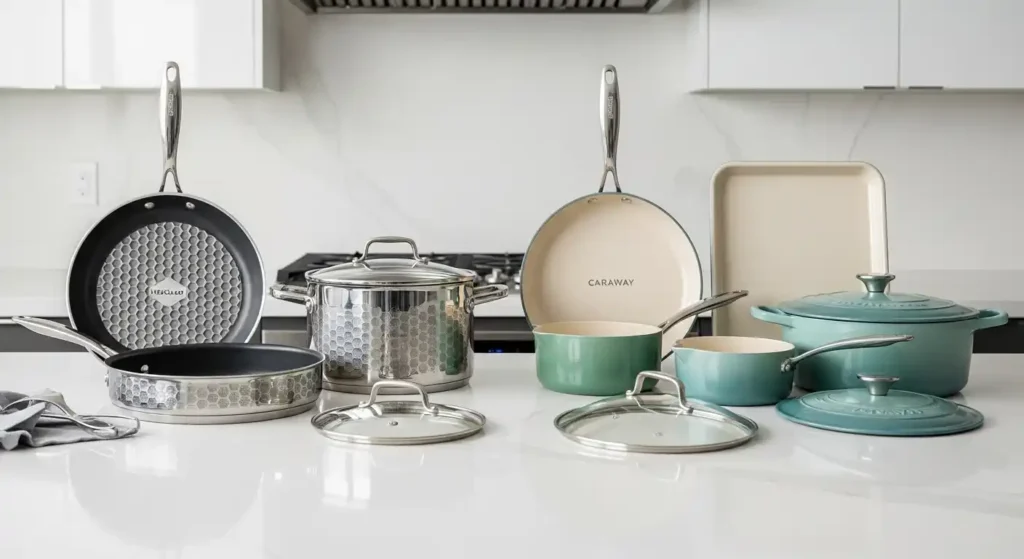
Absolutely! Many home cooks use a mix of cookware to suit different needs.
- Use HexClad for searing, frying, and high-heat cooking
- Use Caraway for eggs, sauces, and low to medium heat dishes
Combining both can give you the best of both worlds.
Final Thoughts
So, in the debate of hexclad vs caraway, there’s no one-size-fits-all answer. Both brands offer high-quality cookware, but they cater to different types of cooks.
HexClad stands out for its durability, versatility, and high-heat performance, making it ideal for serious cooking.
Caraway, on the other hand, shines with its non-toxic coating, ease of use, and beautiful design, perfect for everyday meals and modern kitchens.
Ultimately, the best choice depends on what matters most to you—performance or simplicity, durability or design.
Whichever you choose, both brands can elevate your cooking experience and help you create delicious meals with ease.


