

How To Organize A Deep Kitchen Pantry From Scratch

A deep kitchen pantry looks like a dream — until you lose a can of tomatoes behind three boxes of pasta and a forgotten bag of rice.
Deep shelves are generous with space but brutal with organization. Things get pushed to the back and simply disappear.
The good news is that organizing a deep kitchen pantry from scratch is completely achievable.
You do not need expensive tools or a full weekend to get it done. A clear plan, a few smart storage solutions, and one focused afternoon are all you truly need.
Step 1: Pull Everything Out First
Start by removing every single item from your pantry. Place everything on your kitchen counter or table so you can see exactly what you are working with.
This step feels messy at first but it is the most important one.
Going through a full pantry while items are still on the shelves leads to missed spots and poor decisions.
Check every expiry date as you pull items out. Toss anything expired, stale, or that your family will never realistically use.
Donate sealed, unexpired items you no longer need. Starting fresh with only what belongs in your pantry makes every next step much easier and faster.
Deep Kitchen Pantry Organization Ideas That Actually Work
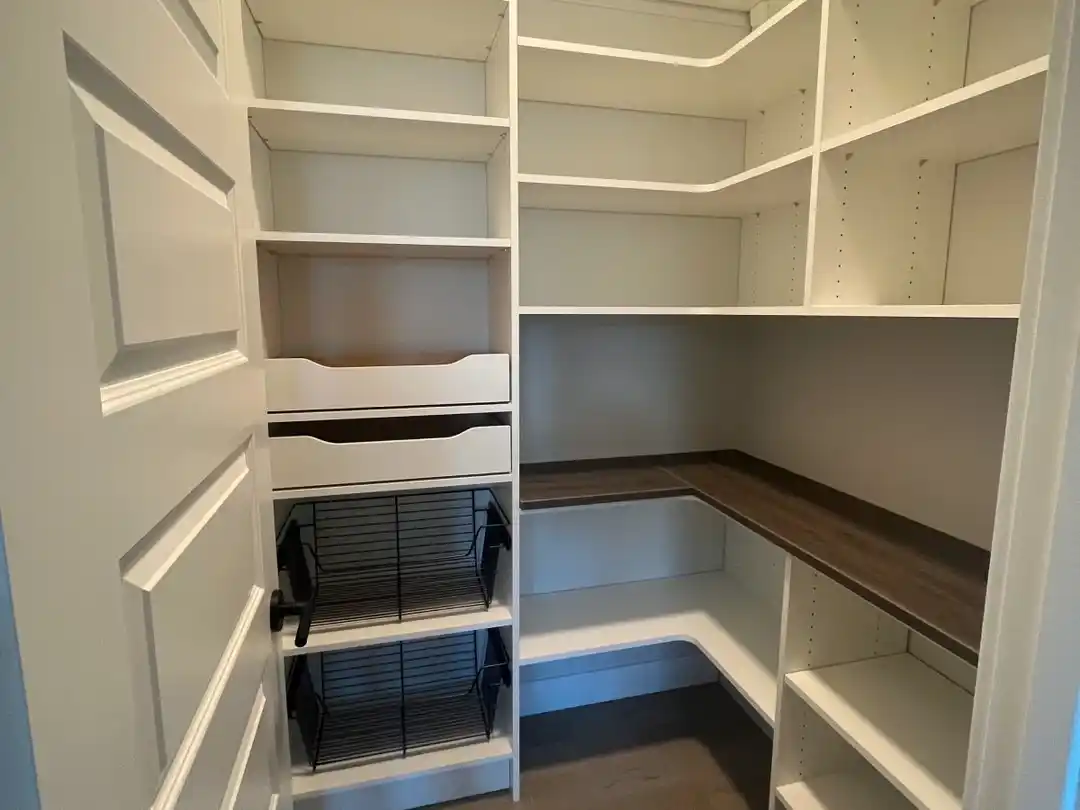
Once your pantry is empty, it is time to think strategically. Deep shelves need a front zone and a back zone system.
Place items you use daily in the front zone within easy arm’s reach. Reserve the back zone strictly for backup stock, bulk items, and things used occasionally.
Group similar items together before putting anything back. Keep all baking supplies in one zone, canned goods in another, snacks in their own section, and grains and pasta together.
This grouping system is the foundation of every well organized deep pantry and it saves enormous time during meal preparation every single day.
Use Clear Bins and Containers for Deep Shelf Organization
Clear storage bins are the single best investment for a deep kitchen pantry.
Pull out bins work especially well because you can slide the entire bin forward instead of reaching blindly to the back of the shelf.
Label every bin clearly so every family member knows exactly where each item lives.
Stackable clear containers work beautifully for dry goods like flour, sugar, oats, rice, and lentils.
Transfer these items out of their original bags and into airtight containers immediately.
Original packaging tears easily, attracts moisture, and takes up far more space than necessary.
Uniform containers stack neatly, look clean, and keep food fresh significantly longer.
How to Maximize Deep Pantry Shelf Space
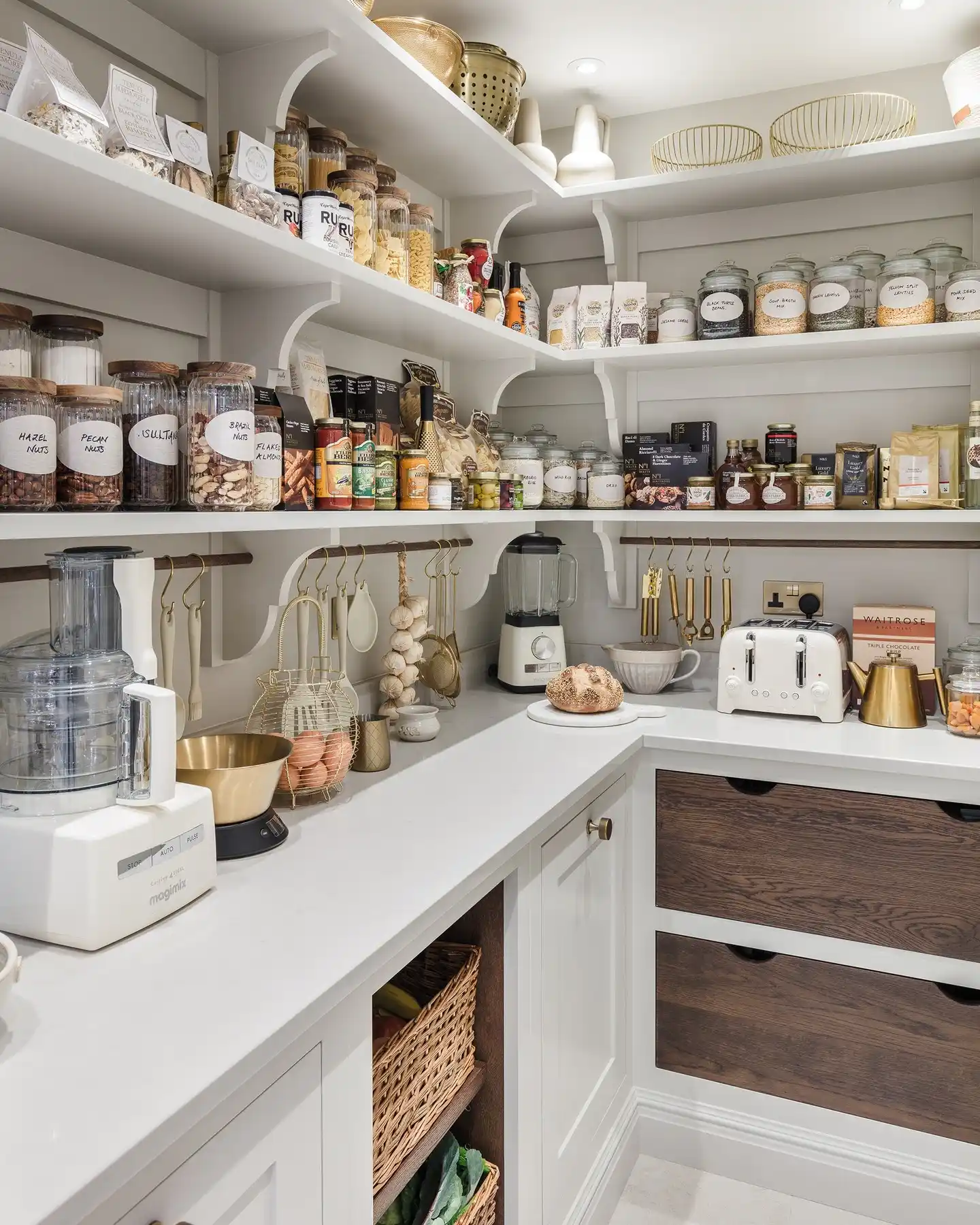
Vertical space inside a deep pantry is almost always wasted. Add shelf risers or small step shelves to create two levels on a single shelf.
Canned goods stack perfectly on risers, keeping every label visible and every item accessible without moving anything else around.
Over the door organizers add significant storage to the inside of your pantry door.
Use them for spice packets, small snack bags, foil rolls, and other flat items that clutter shelves unnecessarily.
Tension rods mounted horizontally on shelves create dividers for cutting boards, baking sheets, and pot lids, keeping them upright and organized instead of stacked in messy piles.
Best Way to Organize Canned Goods in a Deep Pantry
Canned goods are the biggest organizational challenge in any deep kitchen pantry.
Stacking cans directly on shelves means the ones at the back never get used and eventually expire unnoticed.
A simple tiered can organizer or a can dispenser rack solves this problem completely.
Place newer cans at the back and older cans at the front every time you restock.
This rotation system, used in every professional kitchen, ensures nothing expires and nothing gets wasted.
Group canned goods by category such as tomatoes, beans, coconut milk, broth, and vegetables so finding the right can takes seconds rather than minutes.
Pantry Organization Tips for Small and Large Families
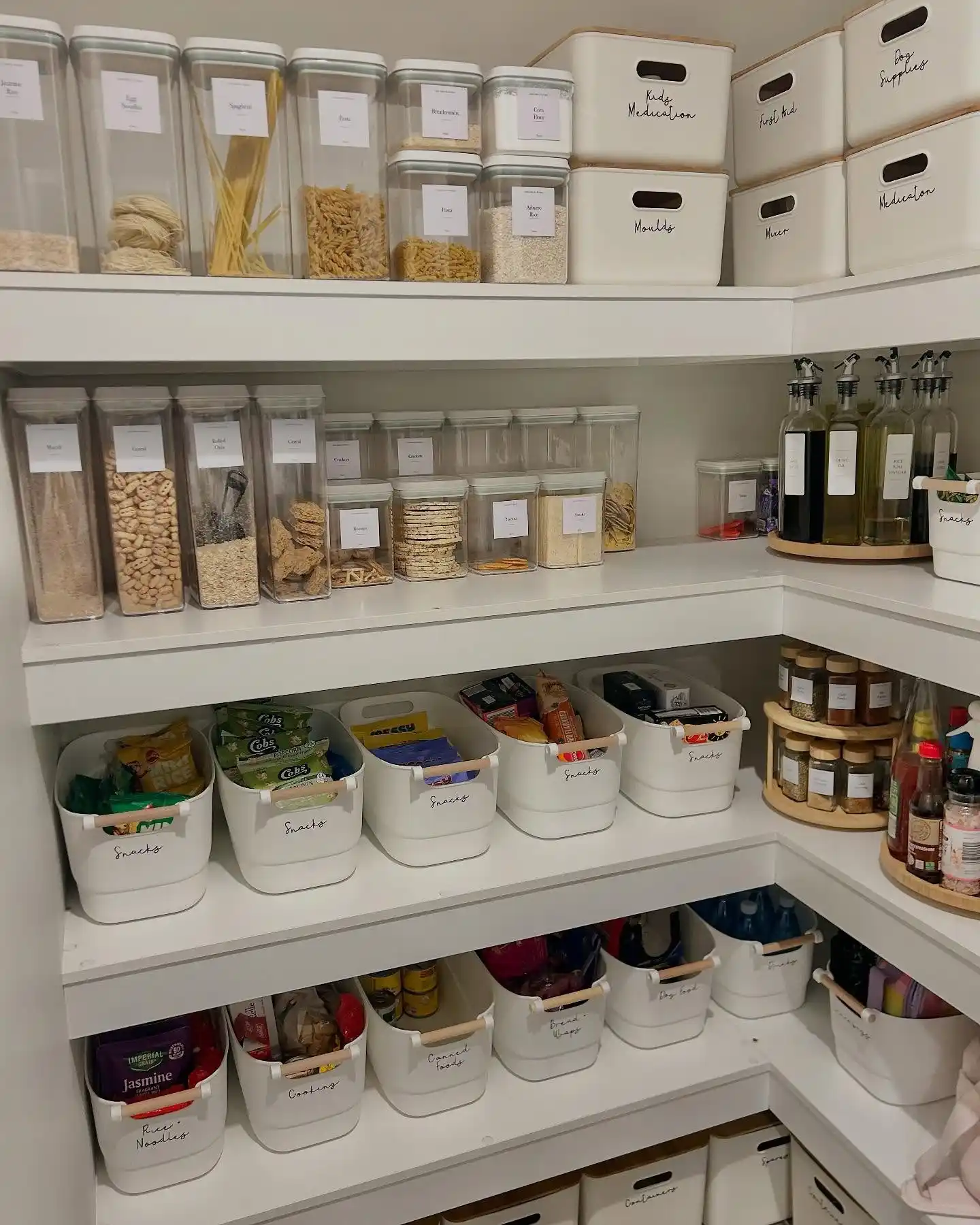
Family size changes how a pantry should be organized but the core principles stay the same.
Larger families need more bulk storage space and benefit greatly from large labeled bins for staples like rice, pasta, oats, and lentils.
Smaller households need less bulk storage and more variety, so smaller containers and more categories work better.
Place kid friendly snacks on lower shelves so children can access them independently without disturbing the rest of the pantry organization.
Keep healthy snacks like nuts, dried fruits, granola bars, and crackers at eye level for adults.
Storing items at the right height for the right person reduces daily pantry disruption significantly.
How to Keep a Deep Kitchen Pantry Organized Long Term
Getting a pantry organized from scratch is satisfying but keeping it that way requires a simple maintenance habit.
Spend five minutes every week doing a quick pantry reset. Push items back into their correct zones, check for anything running low, and pull forward anything approaching its expiry date.
Do a full pantry audit every three months. Remove everything again, wipe down shelves, check expiry dates, and reorganize any zones that have drifted out of order.
Seasonal pantry audits take less than an hour and prevent the pantry from ever returning to its original chaotic state.
Label Everything in Your Deep Pantry
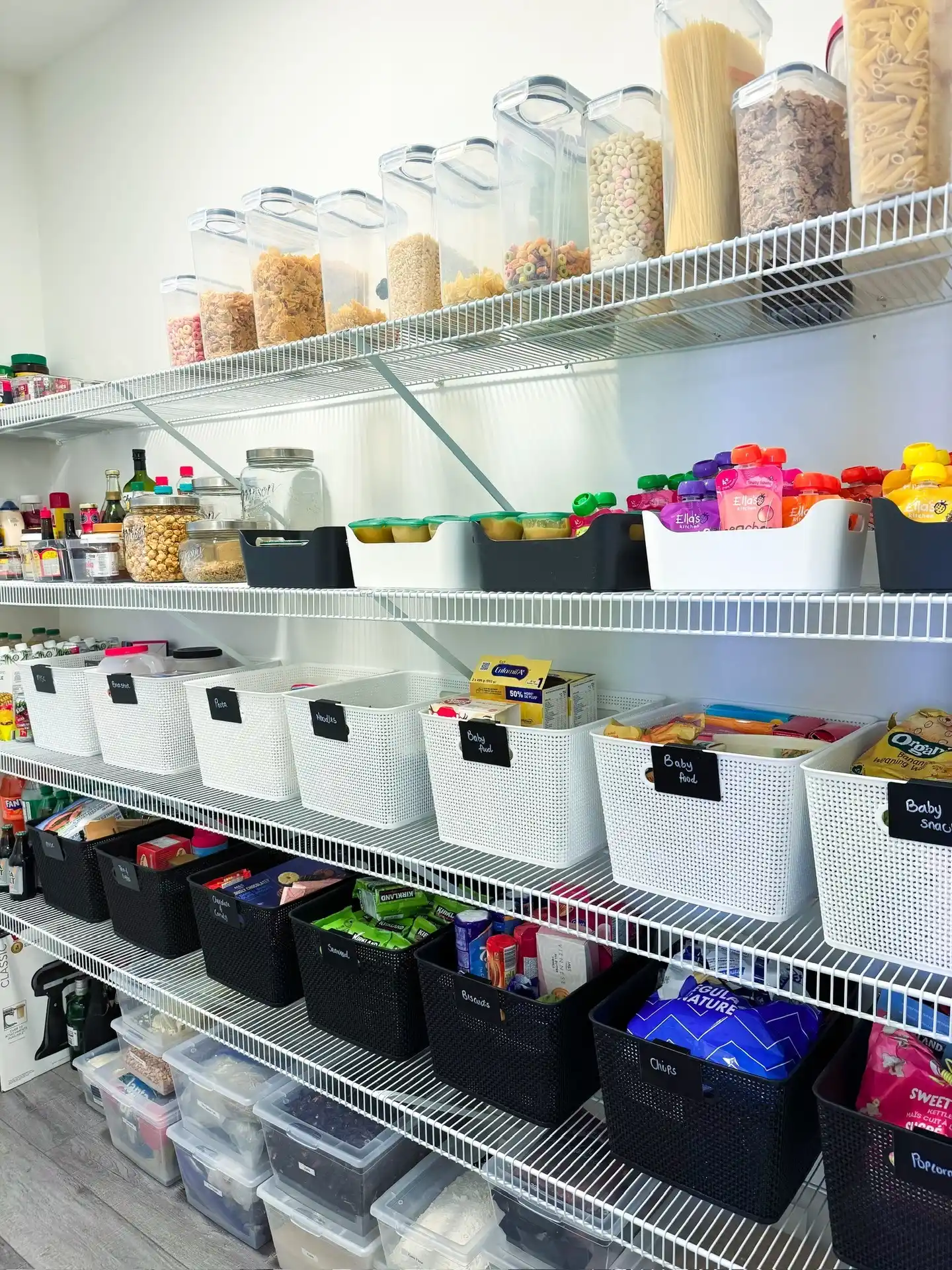
Labels are non negotiable in a deep kitchen pantry organization system. Every bin, basket, container, and shelf zone needs a clear label.
Labels remove all guesswork for every member of the household and make putting groceries away fast and automatic.
Use a simple label maker, printed labels, or even handwritten chalkboard labels for a more personal touch.
Consistency matters more than style. When every item has a designated labeled home, the pantry stays organized on its own with very little daily effort from anyone.
Final Thoughts on Organizing a Deep Kitchen Pantry From Scratch
A well organized deep kitchen pantry saves money, reduces food waste, and makes cooking genuinely enjoyable.
Knowing exactly what you have, where it lives, and when it expires removes daily stress from meal planning and grocery shopping completely.
Start with one shelf if the whole pantry feels overwhelming. Small progress beats no progress every single time.
Apply the front zone and back zone system, invest in clear bins and labels, rotate your canned goods, and maintain your system with quick weekly resets.
Your deep kitchen pantry will go from chaotic and frustrating to calm, functional, and completely under control.


