

What Is a Tilting Skillet? A Complete Guide to This Versatile Kitchen Equipment

If you’ve ever worked in or visited a commercial kitchen, you might have noticed a large, heavy-duty piece of equipment that looks like an oversized pan mounted on a stand.
This is known as a tilting skillet—a powerful and versatile tool used for cooking large quantities of food efficiently.
But for many home cooks and even some professionals, the question remains: what is a tilting skillet, and how does it actually work?
In this guide, we’ll break down everything you need to know about tilting skillets, including their features, uses, benefits, and whether they’re something you should consider for your kitchen.
What Is a Tilting Skillet?
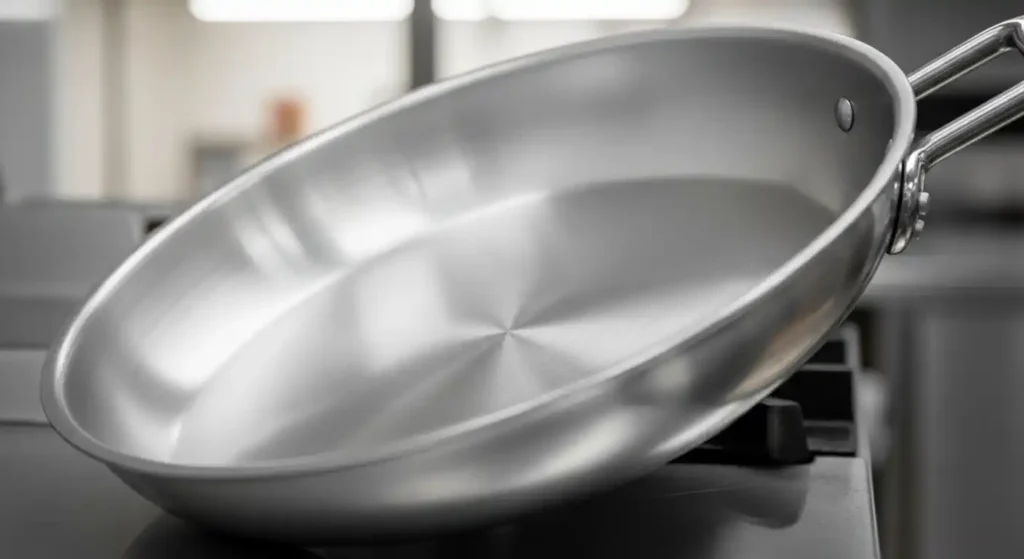
A tilting skillet (also called a braising pan) is a large, flat-bottomed cooking vessel mounted on a frame with a mechanism that allows it to tilt forward. This tilting feature makes it easy to pour out food, liquids, or sauces without lifting the entire unit.
So, what is a tilting skillet used for? It’s designed for high-volume cooking and can handle a wide variety of tasks, including frying, sautéing, simmering, braising, and even shallow boiling.
Key Features
- Large cooking surface
- Flat bottom with slightly raised sides
- Tilting mechanism (manual or automatic)
- Built-in heat source (gas or electric)
- Heavy-duty construction for commercial use
Tilting skillets are commonly found in restaurants, cafeterias, catering kitchens, and institutions where large quantities of food are prepared daily.
How Does a Tilting Skillet Work?
The defining feature of a tilting skillet is, of course, its ability to tilt. But there’s more to it than just that.
Heating System
Tilting skillets use either gas burners or electric heating elements beneath the cooking surface. This provides even heat distribution across the large pan.
Tilting Mechanism
The skillet can be tilted forward using a hand crank, lever, or electric control. This allows you to:
- Pour out liquids easily
- Transfer food without heavy lifting
- Clean the pan more efficiently
Temperature Control
Most tilting skillets come with adjustable temperature controls, allowing precise cooking for different recipes.
What Can You Cook in a Tilting Skillet?
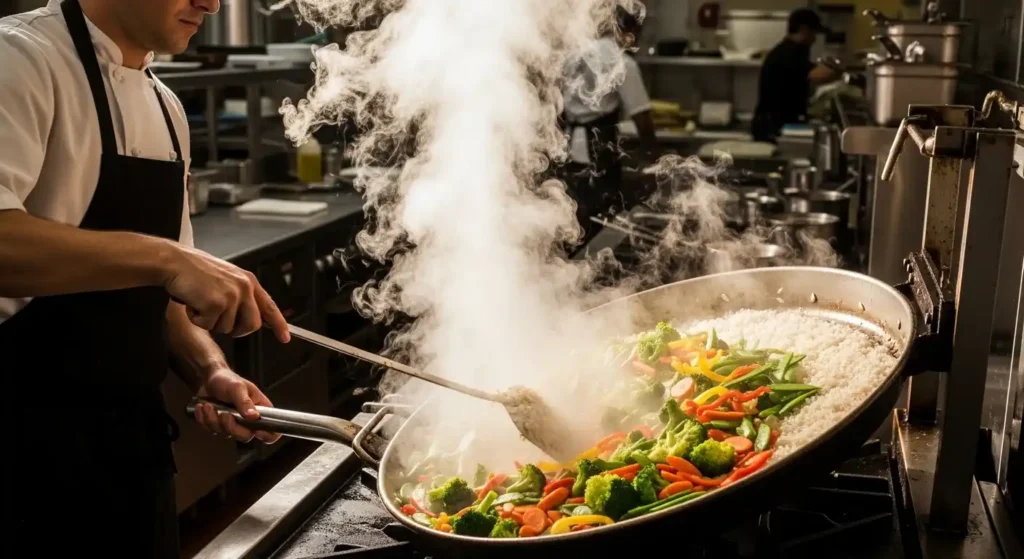
One of the biggest advantages of a tilting skillet is its versatility. It can replace several pieces of kitchen equipment.
Common Uses
- Cooking rice, grains, or pasta
- Preparing large batches of vegetables
- Making sauces, soups, or stews
- Sautéing or stir-frying ingredients
- Braising meats or plant-based dishes
Because of its size and even heating, it’s ideal for cooking in bulk without sacrificing quality.
Benefits of Using a Tilting Skillet
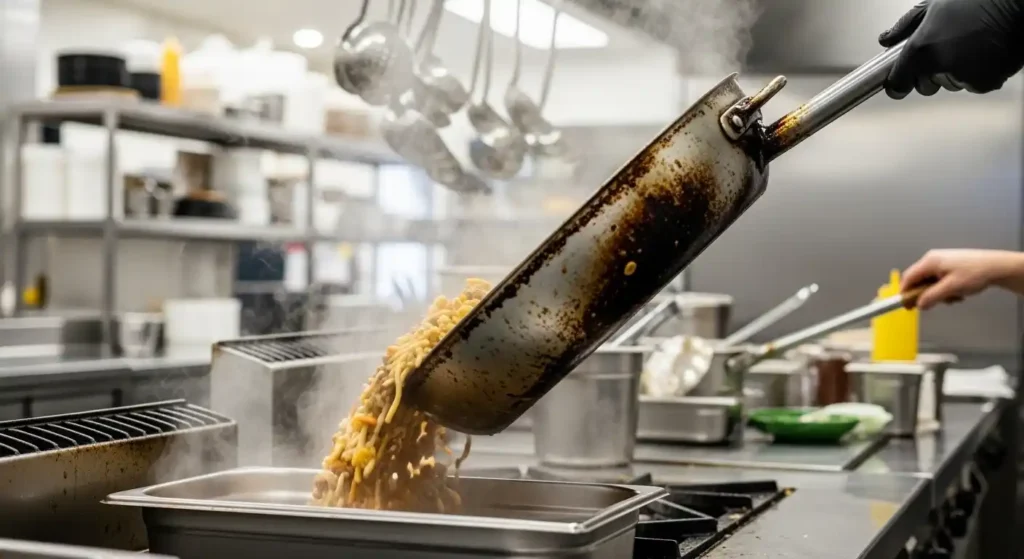
Tilting skillets are popular in professional kitchens for several good reasons.
1. High Capacity
They can cook large quantities of food at once, making them perfect for catering or institutional use.
2. Versatility
Instead of using multiple pots and pans, a tilting skillet can handle a wide range of cooking methods.
3. Easy Food Transfer
The tilting feature eliminates the need to lift heavy cookware, reducing strain and improving efficiency.
4. Even Heat Distribution
The large, flat surface ensures consistent cooking across the entire pan.
5. Time-Saving
Cooking in bulk reduces preparation and cooking time, especially in busy kitchens.
Tilting Skillet vs Regular Skillet
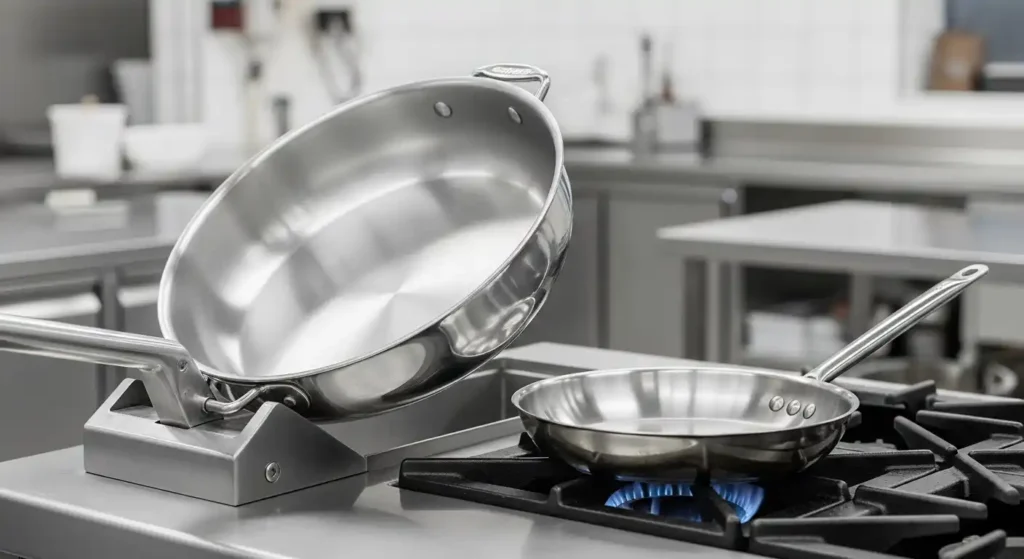
To better understand what is a tilting skillet, it helps to compare it with a regular skillet.
Size and Capacity
- Tilting Skillet: Large, designed for bulk cooking
- Regular Skillet: Small, suitable for home use
Functionality
- Tilting Skillet: Multi-purpose (frying, boiling, braising)
- Regular Skillet: Primarily for frying and sautéing
Handling
- Tilting Skillet: Fixed in place, tilts for pouring
- Regular Skillet: Portable, requires lifting
Usage
- Tilting Skillet: Commercial kitchens
- Regular Skillet: Home kitchens
While a regular skillet is essential for everyday cooking, a tilting skillet is built for large-scale food preparation.
Types of Tilting Skillets
There are different types of tilting skillets available, depending on how they operate.
Manual Tilting Skillet
- Operated using a hand crank
- More affordable
- Requires physical effort
Electric Tilting Skillet
- Uses a motor for tilting
- Easier to operate
- More expensive
Gas vs Electric Heating
- Gas models: Heat up quickly and are energy-efficient
- Electric models: Provide consistent and controlled heating
Where Are Tilting Skillets Used?
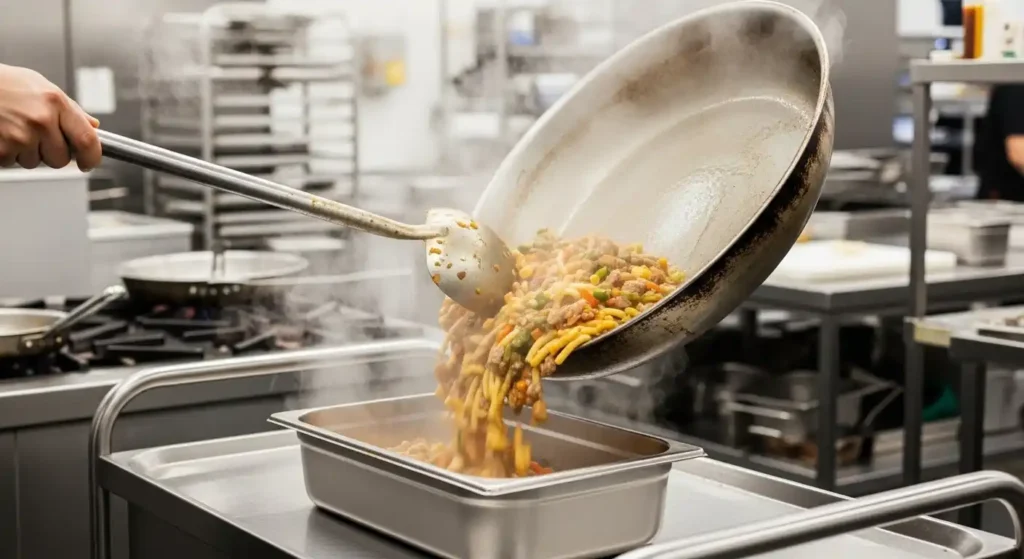
Tilting skillets are not commonly found in home kitchens due to their size, but they are widely used in:
- Restaurants
- Hotel kitchens
- School cafeterias
- Hospitals
- Catering businesses
These environments benefit from the skillet’s ability to cook large volumes efficiently.
Is a Tilting Skillet Suitable for Home Use?
For most home cooks, a tilting skillet may not be practical due to:
- Its large size
- High cost
- Need for dedicated space
However, if you frequently cook for large groups or run a small food business from home, it might be worth considering.
For everyday cooking, a combination of regular skillets, pots, and pans is usually sufficient.
Tips for Using a Tilting Skillet
If you’re working with a tilting skillet, these tips can help you get the best results:
Preheat Properly
Allow the skillet to heat evenly before adding ingredients.
Avoid Overfilling
Even though it has a large capacity, overfilling can make stirring and cooking difficult.
Use the Tilt Carefully
Tilt slowly to prevent spills or splashes.
Monitor Temperature
Adjust heat levels based on the type of food you’re cooking.
Cleaning and Maintenance
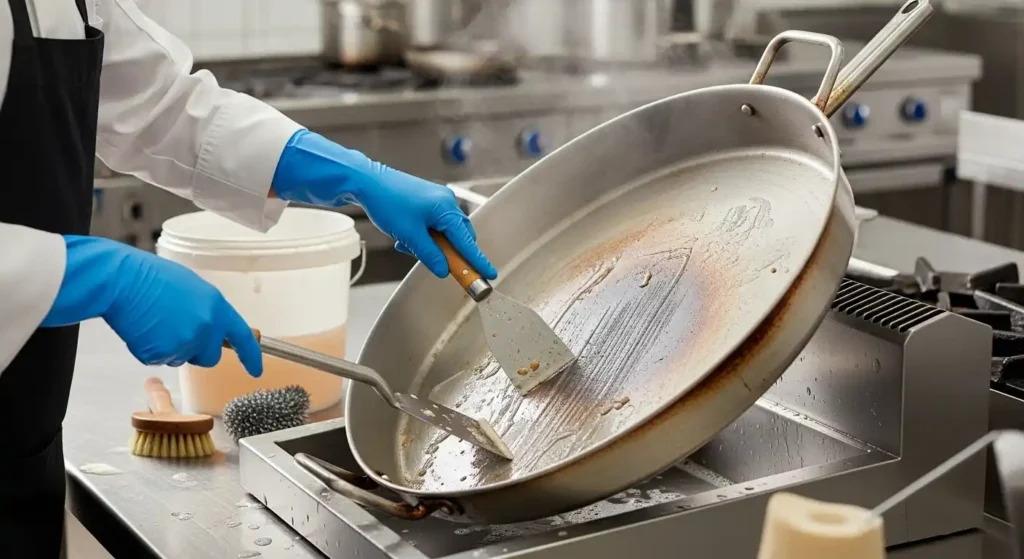
Proper cleaning is essential to keep a tilting skillet in good condition.
Cleaning Steps
- Let the skillet cool slightly after use
- Add warm water and mild detergent
- Use a soft brush or cloth to clean the surface
- Tilt to drain the water easily
Maintenance Tips
- Avoid harsh scrubbers that can damage the surface
- Check the tilting mechanism regularly
- Keep the unit dry when not in use
Regular maintenance ensures long-lasting performance.
Advantages and Disadvantages
Advantages
- Large cooking capacity
- Multi-functional
- Easy to pour and transfer food
- Efficient for bulk cooking
Disadvantages
- Expensive
- Requires space
- Not suitable for small kitchens
- Limited portability
Final Thoughts
So, what is a tilting skillet? It’s a powerful, multi-functional cooking tool designed for large-scale food preparation.
With its ability to cook, stir, and pour with ease, it’s a valuable asset in professional kitchens.
While it may not be necessary for everyday home cooking, understanding how it works can give you insight into how large kitchens operate efficiently.
If you’re cooking for large groups or managing a food service setup, a tilting skillet can save time, effort, and energy—making it a worthwhile investment.
For most home cooks, though, your regular pots and pans will do the job just fine.
Still, it’s fascinating to see how this impressive piece of equipment transforms large-scale cooking into a smooth and efficient process.


