

13 Transition Tips from Indoor to Outdoor Herb Garden Success

Transitioning herbs from indoor to outdoor herb garden pots is one of the most rewarding moves any gardener can make.
Fresh air, natural sunlight, and nutrient rich soil unlock growth that no windowsill or grow light can replicate.
Many gardeners struggle with the indoor to outdoor herb transition because they rush the process without a clear plan.
Done step by step, each transition builds stronger roots, fuller leaves, and more flavorful harvests.
This guide covers 13 proven transitions to move your herbs successfully from indoors to a thriving outdoor garden, giving beginners and experienced growers alike the confidence to grow fresh herbs every single day.
1. Herb Garden Transition
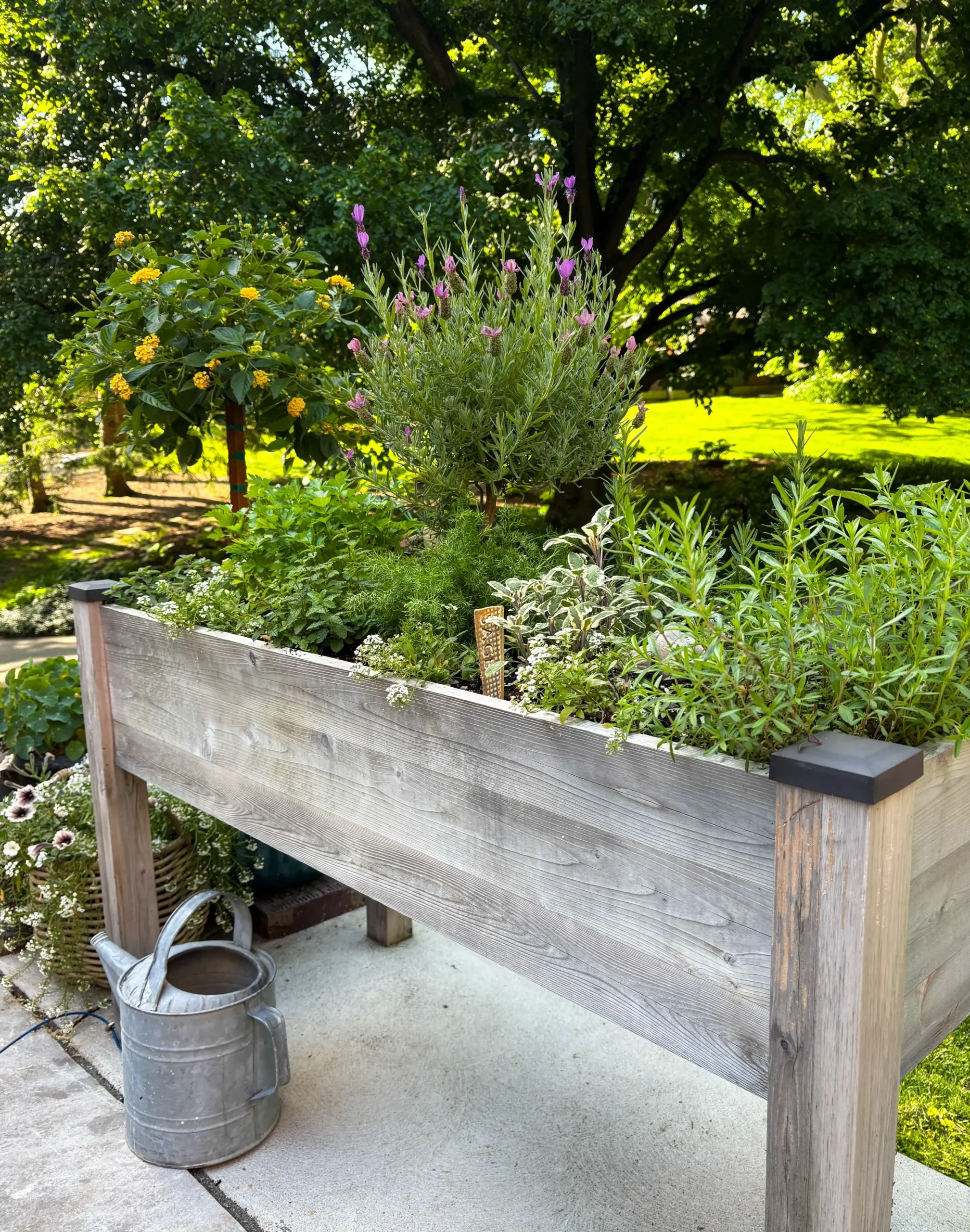
Moving indoor herbs into a raised bed herb garden wooden planter is one of the smartest outdoor transitions you can make.
Elevated beds warm up faster than ground soil, giving roots a strong and healthy start. A vintage metal watering can nearby keeps hydration simple and accessible every day.
Multiple herb varieties grow side by side here, including lavender, rosemary, dill, and oregano.
Grouping herbs together in one raised bed saves space and makes harvesting effortless.
Bright natural light from surrounding trees provides shade balance without blocking essential daily sun.
2. Indoor To Outdoor Herbs
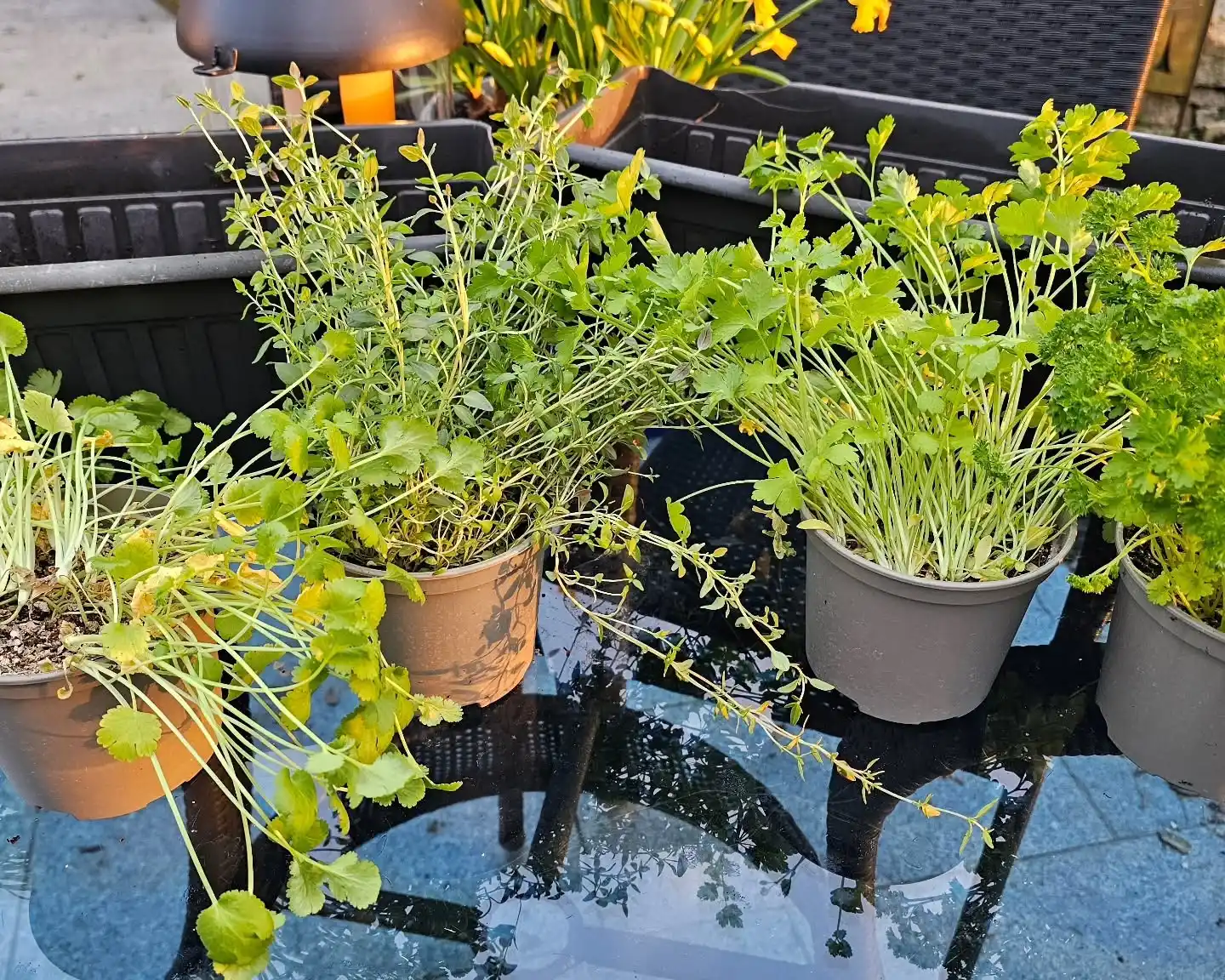
Placing indoor potted herbs directly onto an outdoor patio table is a simple and effective acclimatization method.
Herbs like cilantro, parsley, and thyme sit in individual containers, making it easy to monitor each plant separately.
Keeping them in their original pots reduces transplant stress during the early transition days.
Some leaves show slight yellowing, which is completely normal during outdoor adjustment. Fresh air and natural light gradually strengthen each plant over several days.
Moving pots back indoors at night protects them from temperature drops until roots fully adjust.
3. Hardening Off Herbs
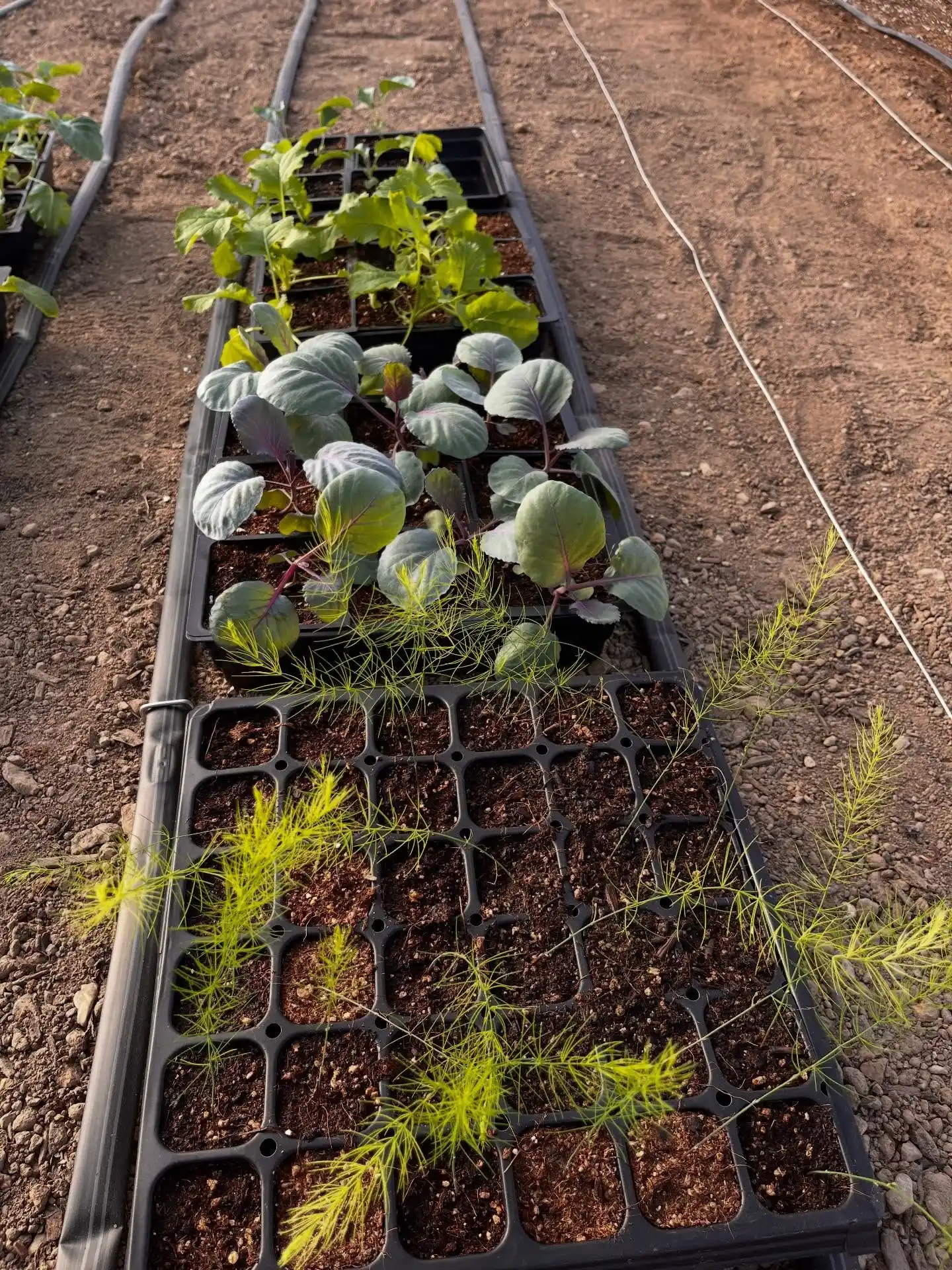
Seedling trays placed directly on open ground mark a critical stage in the hardening off process.
Dill seedlings, red cabbage starts, and leafy greens sit in individual cell trays, each getting equal exposure to outdoor conditions.
Drip irrigation lines nearby ensure consistent moisture without overwatering tender young roots.
Tray growing builds strong, organized seedlings before any ground transplanting begins.
Direct soil contact underneath the trays helps regulate temperature naturally throughout the day.
Starting with short outdoor sessions and gradually increasing exposure prepares each seedling for full outdoor life.
4. Hardening Off Seedlings
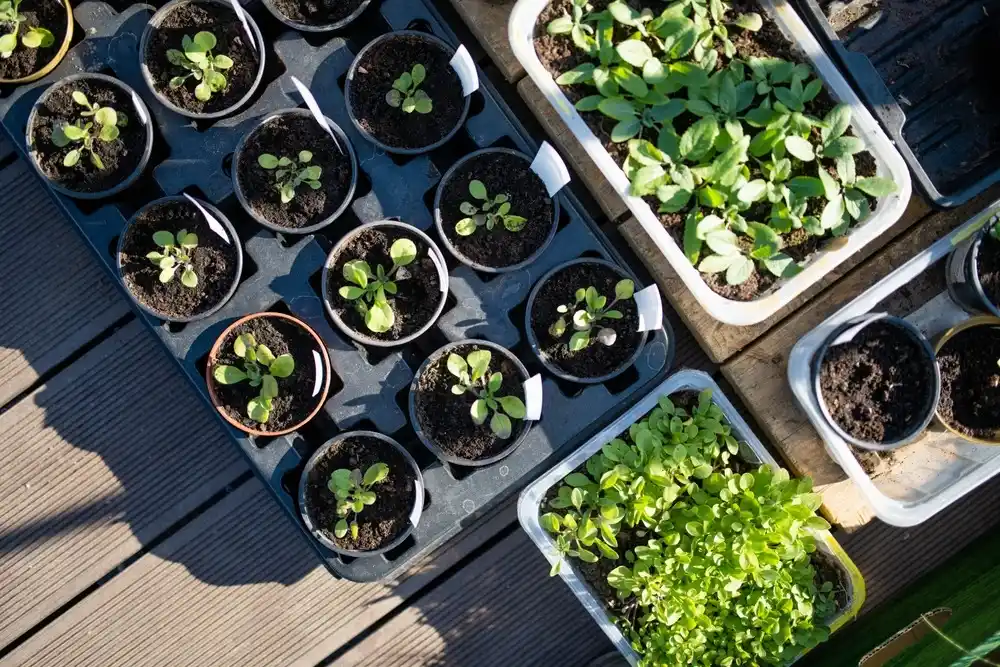
Placing seedling trays on a wooden deck brings young herbs into natural sunlight gradually and safely.
Small labeled seedlings sit in dark cell trays alongside flat white containers filled with leafy herb starts.
Bright morning sun casts sharp shadows across the deck, showing these plants are getting real, direct outdoor light exposure.
Each container holds a different growth stage, making it easy to track progress visually.
White plant labels help identify varieties without disturbing delicate young roots.
Deck hardening works well because you can move trays quickly if weather turns cold or winds pick up unexpectedly.
5. Gradual Sun Exposure Herbs
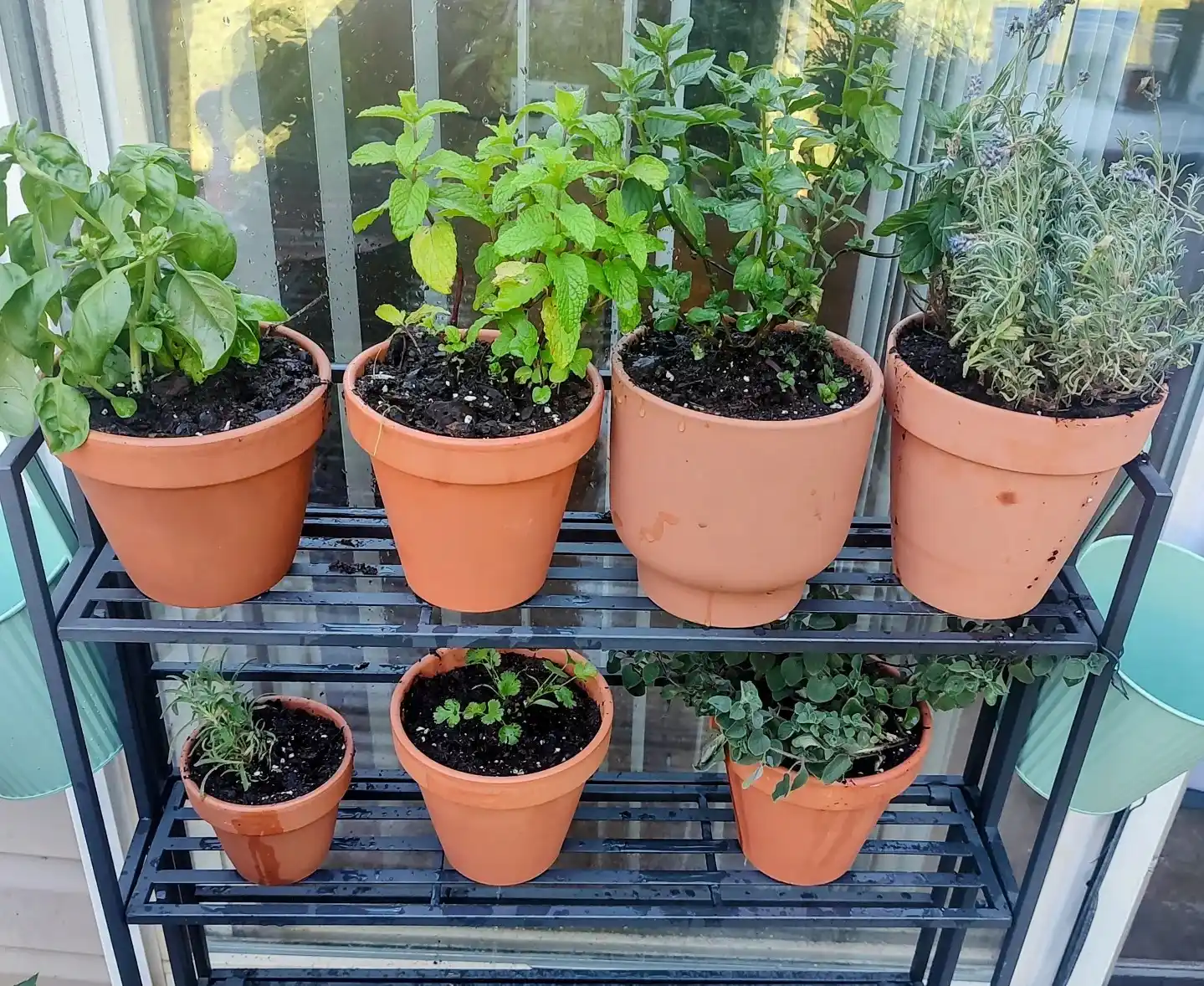
A black metal tiered shelf near a glass door creates a smart sun exposure station for terra cotta potted herbs.
Basil, mint, rosemary, oregano, and cilantro each occupy their own clay pot, allowing individual growth tracking.
Positioning the shelf close to the door lets gardeners move plants back inside quickly on cold nights.
Terra cotta pots naturally regulate soil moisture, making them great for outdoor sun transition periods.
Larger pots on the top shelf receive more direct light, while smaller starter pots sit lower in partial shade.
This tiered setup gradually builds each herb’s sun tolerance without overwhelming tender leaves.
6. Herb Garden Transplant
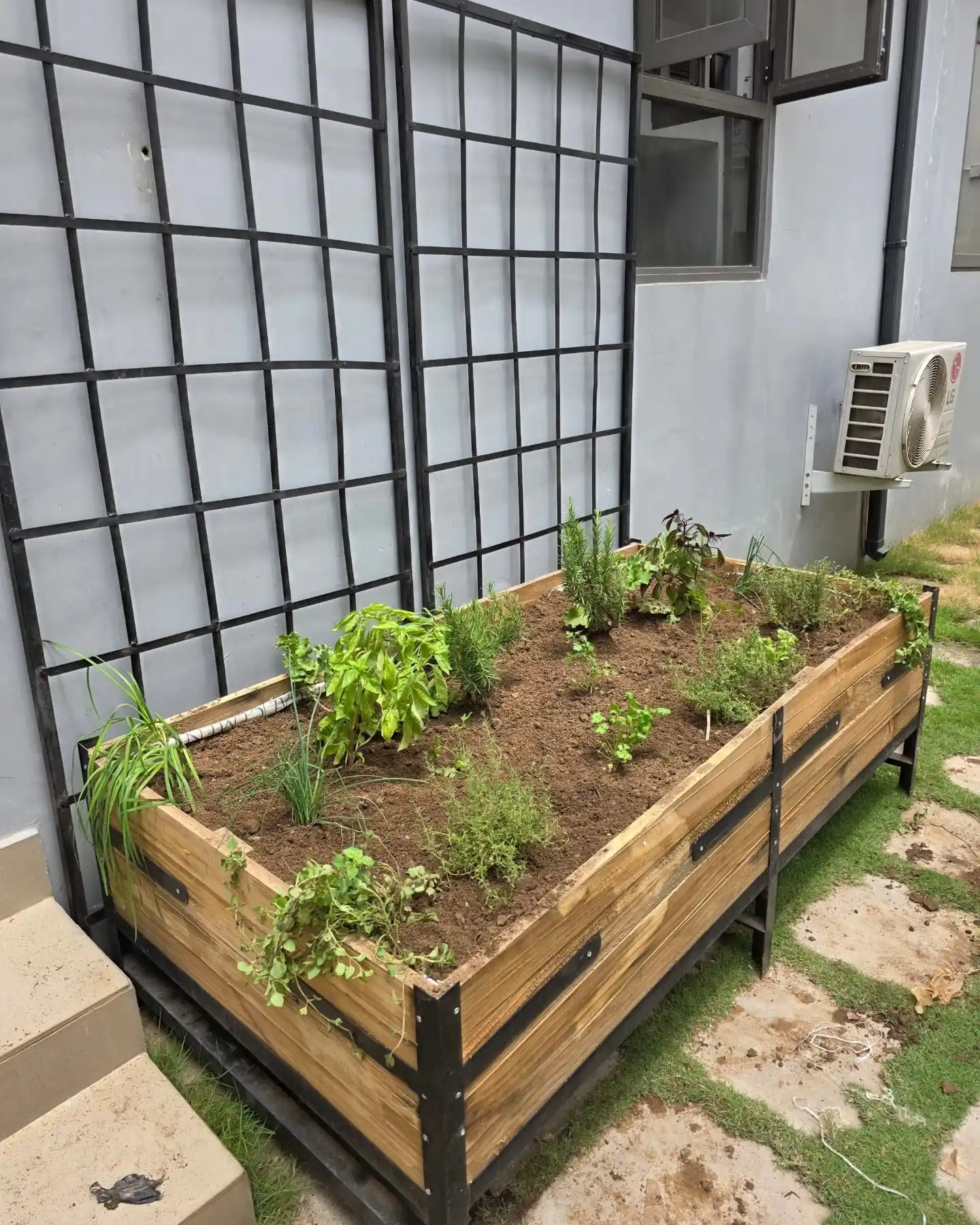
A wood and steel raised bed against a grid wall transforms a compact urban courtyard into a productive herb garden.
Freshly transplanted herbs including basil, rosemary, chives, thyme, and purple basil settle into rich dark soil with plenty of room to spread.
Steel corner brackets reinforce the wooden frame, building a sturdy long lasting structure for years of outdoor growing.
Spacing each herb generously across the bed reduces competition for nutrients and water.
Trailing herbs spill naturally over the front edge, adding visual texture to the clean wooden frame.
Placing the bed against a solid wall shields young transplants from strong winds during their first outdoor weeks.
7. Herb Soil Prep
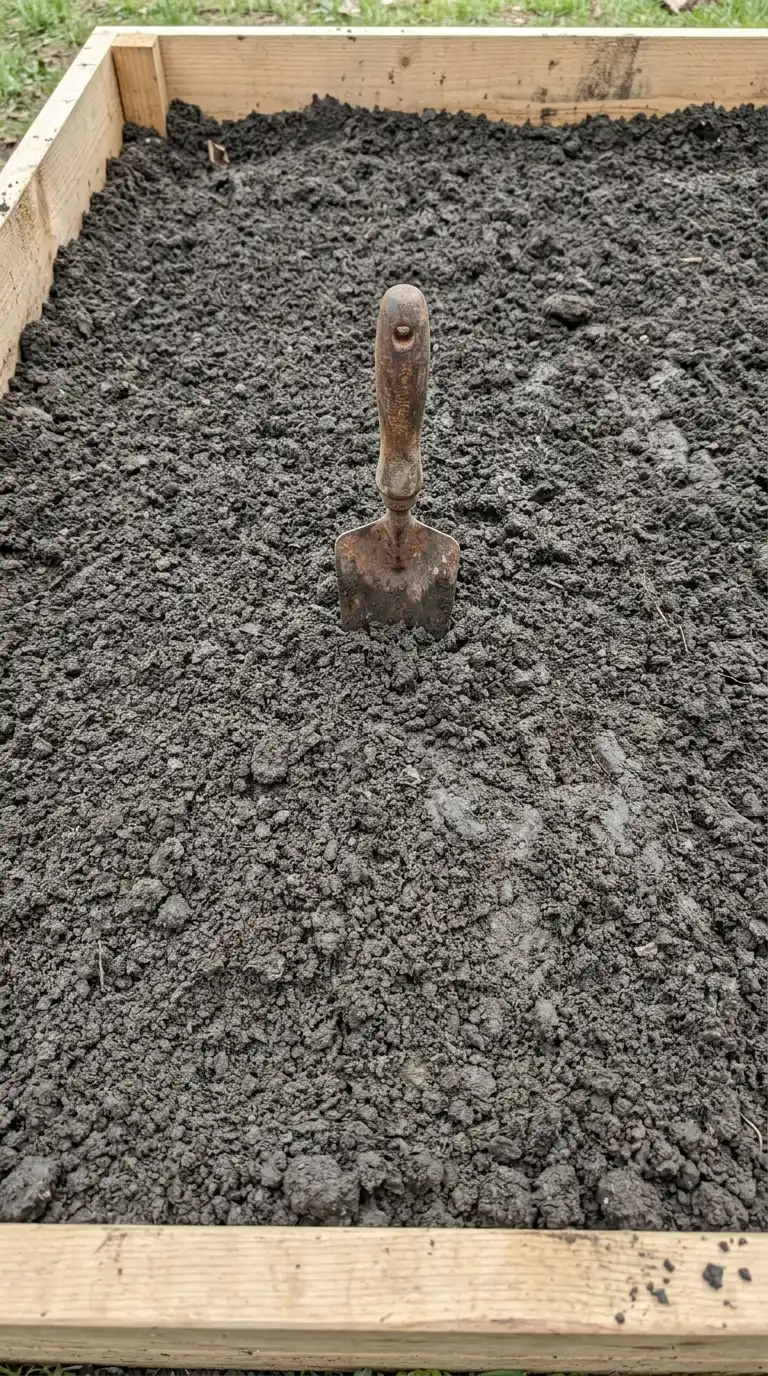
A worn rusty hand trowel stands upright in a freshly filled wooden raised bed, signaling active soil preparation work in progress.
Dark, finely broken compost fills the entire frame evenly from edge to edge without any compacted clumps blocking root growth.
Fresh pine wood borders keep the bed structure clean, sturdy, and ready for transplanting season.
Loose, well aerated soil like this allows herb roots to establish quickly after moving from indoor containers.
Working the soil thoroughly with a trowel before planting removes air pockets and creates an even growing surface.
Preparing the bed a few days early lets soil settle naturally before any herbs go into the ground.
8. Herb Garden Beginner
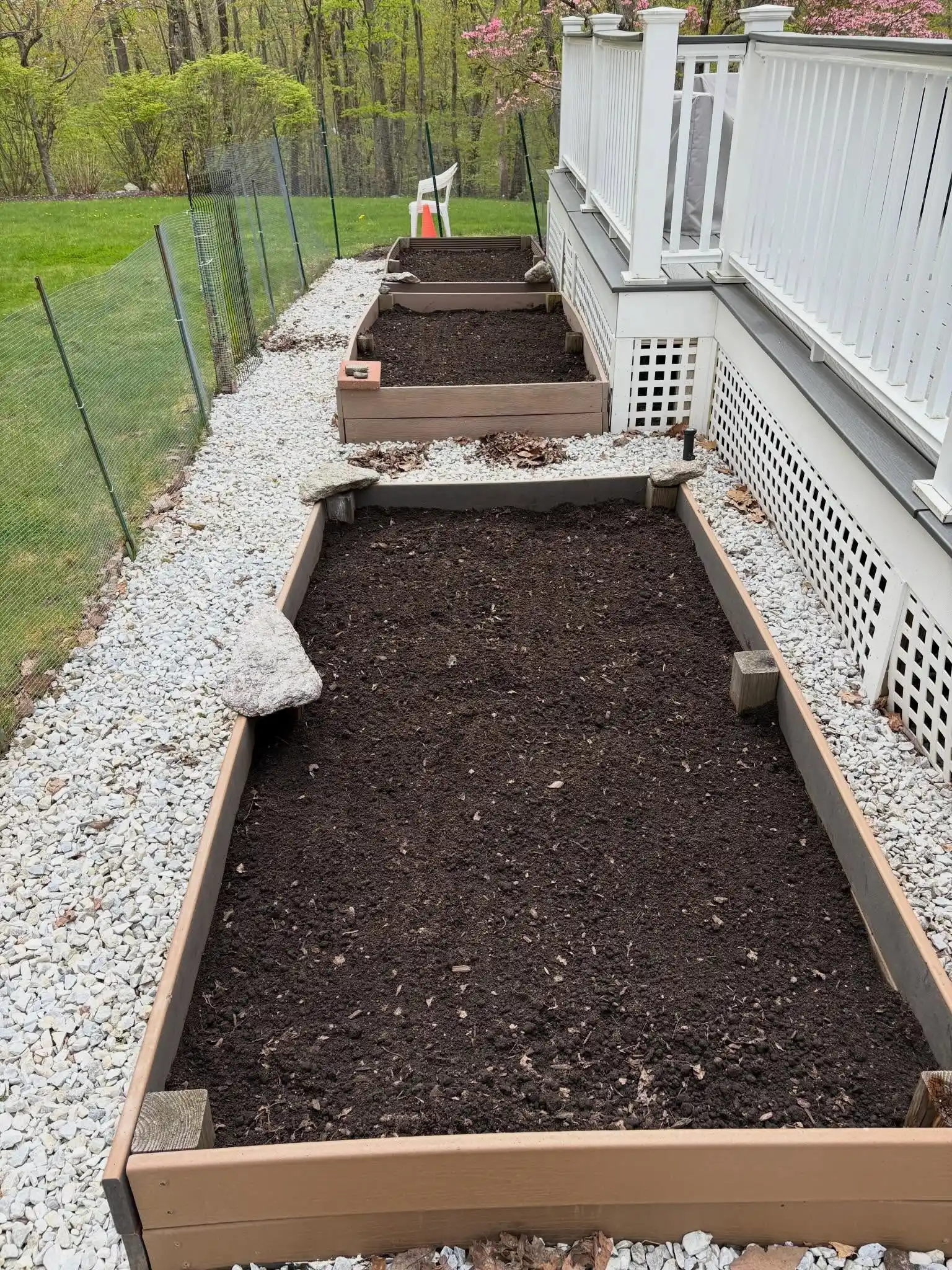
Multiple wooden raised beds filled with fresh dark soil sit along a white gravel pathway beside a home deck.
Three beds line up in a row, each packed with rich compost ready for herb transplanting.
White gravel paths between the beds keep the space tidy and prevent muddy walkways during watering sessions.
Natural stone borders anchor each bed firmly into the landscape without extra hardware.
Positioning beds along the deck railing gives easy access to herbs directly from the house.
Spring trees blooming in the background confirm this setup was built at the right time for outdoor herb planting success.
9. Herb Watering Tips
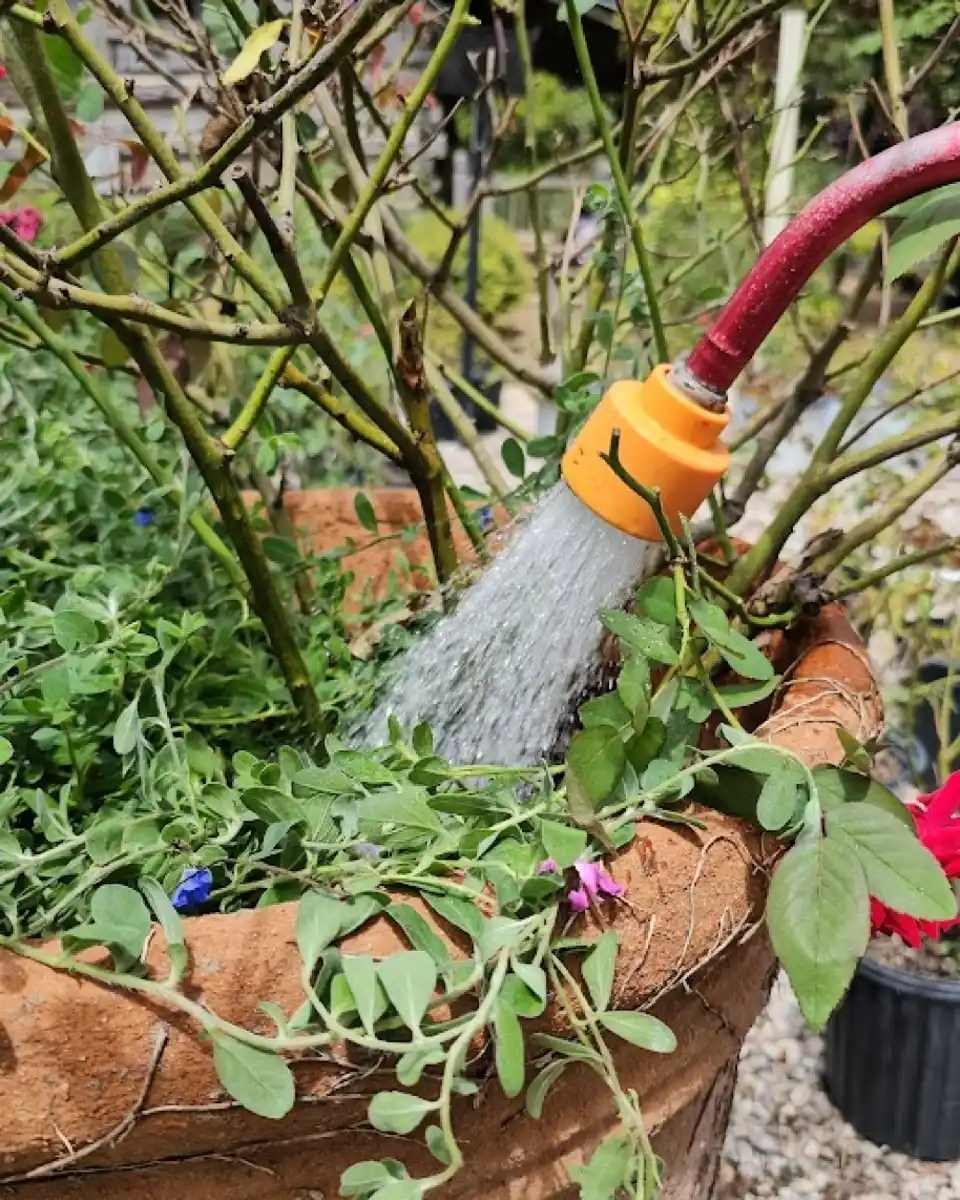
A garden hose fitted with a yellow spray nozzle delivers a gentle, wide water fan directly into a large terra cotta planter.
Trailing herbs and small flowering plants receive an even spread of water across the entire soil surface.
Close range watering like this targets roots deeply without washing away topsoil or disturbing delicate stems.
Outdoor herbs dry out faster than indoor ones due to wind and direct sun exposure.
Watering at soil level rather than overhead keeps leaves dry and reduces fungal disease risk.
Checking soil moisture daily during the first outdoor weeks helps herbs adjust without suffering from drought stress.
10. Herb Garden Maintenance
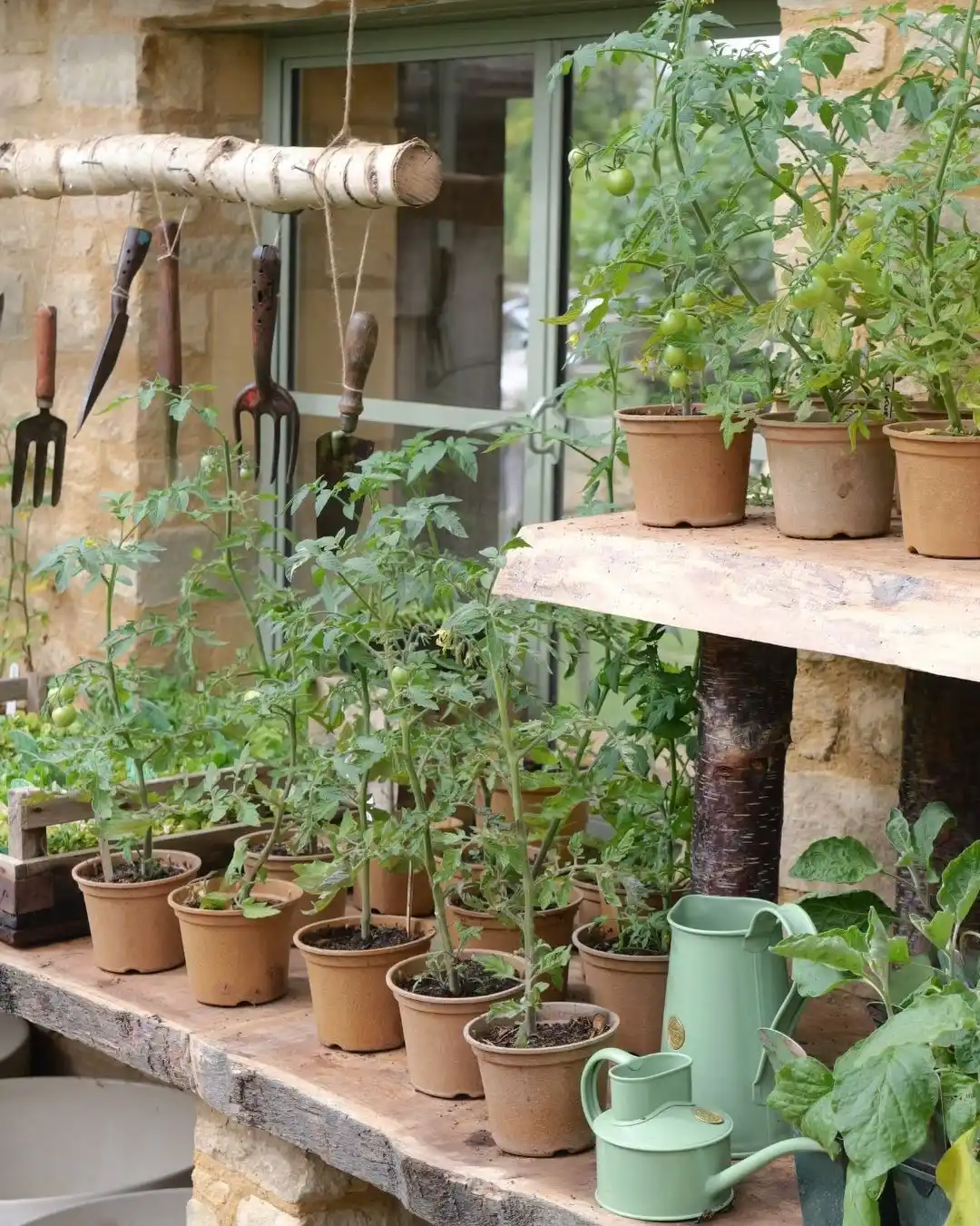
A rustic stone wall potting bench holds rows of young tomato plants in biodegradable fiber pots, creating an organized outdoor maintenance station.
Vintage garden tools hang from a birch log overhead, keeping forks, trowels, and dibbers within arm’s reach at all times.
Two sage green watering cans sit ready on the bench surface for immediate daily care.
Upper and lower shelf levels allow plants at different growth stages to occupy the same compact space efficiently.
Biodegradable pots break down naturally once transplanted directly into garden beds outside.
Keeping all tools and watering equipment at one dedicated station builds a consistent and manageable daily garden maintenance routine.
11. Grow Your Own Herbs
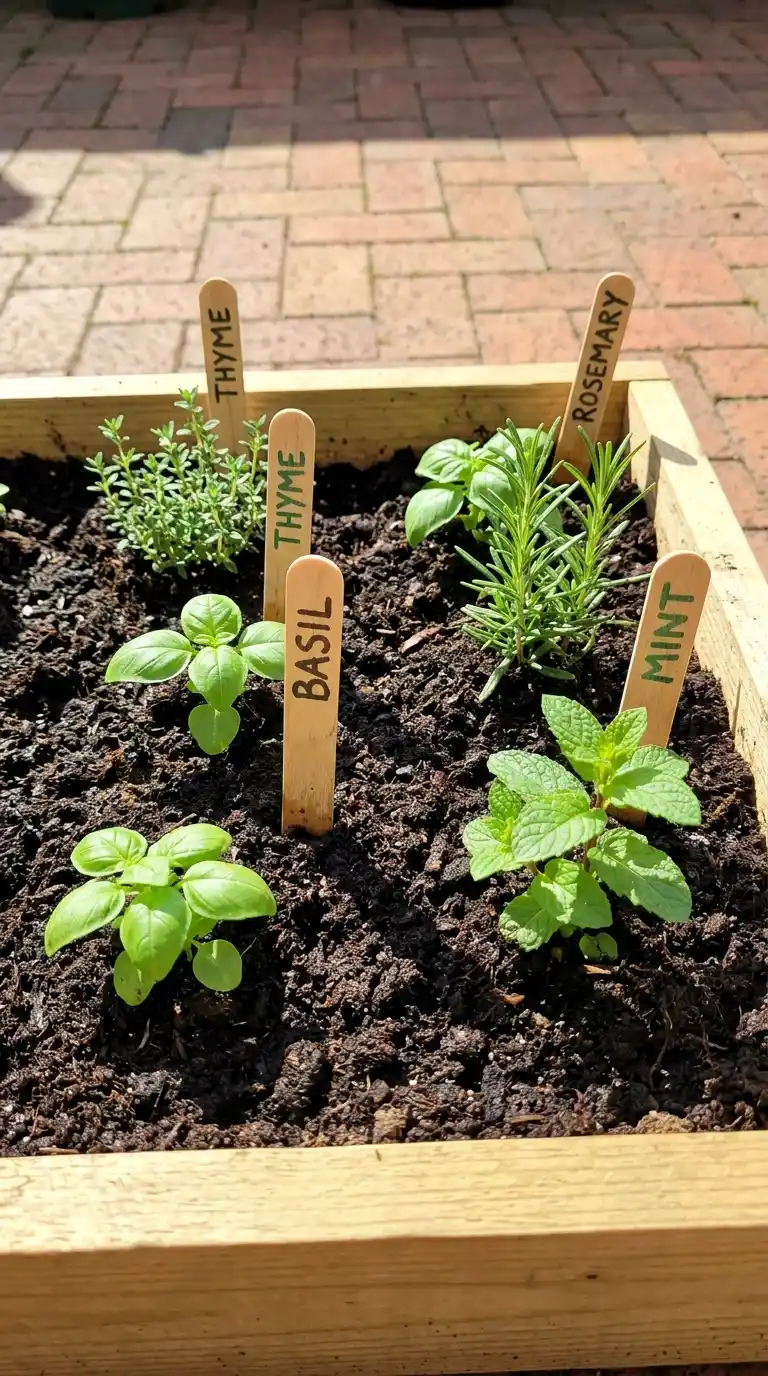
A compact wooden planter box sits on a brick patio with four freshly transplanted herbs, each marked with handwritten wooden stick labels.
Basil, thyme, rosemary, and mint grow in rich dark soil with generous spacing between each plant.
Bright direct sunlight hits every herb evenly, encouraging strong and healthy outdoor growth from the start.
Wooden popsicle stick labels keep plant identification simple and cost nothing to make at home.
Giving each herb its own clearly marked space prevents overcrowding as plants grow and spread outward.
Starting with four core kitchen herbs makes outdoor herb gardening approachable and rewarding for any first time grower.
Basil Transplant :
Basil thrives once moved outdoors into warm, sunny soil.
Transplant after the last frost and watch leaves grow broader and more fragrant within days.
Mint Garden Outdoor :
Mint spreads aggressively once it hits open ground, so plant it in a contained bed or pot.
Outdoor conditions push mint to produce far more aromatic leaves than any indoor setup can.
Rosemary Outdoor :
Rosemary loves full sun and well drained outdoor soil above everything else.
Moving it outside transforms a slow indoor plant into a robust, woody shrub built to last for years.
Thyme Garden Tips :
Thyme is one of the easiest herbs to transition outdoors due to its drought tolerant nature.
Plant it in a sunny spot with loose soil and it will reward you with dense, flavorful growth all season.
Parsley Growing Outdoor :
Parsley grows fuller and faster once transplanted into an outdoor garden bed with rich soil.
Regular outdoor watering and morning sun keep parsley producing fresh, curly or flat leaves for months.
12. Garden To Table
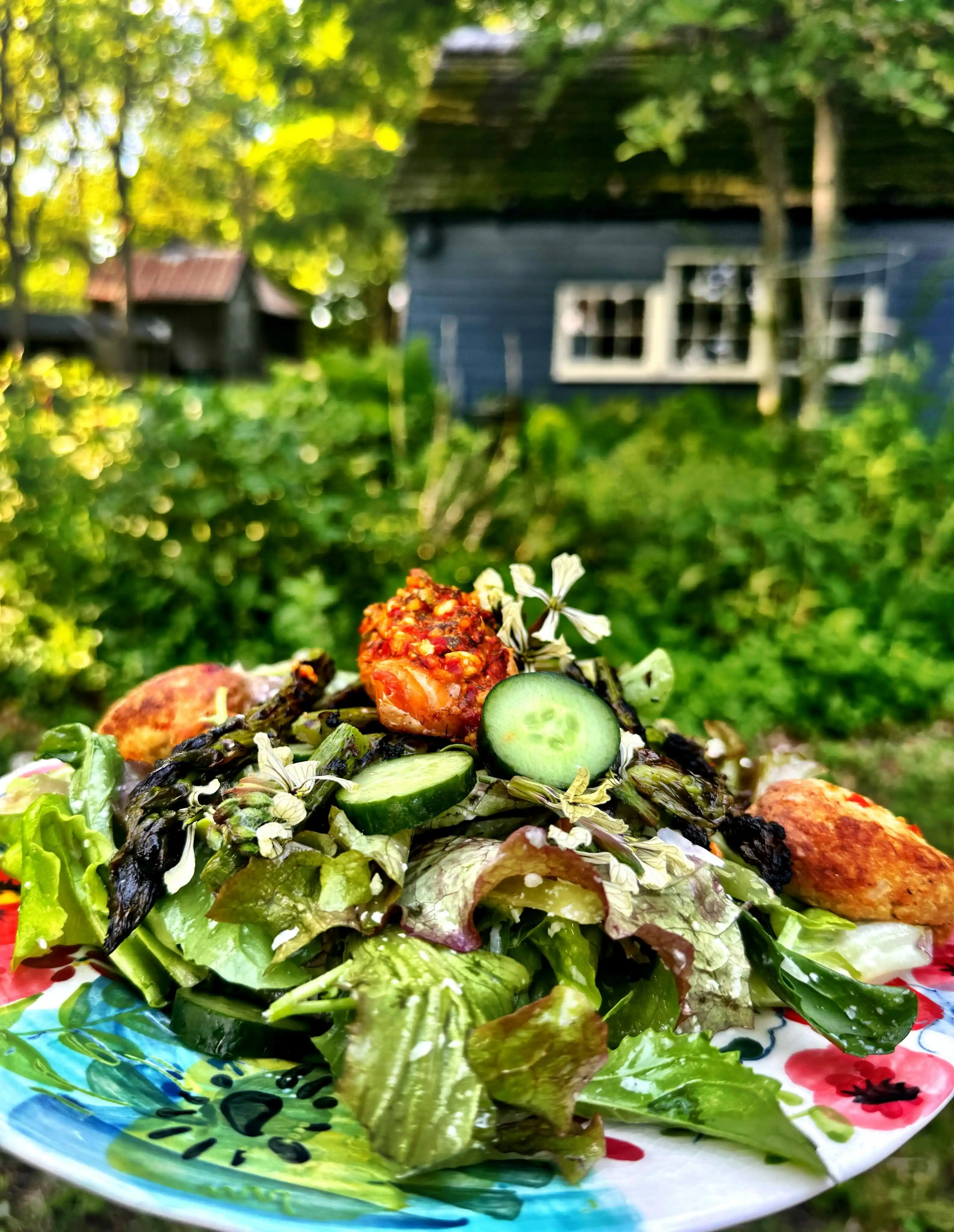
A vibrant garden salad served on a floral plate outdoors captures the ultimate reward of a successful herb garden transition.
Fresh mixed greens, edible flowers, cucumber slices, grilled asparagus, and a bold spiced topping come together in one stunning garden fresh meal.
Lush green trees and a cottage backdrop confirm this plate was built entirely from an outdoor growing space.
Transitioning herbs outdoors produces far more harvest volume than any indoor windowsill setup ever could.
Every leaf, flower, and green on this plate grew under real sun, open air, and nutrient rich outdoor soil.
Completing all 13 transitions from indoor to outdoor herb garden brings you exactly to this moment — fresh, flavorful, and homegrown.
13. Fresh Herbs Everyday

A herb topped avocado toast with poached eggs and crushed pistachios proves that outdoor grown herbs transform ordinary meals instantly.
Fresh arugula, microgreens, and herb sprouts pile generously over toasted sourdough, delivering bold flavor straight from the garden.
A latte and cold pressed juice alongside complete a nourishing everyday herb powered breakfast.
Growing herbs outdoors gives you constant access to fresh leaves, sprouts, and edible greens every single morning.
Outdoor herb gardens produce far more harvest volume than indoor pots, making abundant daily use entirely possible.
Completing this full indoor to outdoor herb garden transition means fresh herbs on your table are no longer a treat but a daily reality.


