

Professional Organizer vs DIY Kitchen Organization: Which One Fits Your Life?

A messy kitchen drains energy before the day even starts. Drawers stick, cabinets overflow, and finding a simple spatula turns into a small battle.
At some point, almost everyone facing this chaos asks the same question: should I hire a professional organizer, or should I just handle the kitchen organization myself? Both paths lead to a tidier space, but they get there in very different ways.
This guide breaks down the real differences between professional organizer vs DIY kitchen organization, so you can pick the option that actually fits your time, budget, and personality.
What a Professional Organizer Actually Does
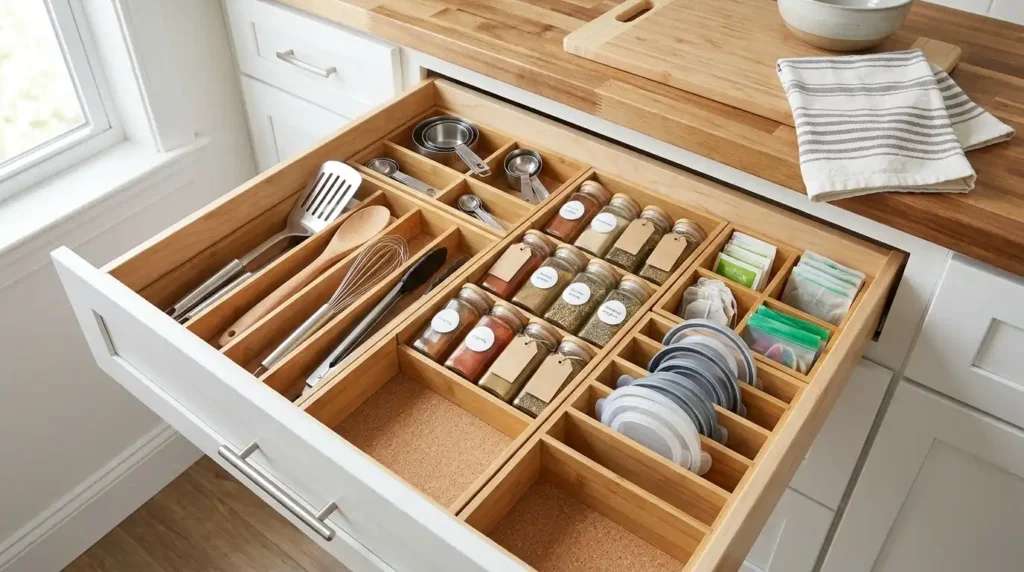
A professional organizer brings more than just storage bins and good intentions. They study how a kitchen gets used, then build a system around those habits instead of forcing a one size fits all layout onto every client.
Most sessions start with a walkthrough, where the organizer asks questions about cooking routines, meal prep habits, and which items get touched daily versus once a year.
After that assessment, the real work begins. Cabinets get emptied, categorized, and rebuilt with purpose.
Drawers receive dividers sized to actual utensils rather than generic kits from a big box store.
Many organizers also bring their own inventory of bins, labels, and risers, so clients skip the guesswork of measuring shelves and ordering the wrong size container twice.
Pricing varies by region and project scope, but hourly rates commonly land between $50 and $150, with full kitchen overhauls sometimes running several sessions long.
That cost covers expertise, not just labor. A trained eye spots wasted vertical space, awkward corner cabinets, and traffic flow issues that a homeowner might walk past for years without noticing.
The Case for DIY Kitchen Organization
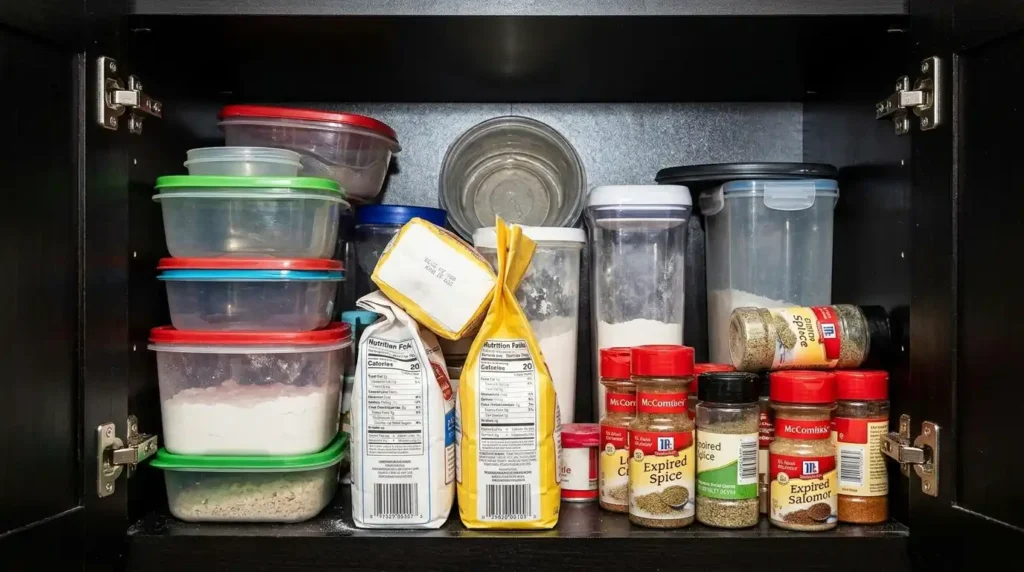
DIY kitchen organization appeals to anyone who enjoys a hands on project and wants to keep costs low.
Pinterest boards and YouTube channels host thousands of tutorials covering everything from pull out spice racks to repurposed mason jars for pantry storage.
Nothing stops a motivated homeowner from tackling the same cabinets a professional would, just on their own timeline and budget.
The biggest advantage here is cost control. A trip to a home goods store for bins, labels, and a label maker rarely exceeds $100 to $200 for an average kitchen, compared to the hundreds or thousands a full professional service might charge.
Weekend warriors also gain something a hired service cannot replicate easily: full ownership over the process.
Every decision, from drawer dividers to cabinet liners, reflects personal taste rather than someone else’s recommendation.
Flexibility matters too. DIY projects can pause mid afternoon and resume next weekend without scheduling conflicts.
There’s no need to clear a calendar slot for a stranger to walk through private spaces. For people who already know their habits well, that self directed pace often feels more comfortable than handing control to an outsider.
Where DIY Falls Short
Good intentions don’t always translate into lasting systems. Many DIY projects start strong on a Saturday morning, then stall once the initial motivation fades.
Cabinets get half sorted, bins get purchased without measuring first, and the project drags into weeks instead of hours.
Without an outside perspective, it’s also easy to recreate old habits in new containers, basically reorganizing clutter instead of solving it.
Trial and error costs money too. Buying the wrong size bin, realizing a drawer divider doesn’t fit, or discovering a shelf riser blocks cabinet doors from closing all add up.
A homeowner might return to the store three or four times before landing on a setup that actually works, eating into the savings DIY was supposed to deliver.
There’s also a knowledge gap. Professional organizers see dozens of kitchens a year and recognize patterns that first time organizers simply haven’t encountered.
Knowing which products hold up over time, or which layout works best for a narrow galley kitchen versus an open concept space, takes repeated exposure most homeowners never get.
Where Hiring a Professional Makes Sense
Busy schedules often tip the scale toward hiring help. Parents juggling work and childcare, or anyone managing a demanding job, may simply lack the hours needed for a proper kitchen overhaul.
A professional organizer compresses what might take a homeowner several scattered weekends into a single focused day or two.
Severe clutter also calls for outside support. Kitchens that have accumulated years of duplicate gadgets, expired pantry items, and miscellaneous junk drawers can feel overwhelming to face alone.
An organizer offers both a system and a sense of accountability, since someone else is physically present and guiding the decluttering decisions in real time.
People who struggle with letting go of items benefit from a neutral third party as well.
Family members often hesitate to push each other toward parting with sentimental or rarely used kitchen tools, but a hired organizer can ask direct questions without the emotional weight attached.
Comparing Cost, Time, and Long Term Results
| Factor | Professional Organizer | DIY Kitchen Organization |
|---|---|---|
| Upfront cost | Higher, often $200 to $1,000+ | Lower, typically $100 to $300 |
| Time investment | Minimal for homeowner | Several hours to several weekends |
| Expertise | Trained, sees many kitchens | Self taught through research |
| Customization | Built around documented habits | Built around personal preference |
| Risk of wasted purchases | Lower, sized correctly the first time | Higher, trial and error common |
Looking at this comparison, DIY kitchen organization wins on upfront cost, while a professional organizer wins on time savings and reduced trial and error.
Long term results depend less on which path gets chosen and more on whether the new system actually matches daily habits.
A beautifully organized cabinet that ignores how a family really cooks will slide back into clutter within months, regardless of who built it.
Making the Right Choice for Your Kitchen
Budget, schedule, and personal interest in the process should guide this decision more than any general rule.
Someone with extra weekend time, a smaller kitchen, and a genuine interest in DIY projects will likely enjoy handling the organization themselves and save money doing it.
Someone juggling a packed calendar, a larger or more cluttered kitchen, or a history of failed organization attempts may find that hiring help pays for itself through saved time and lasting results.
A hybrid approach also works well for many households. Hiring a professional organizer for the initial setup, then maintaining the system through ongoing DIY tweaks, combines expert structure with personal control.
Whichever direction feels right, the goal stays the same: a kitchen where everything has a place, and finding that spatula never turns into a search party again.


