

Glass vs Plastic Kitchen Containers for Organizing

A perfectly systemized pantry is the ultimate milestone of an efficient home. Transitioning your dry goods out of messy, mismatched grocery packaging and into uniform canisters instantly calms visual chaos.
It streamlines your inventory tracking, keeps your cooking essentials fresh, and elevates the overall design aesthetic of your workspace.
However, when you commit to decanting your ingredients, you face a major material decision: choosing between silica-based vessels or synthetic polymer storage.
Deciding between glass vs plastic kitchen containers for organizing requires a close look at your daily kitchen habits, budget, and design preferences.
Both materials possess unique structural advantages and distinct operational drawbacks that can impact how smoothly your workspace functions.
This comprehensive guide will analyze the performance, durability, and stylistic impact of both storage solutions to help you build a highly functional, long-lasting kitchen setup.
The Longevity and Premium Feel of Glass Storage
Silica-based vessels bring an undeniable element of classic elegance and clean predictability to kitchen shelves.
One of the greatest material advantages of glass is its completely non-porous surface. Unlike synthetic alternatives, it does not absorb odors, oils, or strong food stains over time.
If you store pungent ground cumin or bright turmeric powder in a jar for months, a single thorough wash with hot soapy water completely resets the container, leaving zero lingering scents or discoloration.
+-----------------------------------+-----------------------------------+
| Glass Container Attributes        | Plastic Container Attributes      |
+-----------------------------------+-----------------------------------+
| Zero stain or odor retention      | Can absorb strong pigments/scents |
| Heavyweight, solid shelf presence | Lightweight and highly impact-safe|
| Complete structural transparency  | Can scratch or turn cloudy        |
| Premium, heirloom visual style    | Casual, highly budget-friendly    |
+-----------------------------------+-----------------------------------+
From a visual standpoint, glass offers absolute structural transparency that never fades, scratches, or turns cloudy.
This crystal-clear visibility lets you track your inventory of lentils, flour, and oats effortlessly, preventing accidental double-purchasing at the supermarket.
Additionally, the substantial weight of glass creates a stable, premium feel on your shelves. It grounds your storage array, creating a high-end, professional kitchen aesthetic that pairs beautifully with open shelving layouts.
The Environmental and Thermal Resilience of Glass
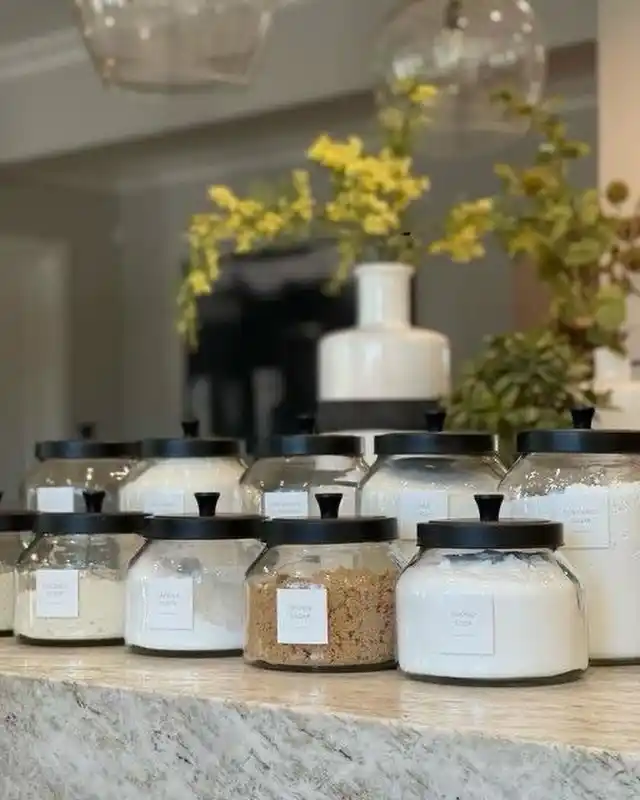
Beyond its visual appeal, glass serves as an exceptionally healthy and thermally stable home for your edible ingredients.
It is entirely free from synthetic chemicals, giving you complete peace of mind when storing items long-term.
This material transitions seamlessly across extreme temperature changes without warping or degrading.
You can comfortably move a glass container from a cold freezer directly into a hot microwave or dishwasher cycle without compromising its structural integrity.
This extreme heat tolerance makes sanitization simple, ensuring your storage remains perfectly clean and free of bacteria over years of heavy use.
Investing in a set of high-quality borosilicate or tempered glass canisters provides a lifetime storage solution that will never need to be discarded due to wear and tear.
The Heavy Realities of Handling Glass Containers
While silica storage offers unmatched durability against aging, it presents clear physical challenges during fast-paced cooking routines.
Glass is inherently heavy, and that weight increases dramatically once you fill a large container with multiple pounds of organic flour, sugar, or rice.
Retrieving a massive, heavy canister down from a high upper cabinet shelf requires a steady grip and caution, which can be challenging during a hectic weeknight dinner rush.
The most obvious disadvantage of glass is its vulnerability to impact structural failure. Dropping a full canister onto hard kitchen finishes—such as ceramic tile, marble, or polished concrete—results in an immediate, hazardous mess of shattered fragments and ruined food.
This safety concern makes pure glass collections less practical for households with young children or active pets who might accidentally tip items off counter surfaces.
The Lightweight Versatility of Plastic Containers
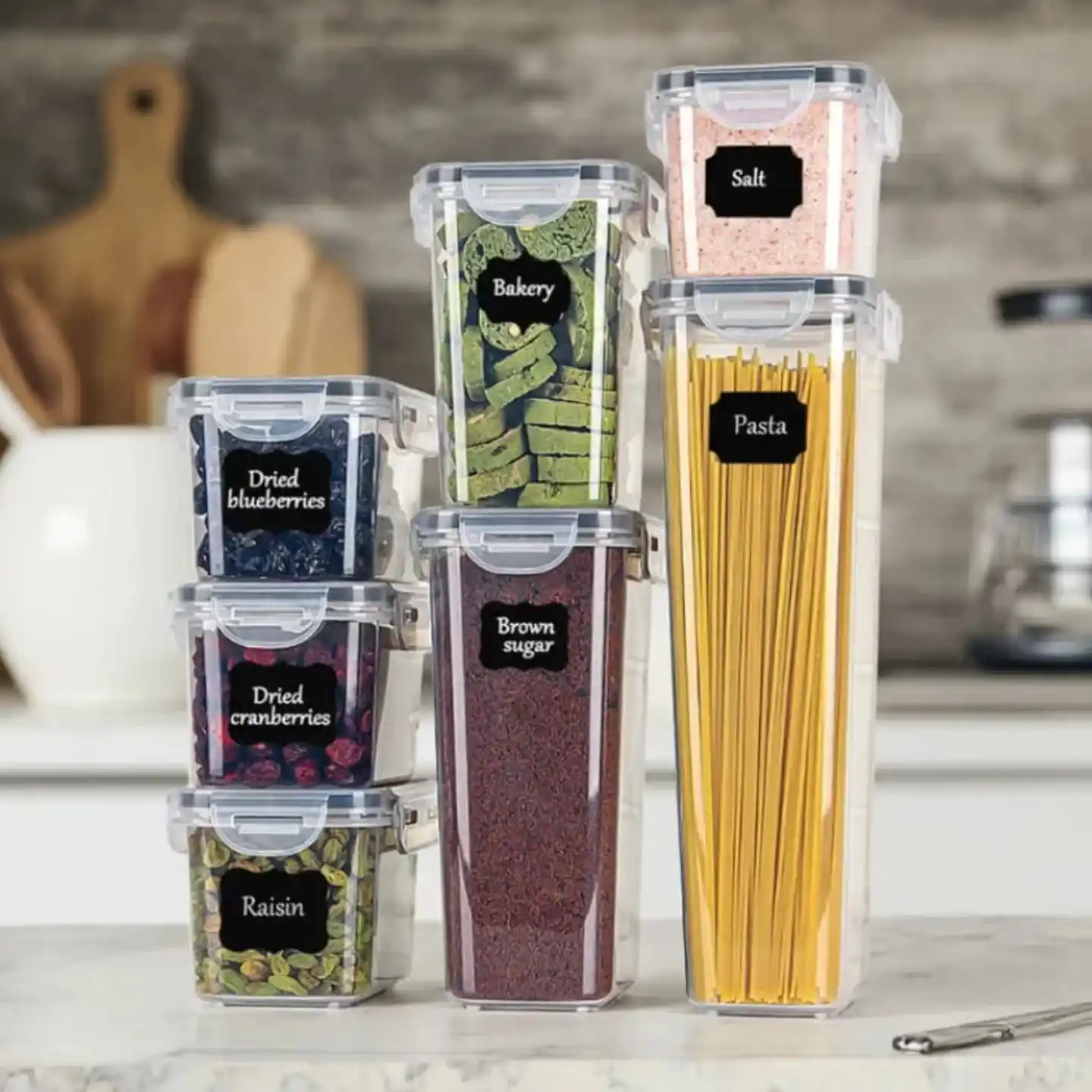
Synthetic polymer storage lines offer an exceptionally practical, high-efficiency alternative for bustling family spaces.
The most immediate benefit of high-quality, food-safe plastics is their remarkably lightweight construction.
A large synthetic storage bin weighs next to nothing when empty, making it incredibly easy to lift, slide, and maneuver across high pantry wire racks or deep lower slide-out drawers.
Modern organizational polymers are engineered to be virtually shatterproof. If a container slips out of your hand while you are baking, it will safely bounce off your floor without breaking, keeping your food secure and your floor clean.
This high impact resistance allows you to choose massive, multi-quart container styles that hold entire bulk bags of grains without making the shelf dangerously heavy.
Smart Geometry and Maximum Space Utilization
Synthetic canisters excel at space-saving engineering and modular design flexibility. Because plastic can be molded into incredibly sharp, precise geometric shapes, these containers frequently feature perfectly square or rectangular footprints.
These straight vertical edges allow the containers to sit flush against one another, completely eliminating the dead, wasted space that naturally occurs between rounded jars.
- Interlocking Lids: Many modern synthetic lines feature recessed lids that lock into the bases of matching units above them, creating incredibly stable vertical stacks.
- Integrated Grips: Large plastic bins often incorporate molded side handles or finger grooves, allowing for effortless one-handed retrieval.
- Narrow Profiles: Slim, rectangular options slide neatly into narrow utility gaps or small pantry corners, maximizing tight footprints.
- Flexible Modular Sizes: They are built to scale evenly, allowing you to stack two small canisters perfectly on top of one medium-sized unit.
This superior structural geometry makes synthetic lines the absolute favorite choice for maximizing tight, enclosed pantries where every single millimeter of shelf space matters.
Navigating the Limitations of Synthetic Materials
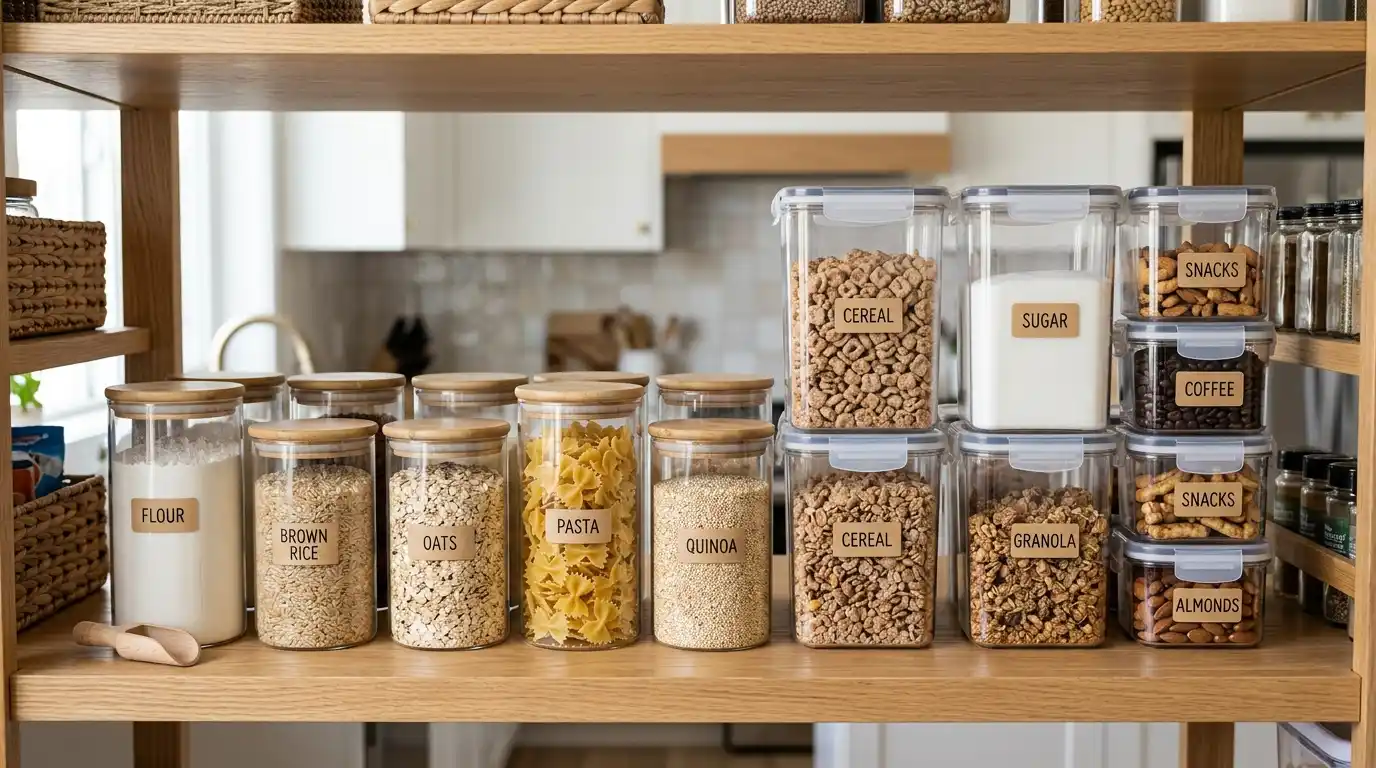
Despite their incredible convenience, plastic kitchen organization lines possess inherent material limitations that show up over time.
Even high-grade, food-safe plastics are vulnerable to surface scratching from abrasive cleaning sponges or rough kitchen utensils.
Over months of regular use, these microscopic scratches trap fine particles, causing the once-clear material to look cloudy, hazy, and worn.
Furthermore, polymers are inherently prone to absorbing strong chemical pigments and organic odors.
Storing items like chili powder, dried tomato flakes, or strong tea leaves can permanently stain the interior walls with a stubborn orange or yellowish hue.
These absorbed scents can linger even after multiple dishwasher cycles, making it difficult to rotate the container to a delicate new ingredient, like white sugar, without affecting its flavor.
Balancing Costs and Long-Term Value
When evaluating the financial investment of your organizing project, plastic lines present a much lower entry barrier.
Purchasing a comprehensive, multi-piece matching set of synthetic storage bins is highly affordable, allowing you to transform an entire walk-in pantry on a budget.
This cost efficiency makes it simple to establish a cohesive, uniform look all at once.
However, from a long-term sustainability perspective, glass often delivers better financial value over time.
Because it does not scratch, stain, or degrade from UV light exposure, a glass jar remains in pristine condition indefinitely.
Plastic canisters inevitably show their age and will likely need replacement every few years due to cloudiness, broken snap-locks, or warped lids.
Choosing glass minimizes ongoing plastic waste, making it a highly sustainable, eco-friendly lifestyle choice.
Designing Your Ultimate Hybrid Storage System
You do not have to limit your home design to a single material choice to achieve a beautifully organized kitchen.
The most successful professional systems use a smart, hybrid configuration that pairs each material with the specific storage zone where it performs best.
Consider investing in a premium set of uniform glass jars for your high-visibility open shelving units, counter spaces, and primary eye-level cabinet rows.
Use these beautiful, non-porous vessels to display colorful everyday staples like whole wheat pasta, organic lentils, loose tea leaves, and baking spices.
This keeps your main cooking zone looking elegant, clean, and styled while completely protecting your most fragrant ingredients from flavor transfer.
For hidden walk-in pantries, deep lower cabinetry slide-outs, and high over-the-head shelves, deploy modular, square plastic containers.
Use these lightweight, shatterproof bins to organize bulky backstock items, extra bags of flour, chips, snacks, and lightweight cereals.
This strategic division of labor gives you the absolute best of both worlds: premium visual elegance where it is seen, and high-performance, impact-safe efficiency where it is needed most.
Would you like some specific advice on selecting airtight lid styles to extend the shelf life of your ingredients, or help calculating the ideal container sizes for your space?


