

10 Essentials for a Thriving Indoor Herb Garden

Fresh herbs change everything in the kitchen. They elevate simple meals into culinary masterpieces right at home.
Growing them indoors is incredibly rewarding, but it requires a few key elements to succeed. Many beginners struggle because they miss basic plant needs.
This guide covers the absolute fundamentals you need for a lush, continuous harvest. You can grow vibrant greens on your windowsill with the correct setup.
Let us look at what makes an indoor garden truly flourish throughout the year.
1. Bright Sunny Windowsill
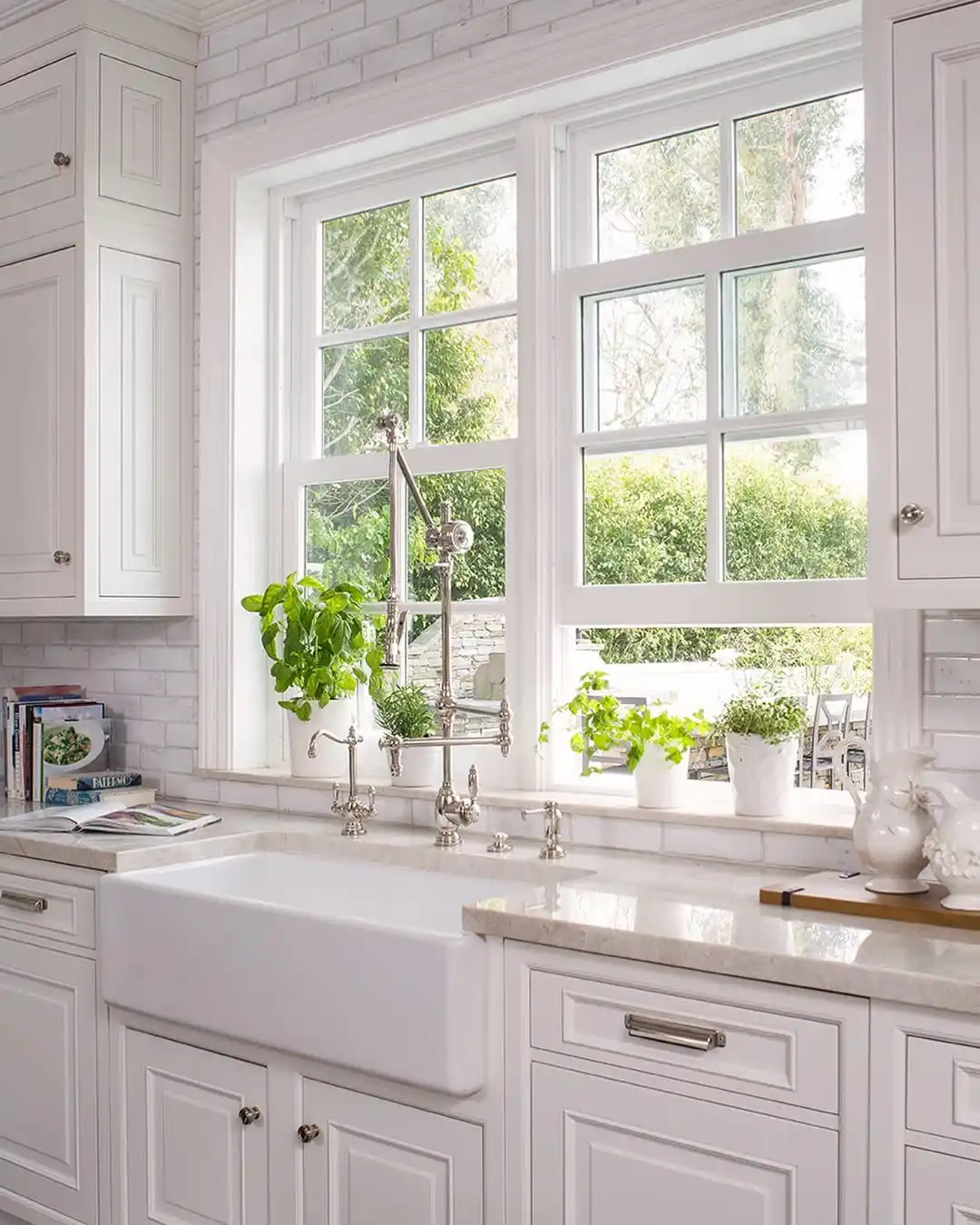
Sunlight drives the growth of your indoor greenery. Placing pots directly on a wide ledge ensures they receive hours of vital natural beams.
This specific location keeps your plants at eye level right where you cook.
White ceramic containers look beautiful and neat against a clean kitchen backdrop. They reflect light efficiently to keep the roots cozy and warm.
Choose a spot that gets ample morning brightness for the best results.
2. Hanging Window Rod Planter
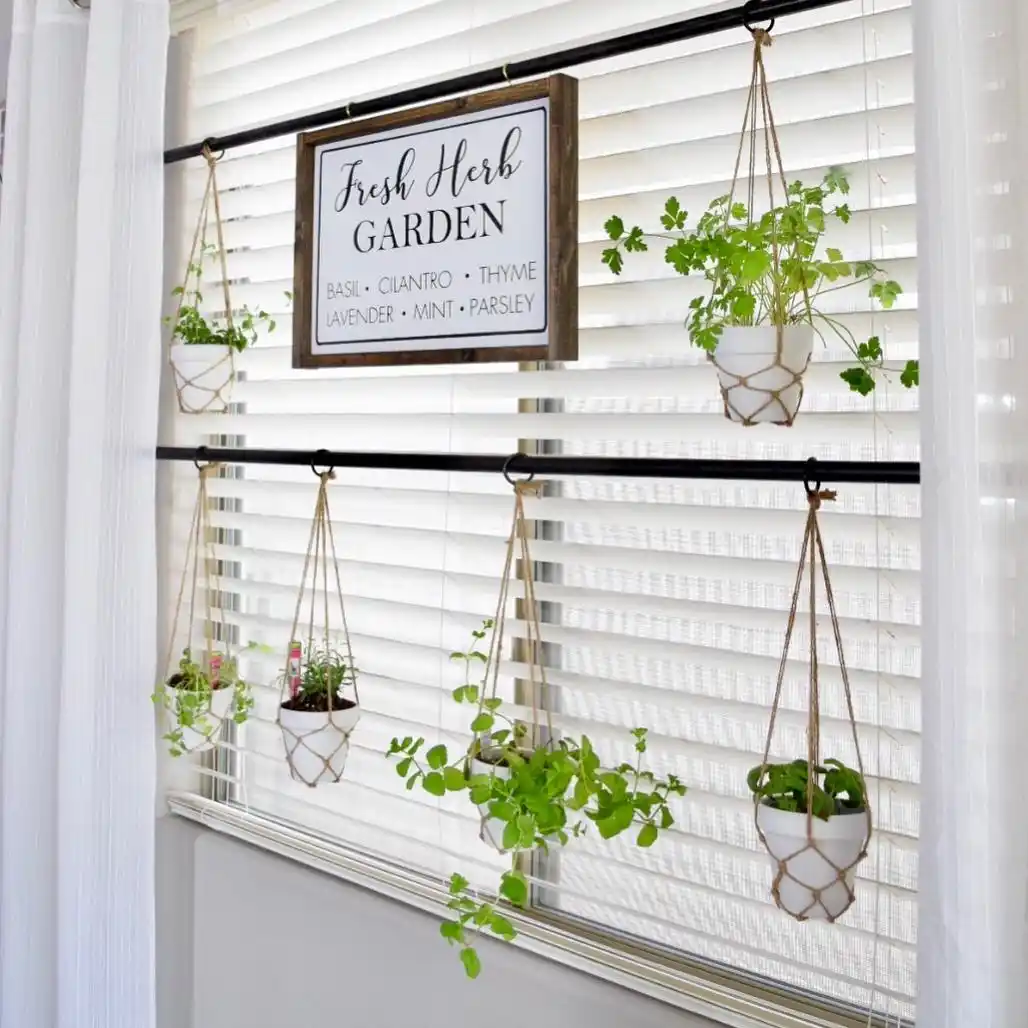
Vertical space offers an excellent solution for crowded countertops. Securing black metal rods across a glass pane lets you suspend multiple small pots effortlessly.
Macrame twine hangers cradle each container safely in front of the incoming daylight.
Adjustable window blinds behind the display help control intense afternoon heat. This setup maximizes sun exposure while keeping your surfaces completely clear.
Tiny white pots hold delicate varieties like mint and parsley beautifully.
3. Utilize Vertical Wall Planters
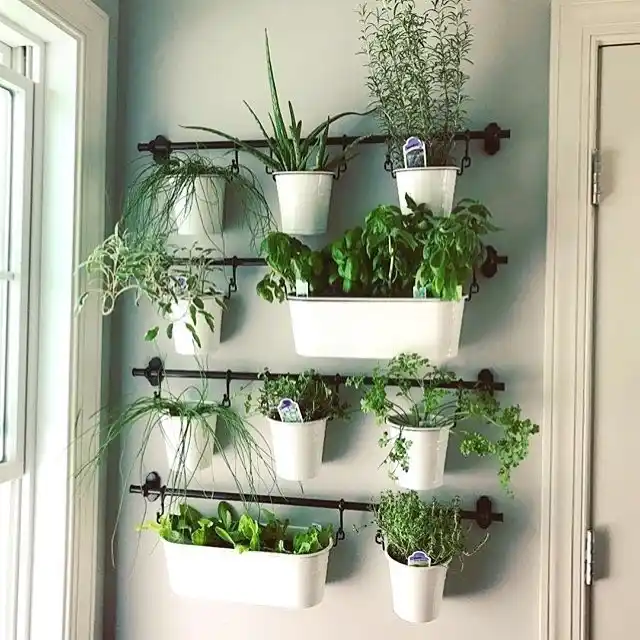
source: @wm_homestead
Vertical wall systems maximize limited kitchen areas efficiently. This setup hangs multiple white pots from black metal rails attached directly to the drywall.
It keeps your countertops clear for food preparation tasks.
Positioning your hanging greenery near a bright window ensures adequate light exposure.
Small hooks allow you to remove individual containers easily for watering or harvesting. This method creates a striking living art piece in any culinary space.
4. Pick Fast Growing Herbs
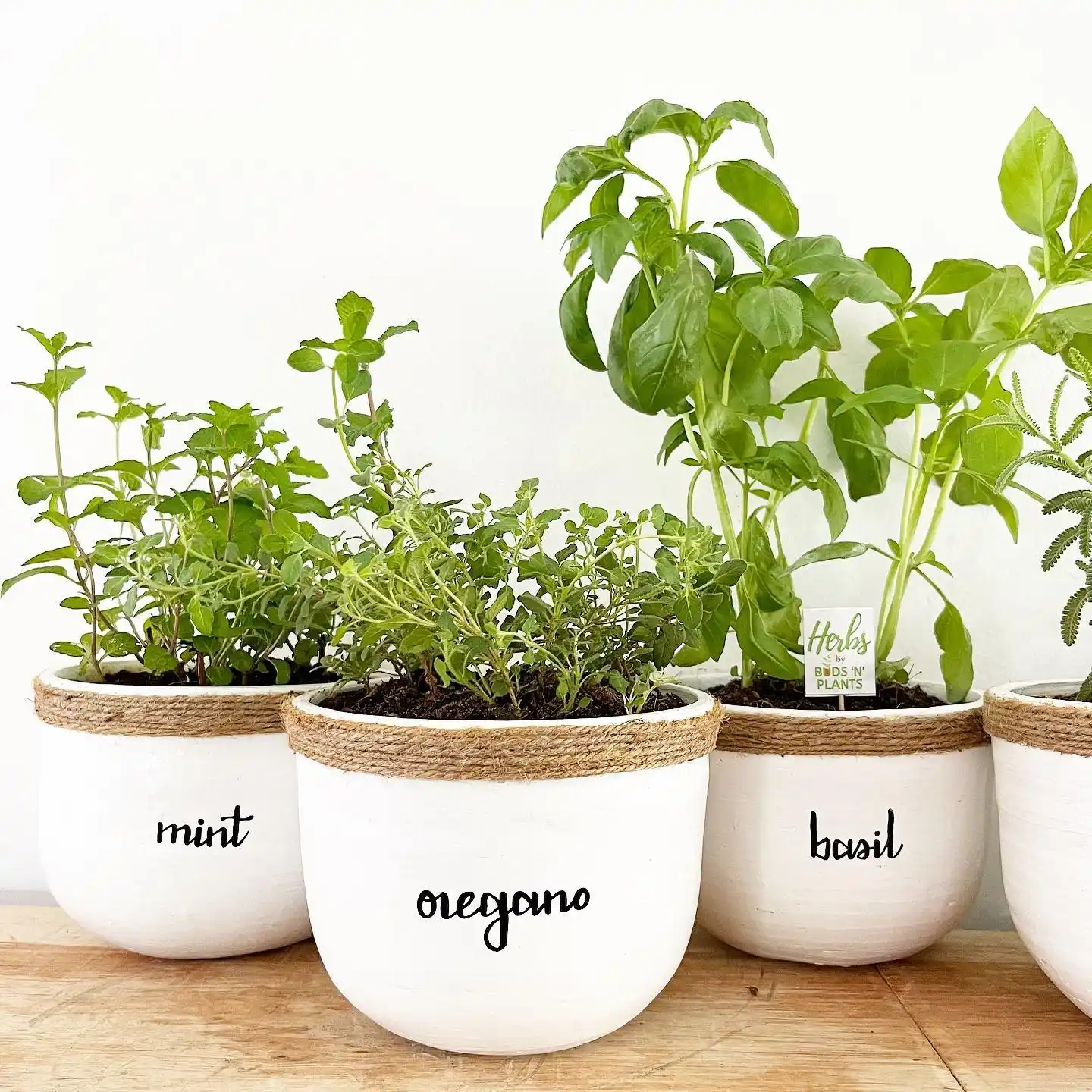
source: @budsnplants
Selecting rapid varieties gives you a quick and rewarding harvest. This image shows thriving pots of mint, oregano, and basil lined up on a wooden surface.
These specific greens develop lush foliage quickly under standard indoor conditions.
Clear labels on the front of each white container prevent any confusion during meal preparation.
Twine wrapped around the rims adds a rustic touch to the clean design. Choosing these aggressive growers ensures a steady supply of fresh ingredients for your recipes.
5. Give Herbs Enough Light
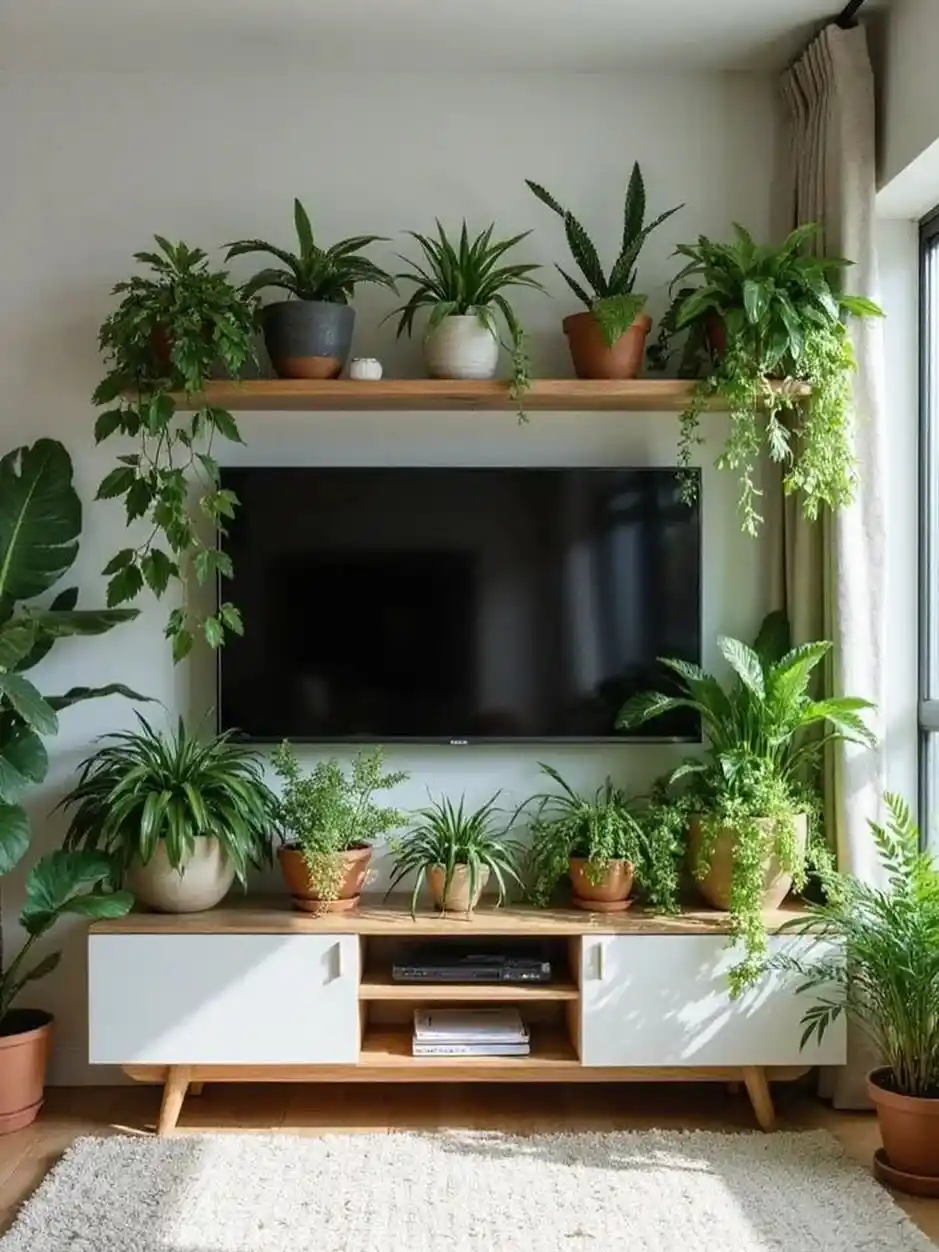
Adequate illumination keeps your greenery vibrant and productive indoors. This setup places numerous potted varieties around an entertainment center next to a large window.
Direct sunshine streams onto the floor rug, showing the strength of the natural light source.Positioning your collection near bright windows ensures they receive necessary energy.
Golden beams feed the leaves throughout the morning and afternoon hours. Lush growth stays thick and healthy when you utilize these sunny locations.
6. Keep Air Flow Moving
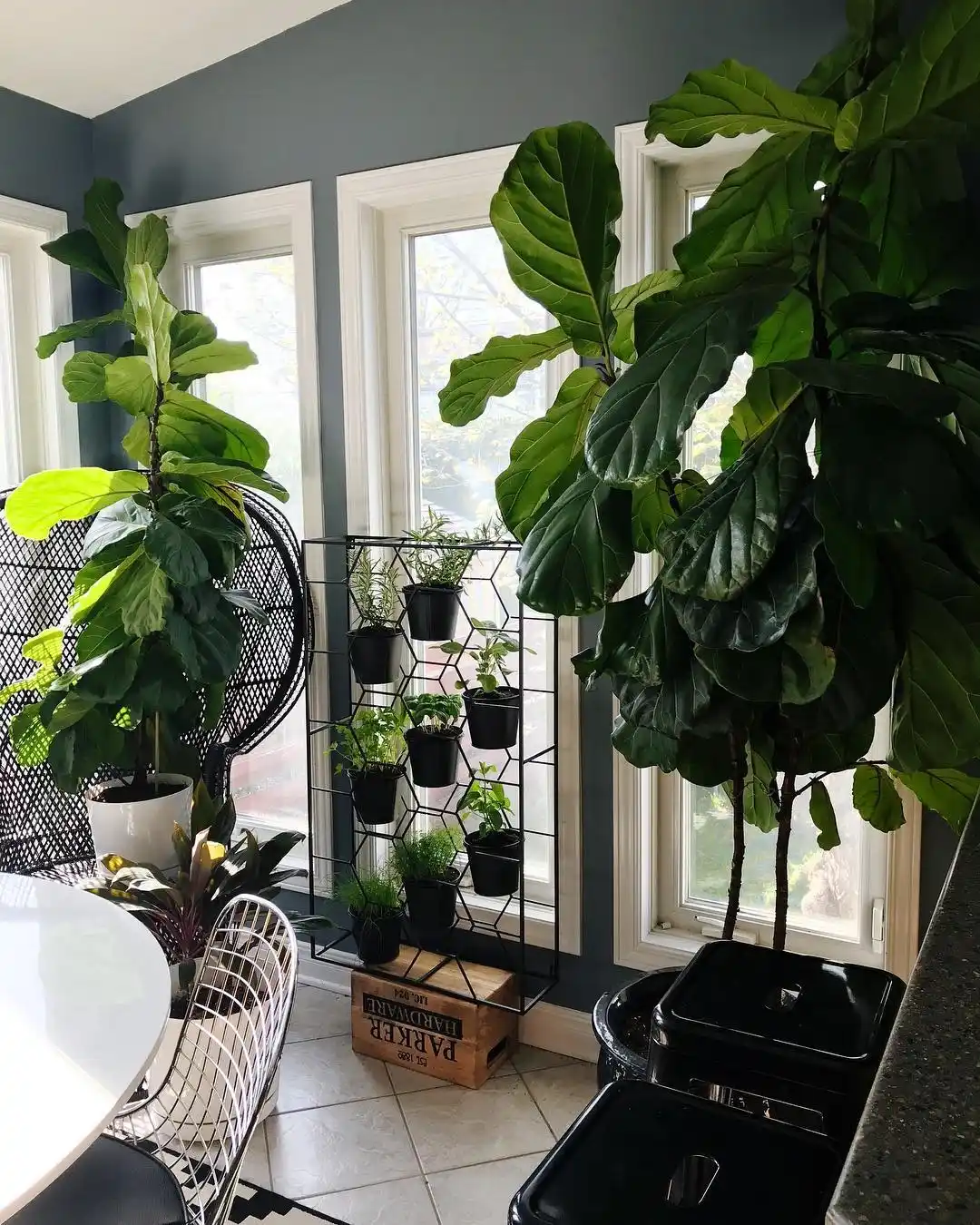
Stagnant environments hinder growth and encourage mold in cramped kitchens. This room utilizes large, unblocked glass windows to allow natural breezes to enter the space.
Gentle currents help strengthen the plant stems and dry out overly wet soil.
Ample spacing between the different planters prevents stagnant moisture pockets from forming.
Positioning your greenery where air circulates freely protects the foliage from pest infestations. Proper ventilation remains key to keeping indoor gardens healthy over time.
7. Water With Care
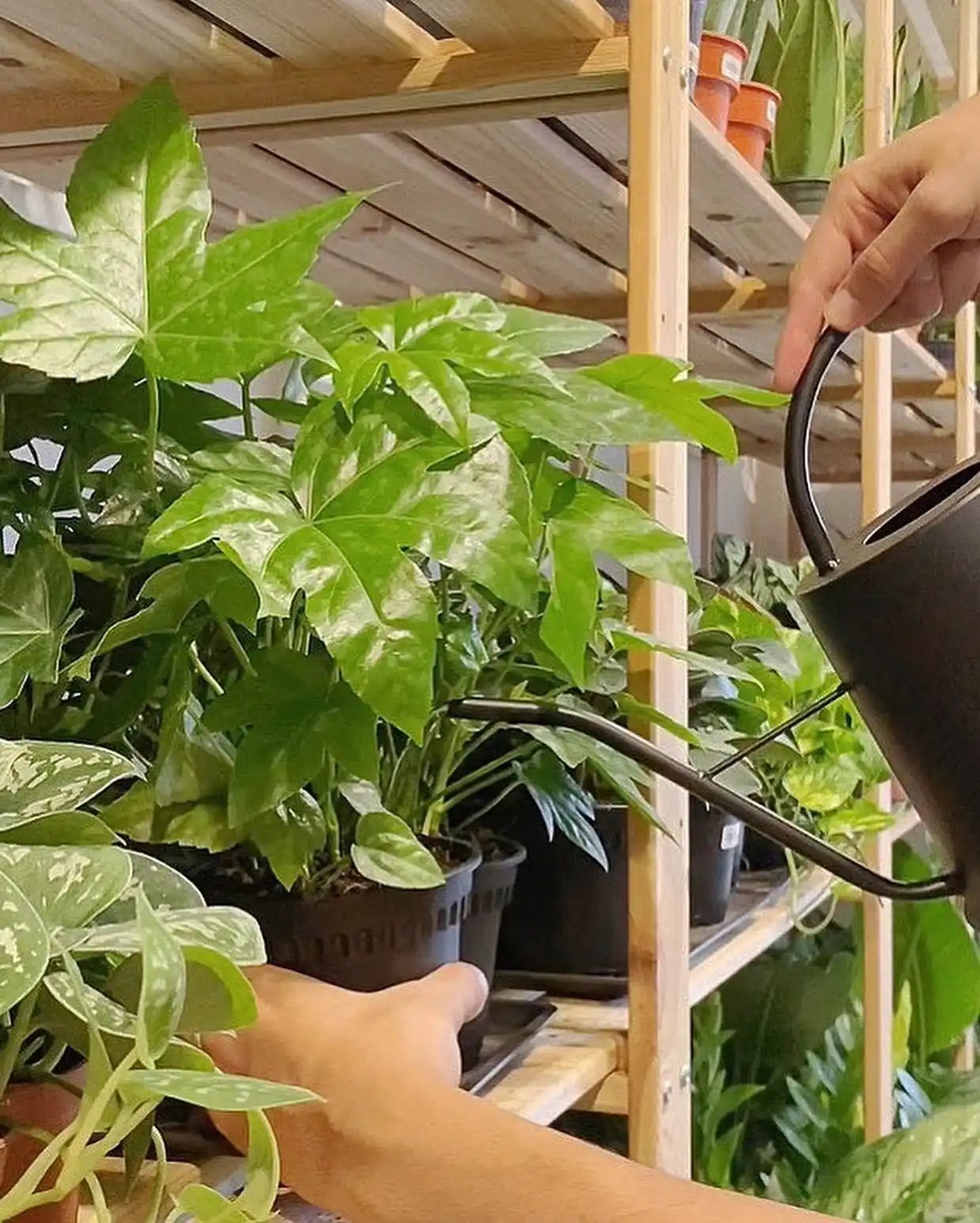
source: @plantaelover
Overwatering is a common mistake that ruins healthy roots. This image demonstrates a person using a slender black watering can with a long spout.
The narrow design directs moisture straight to the soil base without wetting the leaves.One hand steadies the dark plastic pot on a wooden shelf during the process.
Targeted hydration protects delicate stems from rot and keeps the surrounding area clean. You should check the dirt dryness before adding more liquid.
8. Feed Plants Lightly
source: @simplyseed_uk
Indoor varieties exhaust their soil nutrients after a few months of steady growth.
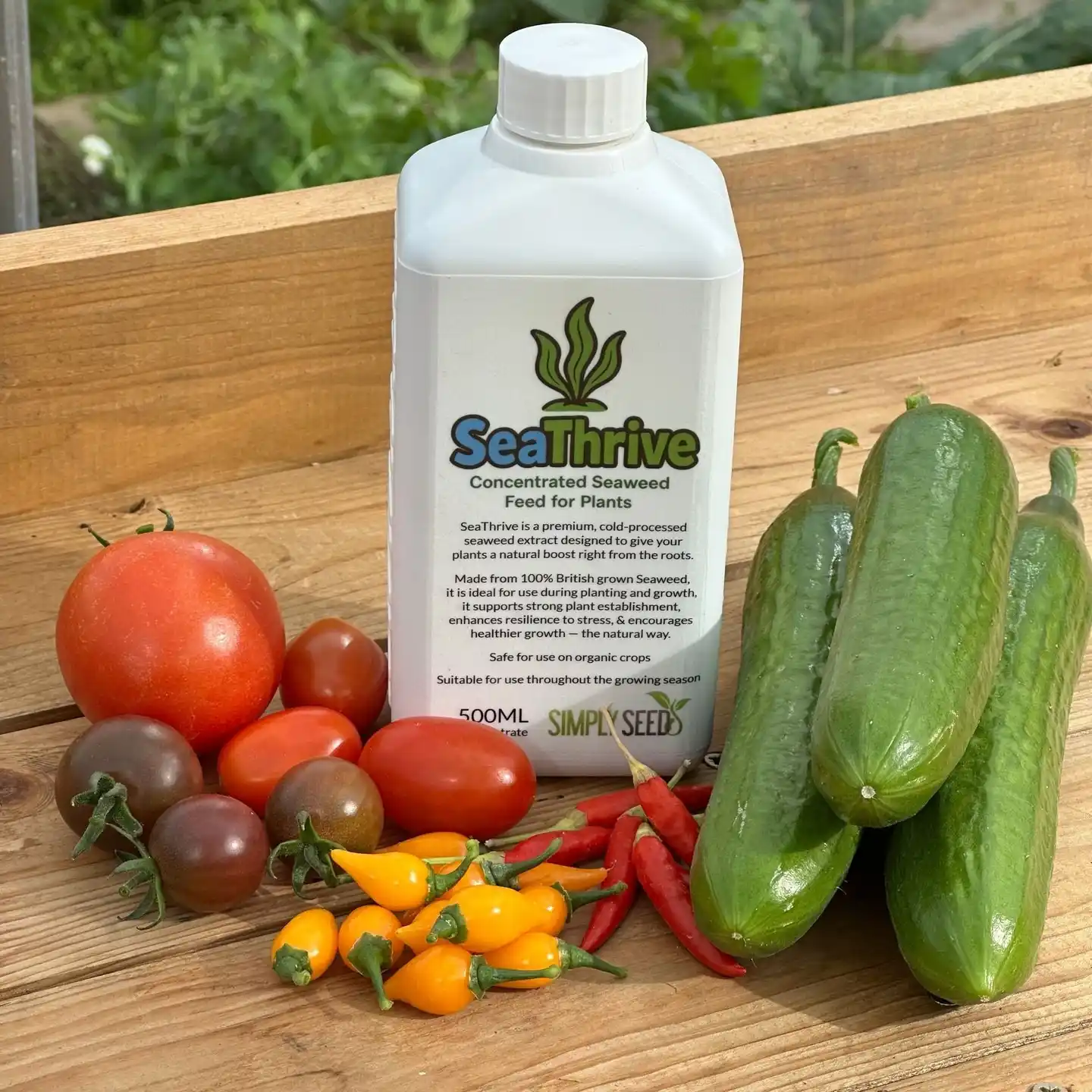
This white bottle of SeaThrive concentrated seaweed extract sits on a wooden surface surrounded by fresh garden produce.
Using organic liquid supplements provides a gentle boost to the root systems.
Bright tomatoes, cucumbers, and peppers demonstrate the benefits of proper nourishment.
You must dilute these mixtures heavily to avoid burning fragile root tissues. Regular light applications keep the crop productive throughout the active season.
9. Trim Herbs Often
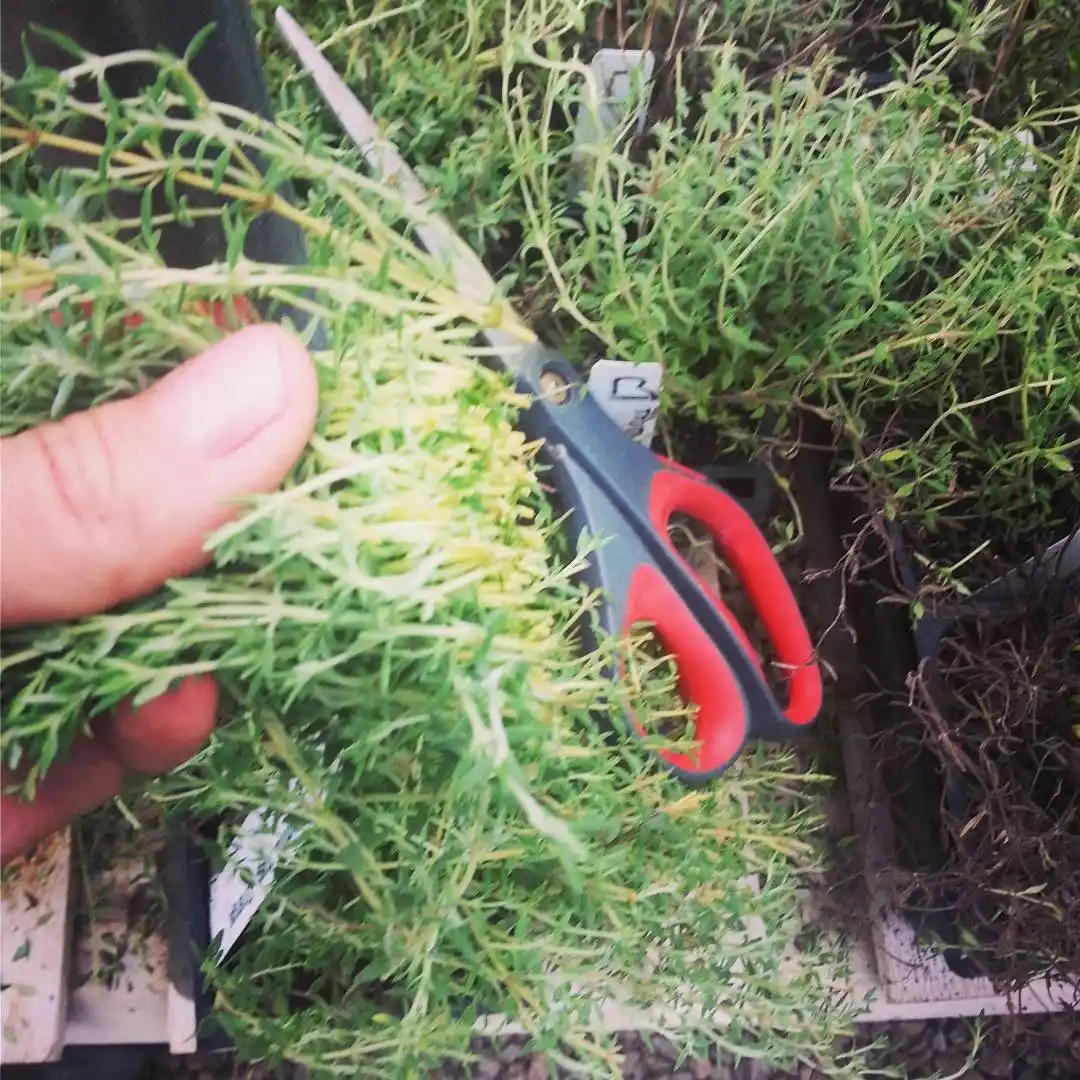
Frequent clipping encourages bushier growth and prevents leggy stalks. A hand holds a large bunch of thin green stems while snip cutting with red handled shears.
Removing the top sections forces the plant to branch out from the sides.
Regular harvesting also stops your culinary greens from flowering early. This maintenance keeps the leaves tender and packed with rich flavor.
You should always use sharp blades to ensure clean cuts that heal quickly.
10. Harvest the Right Way
source: @nancyherbsandwellness
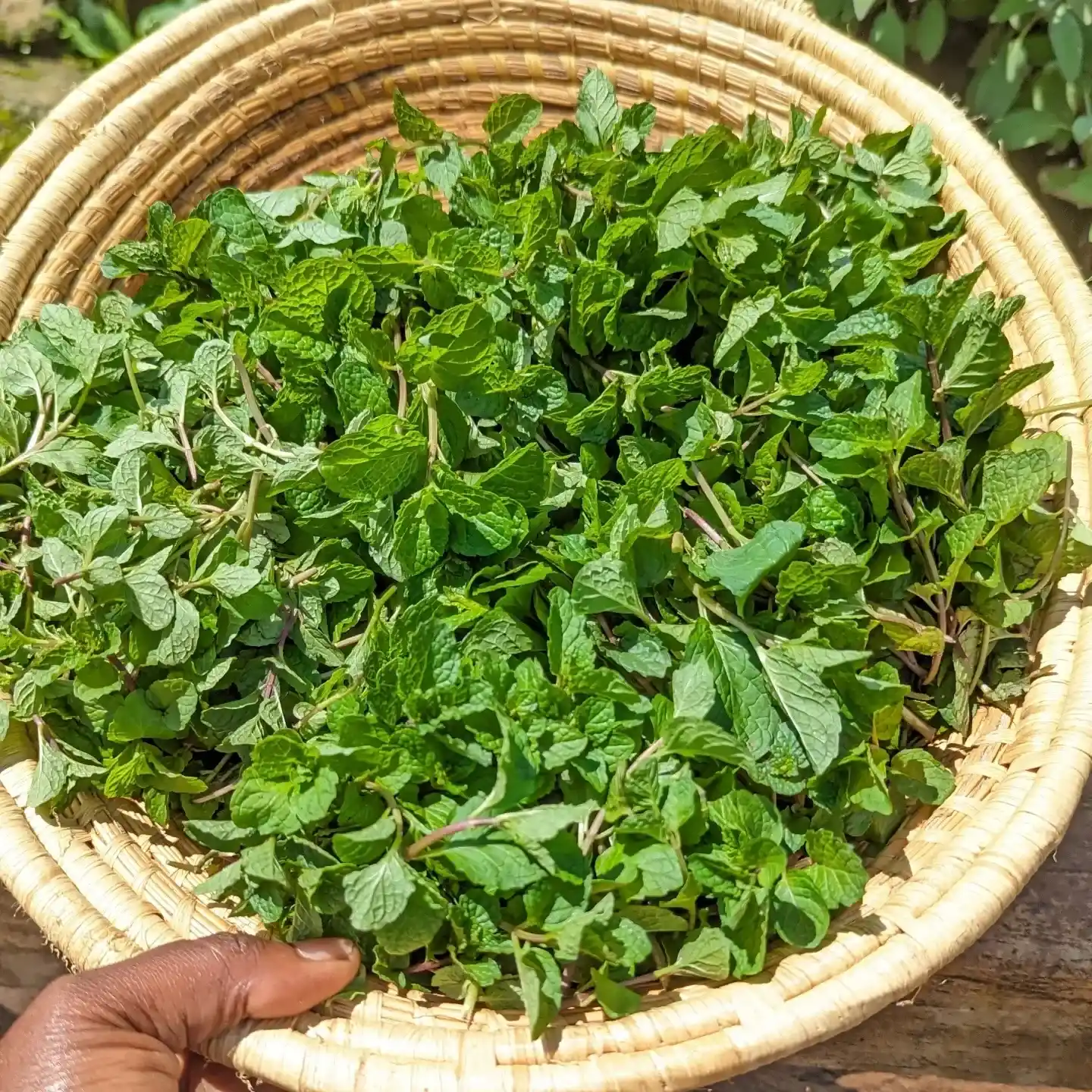
Correct picking methods protect your indoor plants from unnecessary shock. This woven circular basket holds a massive collection of freshly snipped green mint leaves.
A hand grasps the edge of the shallow container to showcase the abundant yield.Taking only the outer mature foliage ensures the center continues growing safely.
You should avoid stripping an entire stalk at one single time. Leaving enough canopy allows the root system to regenerate new stems continuously.


