

How to Declutter Kitchen Cabinets for Beginners

There is a unique kind of daily frustration that comes with a chaotic kitchen. Ready to clear the chaos? Learn how to declutter kitchen cabinets for beginners and create a functional, stress-free cooking space today.
You open a cupboard looking for a simple mixing bowl, and instead, a small avalanche of mismatched plastic lids and old travel mugs comes tumbling down onto the counter.
You find yourself digging past three identical, half-empty bags of flour just to locate the baking powder.
Cooking should be an enjoyable, creative escape, but when your storage spaces are packed to the brim, simply making a quick weeknight dinner can feel like an exhausting chore.
If your cupboards have reached a point where opening them requires a protective helmet, it is time for a change.
You don’t need to be a professional organizer or a minimalist influencer to get a handle on the mess.
With a straightforward plan, a free afternoon, and a little bit of patience, you can completely transform your workspace.
Let’s dive into the ultimate, stress-free methodology on how to declutter kitchen cabinets for beginners, so you can finally clear out the excess and build a functional, beautiful culinary environment.
Why Cupboard Clutter Happens to Good Cooks
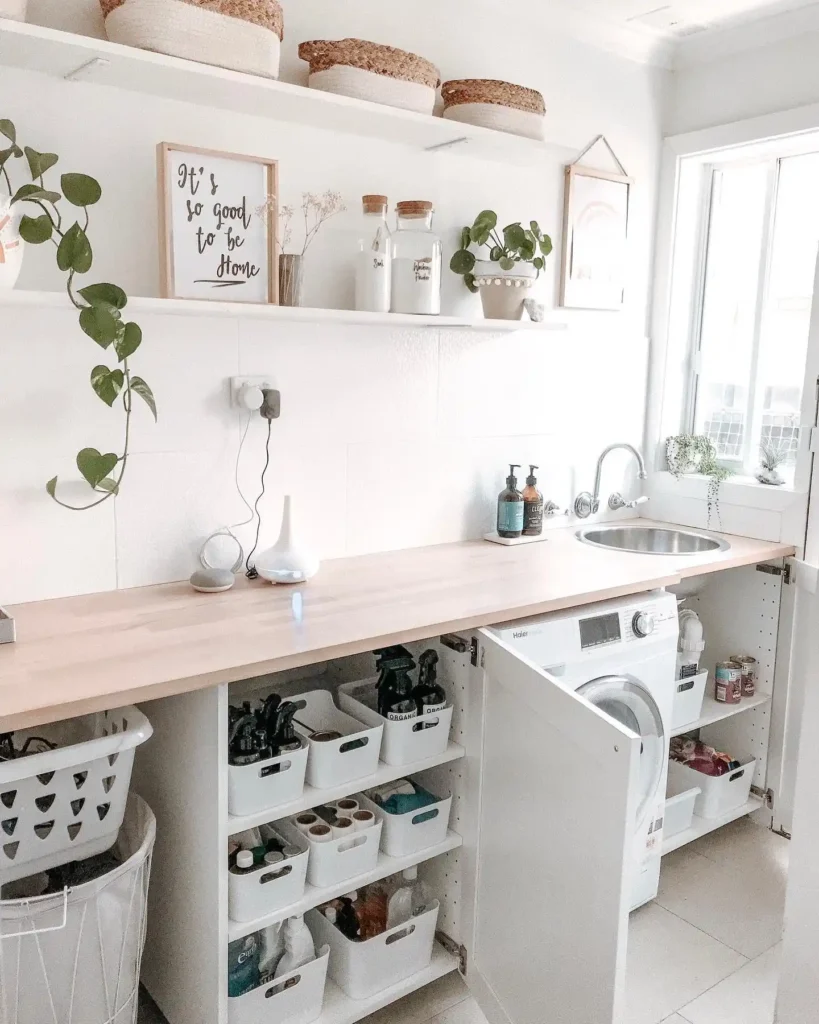
Source: @thehousethatjessbuilt
Before we pull out the first container, let’s clear the air on one thing: having messy cupboards does not mean you are a bad homemaker or a messy person.
Kitchens are the high-traffic epicenters of our homes.
They undergo constant, daily cycles of unpacking grocery bags, cooking meals, washing dishes, and putting things away quickly when we are tired.
Over time, certain habits naturally create clutter:
- The “Just in Case” Mentality: Keeping that specialized avocado slicer you used once in 2022 because you might need it again someday.
- The Duplicate Trap: Buying a second bottle of ground cumin because you couldn’t see the first one hidden in the back of a dark upper shelf.
- The Freebie Collection: Accumulating an endless supply of plastic takeout containers, promotional water bottles, and novelty coffee mugs.
Acknowledging how the clutter got there makes it much easier to let it go without guilt.
The Master Recipe for Cupboard Organization
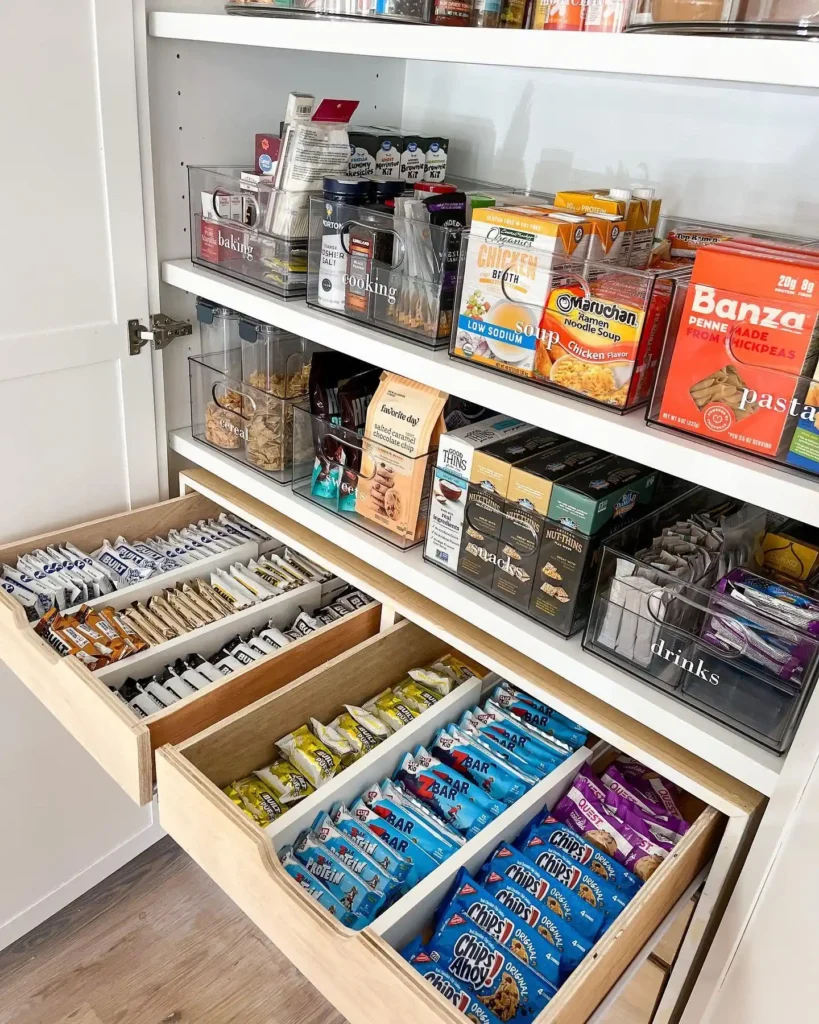
Source: @soshomeorganization
Think of decluttering like baking a loaf of bread. If you skip a step or throw the ingredients into the oven out of order, the final result won’t turn out right.
Following a logical, step-by-step process keeps you from getting overwhelmed halfway through the project.
Step 1: The Total Empty-Out
Do not try to organize your cabinets by shuffling items around inside them. It doesn’t work. To fix a space, you have to completely clear it out.
Pick one section of your kitchen to start with—perhaps your dinnerware cabinet or your baking cupboard.
Take every single item out and lay it across your kitchen island or dining table. Staring at an entirely empty cabinet shelf gives you a clean slate and instantly sparks a wave of organizing momentum.
Step 2: The Deep Cleanse
Once the cupboard is completely bare, you will likely notice a fine layer of dust, stray crumbs, or sticky rings left behind by old honey jars.
Take a damp microfiber cloth and a gentle, plant-based surface cleaner to wipe down the shelves, walls, and corners.
Drying the shelves thoroughly before putting anything back prevents moisture from getting trapped under your dinnerware.
Step 3: The Sorting Game
Now comes the fun part. Look at the pile of items sitting on your table and sort them into four distinct categories:
- Keep: Items you use constantly, love, and have a clear purpose for.
- Donate: Perfectly good tools, plates, or small appliances that you simply don’t use anymore.
- Trash/Recycle: Damaged pans with peeling non-stick coatings, cracked plastic cups, or expired pantry items.
- Relocate: Things that managed to drift into the kitchen but actually belong in the garage, dining room, or hallway closet.
Smart Ruthless Purging Questions to Ask Yourself
When you are learning how to declutter kitchen cabinets for beginners, the hardest part is deciding what stays and what goes.
If you find yourself hesitating over an item, ask yourself these quick diagnostic questions to cut through the indecision:
“Have I used this tool in the last 12 months?”
If the answer is a definitive no, it is highly likely you won’t miss it if it’s gone. Specialized seasonal items, like a turkey roasting pan, are the exception, but everyday gadgets should earn their keep.
“Do I have another item that performs the exact same job?”
You do not need three different vegetable peelers or four identical whisks. Pick your favorite, highest-quality version of the tool and donate the backup copies to someone who needs them.
“If this item broke today, would I spend money to replace it?”
This question filters out the items you are keeping purely out of habit. If you wouldn’t spend your hard-earned money to buy it again, it shouldn’t be taking up valuable real estate in your home.
Setting Up Your New Ergonomic Kitchen Zones
Once you have successfully narrowed down your belongings to the absolute essentials, it is time to put them back intentionally.
The goal here is to group items based on how you actually move around your kitchen when preparing a meal.
The Prep Zone
Keep your cutting boards, mixing bowls, chef’s knives, and measuring cups close to your primary countertop workspace.
This prevents you from pacing back and forth across the room just to chop an onion or measure out some olive oil.
The Cooking Range Zone
Store your frying pans, stockpots, baking sheets, and wooden stirring spoons right next to or underneath your stovetop.
When a sauce is simmering rapidly and needs a quick stir, you don’t want to be hunting through a distant cupboard for a spoon.
The Daily Dish Station
Your everyday dinner plates, cereal bowls, drinking glasses, and coffee mugs should live in the upper cabinets closest to either your sink or your dishwasher.
This makes the daily chore of unloading clean dishes incredibly fast and effortless.
3 Golden Rules to Keep the Clutter from Returning
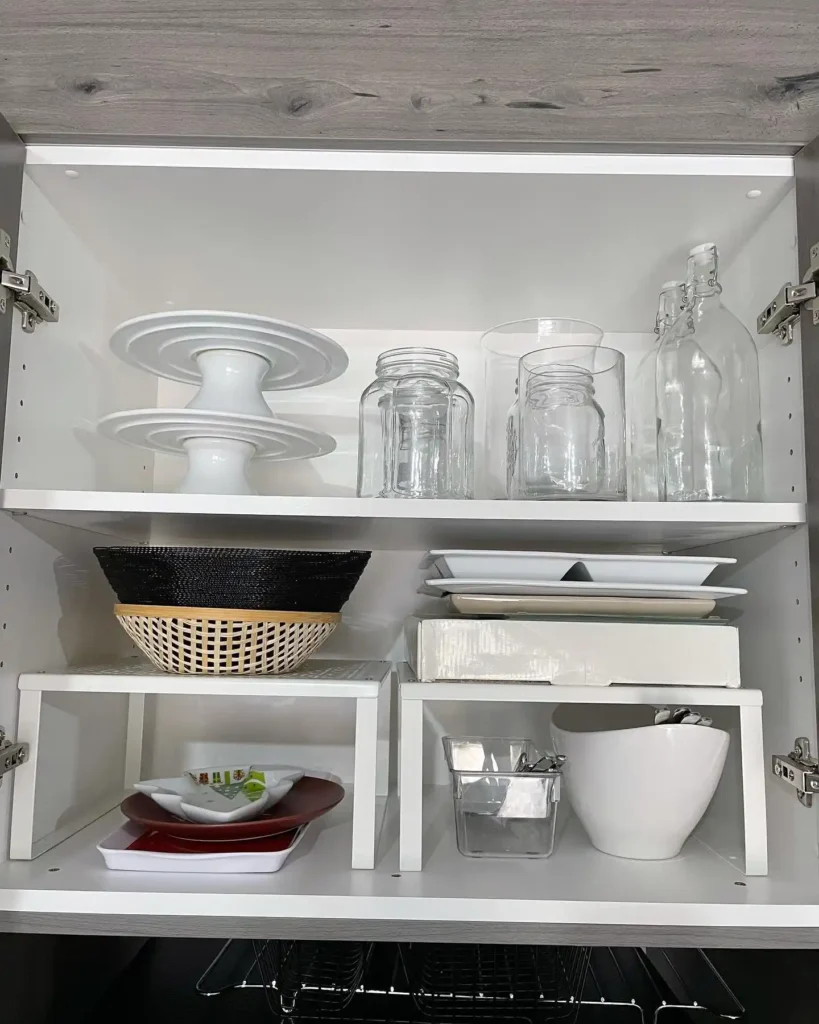
Source: @organised.by.emily
Decluttering your cabinets is a fantastic victory, but keeping them organized over the long haul requires a shift in your daily kitchen habits.
Implement these simple guidelines to maintain your beautiful new space:
1. The Strict “One In, One Out” Rule
If you decide to treat yourself to a beautiful new ceramic salad bowl, you must commit to donating or recycling an old piece of dinnerware to make room for it.
This simple boundaries check ensures your total volume of kitchen items stays perfectly balanced over time.
2. Embrace the Power of Clear Visibility
When you are putting things back into your upper cupboards, always arrange them by height, placing the tallest bottles and jars in the back and smaller spice containers up front.
If you can’t see an ingredient at a single glance, you will completely forget you own it, which leads straight back to duplicate buying.
3. Maximize Your Dead Vertical Space
Standard cabinet shelves leave a massive amount of empty space sitting right above your plates and bowls.
Invest in a few inexpensive, wire undershelf baskets or freestanding shelf risers.
These handy tools allow you to double-stack your bowls or plates without nesting them inside one another, keeping everything incredibly easy to grab
Enjoying the Fruits of Your Labor
Stepping back to admire a set of beautifully organized, clean kitchen cabinets is a deeply satisfying feeling.
When your cupboards are clear of unnecessary distractions, cooking stops feeling like a chaotic battle against clutter and goes back to being a therapeutic, rewarding experience.
You will save time during grocery shopping, experience less cooking stress, and enjoy a much cleaner home atmosphere overall.
Take it one cabinet shelf at a time, trust the process, and enjoy the incredible peace of mind that comes with a beautifully organized kitchen sanctuary!


